

French photographer Nicolas Guerin has built one of the most distinctive bodies of work in contemporary portrait photography. Working primarily in black and white, he has photographed an extraordinary range of creative figures — film directors, actors, fashion designers — with a consistency of vision that makes his portraits instantly recognisable.
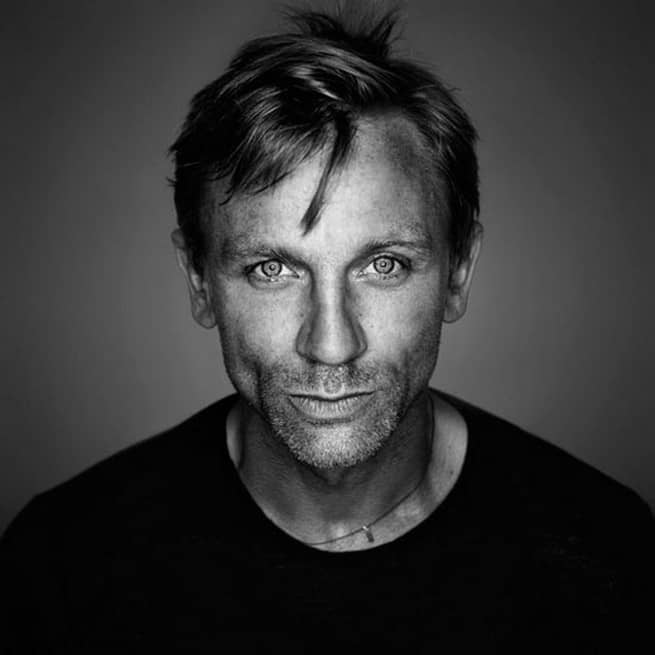
The Craft of the Black-and-White Portrait
Guerin’s approach strips away the distraction of colour to focus attention entirely on character. His subjects — among them Tim Burton, Quentin Tarantino, Clint Eastwood, Robin Williams, David Lynch, Martin Scorsese, and the Coen Brothers — are photographed with a directness that avoids flattery without tipping into harshness. The result is a series of images that feel genuinely revelatory: you see not just what these people look like, but something of what they are.
The photographer works extensively in both portraiture and fashion, and his advertising work has appeared across major publications and campaigns. Yet it is his editorial portrait work that has earned him an enduring reputation — particularly these studies of filmmakers and actors, which have become reference points in the field.
Subjects and Approach
The roster of subjects that Guerin has photographed reads like a map of late twentieth-century cinema. Vincent Cassel, Dennis Hopper, Willem Dafoe, Nick Nolte, Tommy Lee Jones, Takeshi Kitano, Roman Polanski, Emir Kusturica, Pierre Richard, Ed Harris — each sitting has produced images that have gone on to be widely reproduced and cited. Fashion figures such as Yohji Yamamoto appear alongside film directors, suggesting a photographer equally at home in both worlds.
What connects these disparate subjects is the quality of attention Guerin brings to each sitting. He does not impose a single formal solution across all his work; the framing, lighting, and distance vary considerably from subject to subject. What remains constant is a quality of stillness — even when the subjects are evidently in motion or mid-gesture, the images feel composed rather than caught.
A Body of Work Worth Studying
For anyone with a serious interest in portrait photography, Guerin’s output rewards close study. He demonstrates that the elimination of colour is not a stylistic affectation but a genuine compositional decision — one that forces both photographer and viewer to engage with form, texture, and expression on their own terms. His portraits of the cinema world in particular stand as one of the more complete photographic records of a generation of filmmakers at the height of their powers.