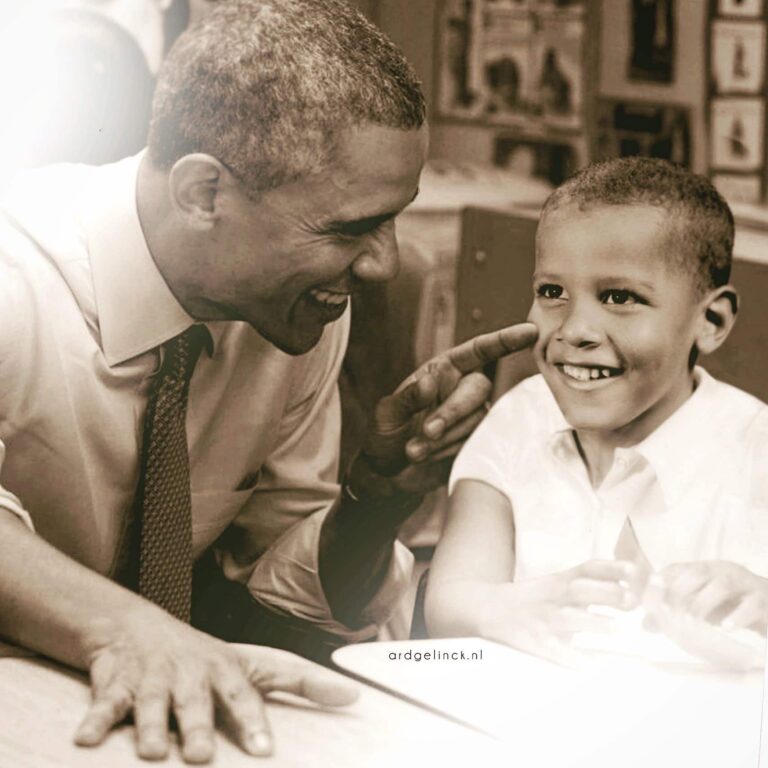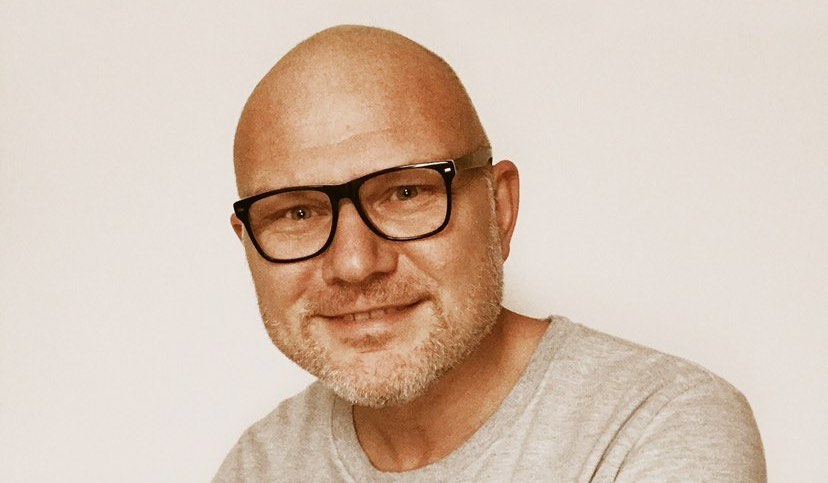
Ard Gelinck is a Dutch photo artist known for composite portraits that place a celebrity beside a younger version of themselves, usually by merging two separate photographs into a single seamless image. His work turns portraiture into a visual time machine, using careful cutouts, perspective matching, lighting adjustments, and digital retouching to make the two eras feel physically present together.
- Gelinck works from Groenlo in the Netherlands.
- He is best known for “then and now” celebrity portraits.
- His images combine photographs from different periods into one frame.
- The effect depends on precise editing rather than obvious collage.
- His work draws on nostalgia, especially the pop culture of the 1980s.
What does Ard Gelinck actually make?
Gelinck makes composite portraits, often called “then and now” images. In practice, that means he photographs or sources a current portrait of a well-known person and combines it with an older image of the same person, aligning pose, scale, and angle so the two figures appear to meet across time. The result is a single image that reads both as a portrait and as a small piece of visual fiction.
What makes the work distinctive is not only the idea, but the finish. The old and new images are matched so carefully that hair, shoulders, hands, and background edges often seem to belong to the same photographic moment. The viewer can usually detect the seam on close inspection, but the first impression is of a witty, convincing encounter between past and present.
Why did this style catch on?
Gelinck’s portraits fit a culture that already enjoys celebrity memory, before-and-after comparisons, and easy visual shareability. The format is instantly legible: one face, two eras. It condenses biography into a single glance and gives viewers a familiar pleasure, especially when the older image comes from a famous film, album cover, or public appearance.
That accessibility matters. Composite portraiture can become technical very quickly, but Gelinck keeps the idea simple enough for broad audiences. He uses the tools of digital editing to produce something that still feels human and readable, with the person’s changing age, style, and fame becoming the subject of the image itself.
How are the images made?
The work depends on photo editing, but also on a strong eye for coordination. A successful composite needs the right source images, matching eyelines, compatible posture, and enough visual space for the two versions of the subject to coexist without crowding each other. Shadows, highlights, and skin tones have to be adjusted so the composite does not break apart under scrutiny.
This is where the craft sits: in selection as much as in editing. A weaker source photo can make the whole illusion collapse, while a well-chosen pair of images can feel effortless. Gelinck’s best-known pieces work because they treat archival photography as raw material, not as fixed history, and then recombine it into a new portrait with its own rhythm and humor.
What does his work say about nostalgia?
Gelinck has said that the 1980s shaped his childhood, and that attachment shows up in the emotional tone of the work. His composites are not harsh or satirical. They lean toward recognition, affection, and memory, especially for viewers who grew up alongside the music, film, and television references embedded in the images.
That nostalgic pull is part of why the portraits travel so well online. They do more than show change over time; they make time feel visible. A former teen idol, a pop star, or an actor becomes a bridge between one decade and another, and the image invites reflection on aging, continuity, and the way celebrity itself is built from repeated appearances.
Frequently Asked Questions
Is Ard Gelinck a photographer or a digital artist?
He works as both, but the digital side is central to the finished image. The photographs only become his signature work when they are joined, retouched, and balanced into a single composite. The result sits between portrait photography and digital collage.
Are his “then and now” portraits fake?
They are constructed images, but not deceptive ones in the usual sense. The older and newer portraits are real photographs, yet the encounter between them is manufactured through editing. The fiction lies in the meeting, not in the identities shown.
Why are his images so recognizable?
The format is easy to understand in a fraction of a second, and the contrast between youth and age creates immediate interest. Gelinck also keeps the compositions clean, so the subject remains the focus rather than the editing trick. That clarity makes the portraits feel memorable and repeatable at the same time.
Articles mentioning Ard Gelinck