
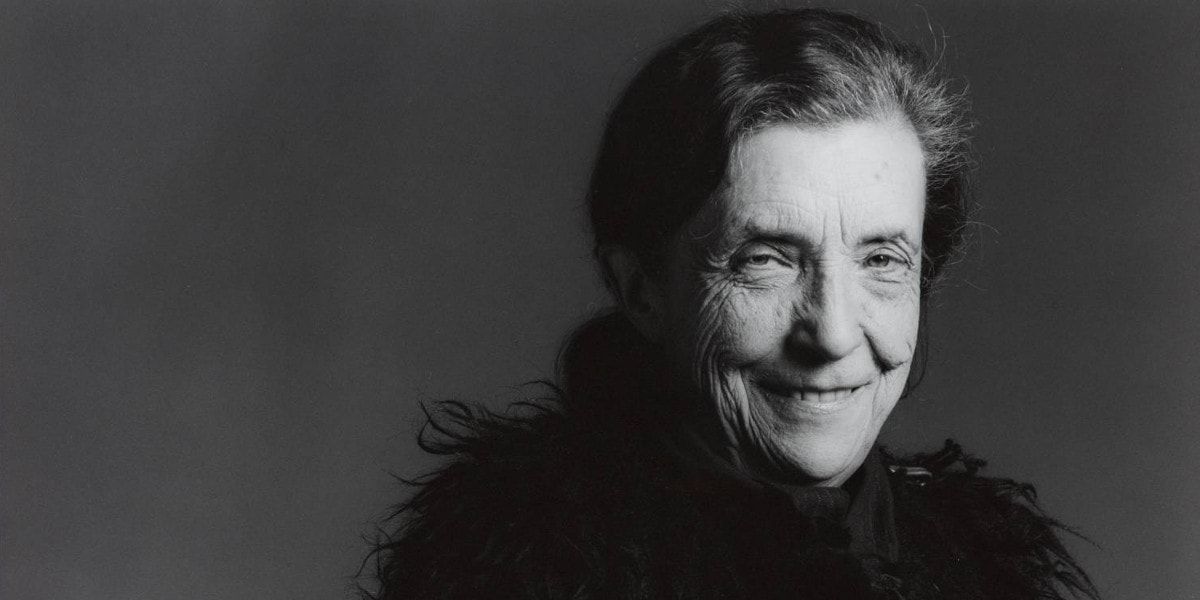
Louise Bourgeois was a French–American artist known for sculpture, drawing, printmaking, and installation, especially her spider forms, cell-like environments, and frank explorations of memory, family, sexuality, and fear. Born in Paris in 1911 and based in New York from 1941 until her death in 2010, she became one of the central figures in postwar and contemporary art.
- She worked across sculpture, drawing, printmaking, fabric, and installation rather than a single medium.
- Her best-known motif is the spider, most famously in Maman, a monumental bronze and steel work.
- Her art often draws on childhood experience, especially the emotional aftermath of family life and loss.
- She began receiving major international recognition late in life, which helped reshape the canon around women artists.
- Her work influenced later artists and designers who use the body, the domestic interior, and psychological imagery as source material.
What made Louise Bourgeois important?
Bourgeois made intensely personal work at a time when much of modern sculpture prized detachment. She treated materials as carriers of memory: bronze for monumentality, steel for structure, latex and fabric for skin, and stitched textiles for vulnerability and repair. Her forms can feel architectural, bodily, and domestic at once. A room may become a cage, a cupboard may suggest a psyche, and a spider may read as both guardian and threat.
That approach mattered because it widened what sculpture could do. Bourgeois helped shift attention from heroic abstraction toward inward, psychological form. She also made the private life of a woman artist central rather than secondary, giving later artists permission to use biography, trauma, and domestic craft without softening their force.
Why do so many people associate her with spiders?
The spider became Bourgeois’s signature image because she linked it to her mother, who repaired tapestries and preserved structures rather than destroying them. In Bourgeois’s hands, the spider was not a horror symbol but a figure of protection, industry, and memory. Her most famous version, Maman, rises on long legs and carries a sac of marble eggs, combining delicacy with scale and threat.
The spider also suits the way her work functions visually. It has a clear silhouette, but it is never simple. The same object can seem nurturing and predatory, elegant and unsettling, which is one reason designers and artists still return to it when they want a form that carries emotional contradiction.
What did her work look like in practice?
Bourgeois built sculptures, rooms, and wall-based works from materials that keep a trace of handwork. She used carved wood, plaster, bronze, steel, latex, rubber, and sewn fabric. Many pieces are rough-edged, with visible joins, patched surfaces, and repeated forms that suggest repair rather than finish. Her fabric works, often made from old clothing and household textiles, carry a domestic scale even when the ideas are severe.
Her Cells series shows this method especially clearly. These enclosed installations combine found objects, furniture, beds, mirrors, fragments of bodies, and metal frameworks to stage states of anxiety, memory, and isolation. They do not illustrate a narrative. Instead, they create a physical condition that the viewer enters through sight and movement.
How did her life shape her art?
Bourgeois was born in Paris in 1911 and grew up in a family that dealt in tapestry restoration, a background that made textile work part of her visual language from the beginning. Her father’s infidelity and the tensions within the household became recurring material in her art, not as literal autobiography but as emotional structure. She studied mathematics and art before turning fully to sculpture and moving to New York in the early 1940s.
Recognition came late, but it was decisive. By the 1980s and 1990s, museums and critics had begun to treat her as a major figure, and younger artists saw that a life shaped by displacement, family conflict, and technical experimentation could produce a powerful public body of work. She remained active into old age, continuing to make drawings, prints, and sculptures with sharp focus.
Frequently Asked Questions
Was Louise Bourgeois a Surrealist?
She was not a formal Surrealist, though her work often overlaps with Surrealist concerns such as dream imagery, the unconscious, erotic tension, and unsettling objects. Bourgeois belonged more to postwar and contemporary sculpture than to any single movement. Her work stands apart because it is less interested in surreal fantasy than in lived psychological experience.
What is Maman?
Maman is Bourgeois’s large spider sculpture, made in bronze, stainless steel, and marble. The work has become one of the most recognisable sculptures of the late twentieth century, installed in museums and public spaces around the world. Its scale makes the spider feel protective and monumental rather than merely decorative or literal.
Why do designers and collectors still reference her work?
Her forms are memorable because they condense strong ideas into simple structures: enclosure, repetition, repair, fragility, and protection. That makes them useful reference points for objects and spaces that want to feel psychologically charged without becoming narrative illustration. The visual language of legs, cages, stitched surfaces, and suspended bodies remains easy to recognise and hard to forget.
} and 0്
Articles mentioning Louise Bourgeois


