
Nicole Kidman is an Australian actor and producer known for a career that has moved between mainstream studio films, independent cinema, and fashion-led editorial work. She first gained international attention in the late 1980s and became one of the most recognisable screen performers of the 1990s and 2000s. In visual culture, Kidman matters not only as a film star but as a recurring subject for photographers, magazines, and luxury brands that use her image to signal polish, seriousness, and a controlled kind of glamour.
Stories from Nicole Kidman
6 stories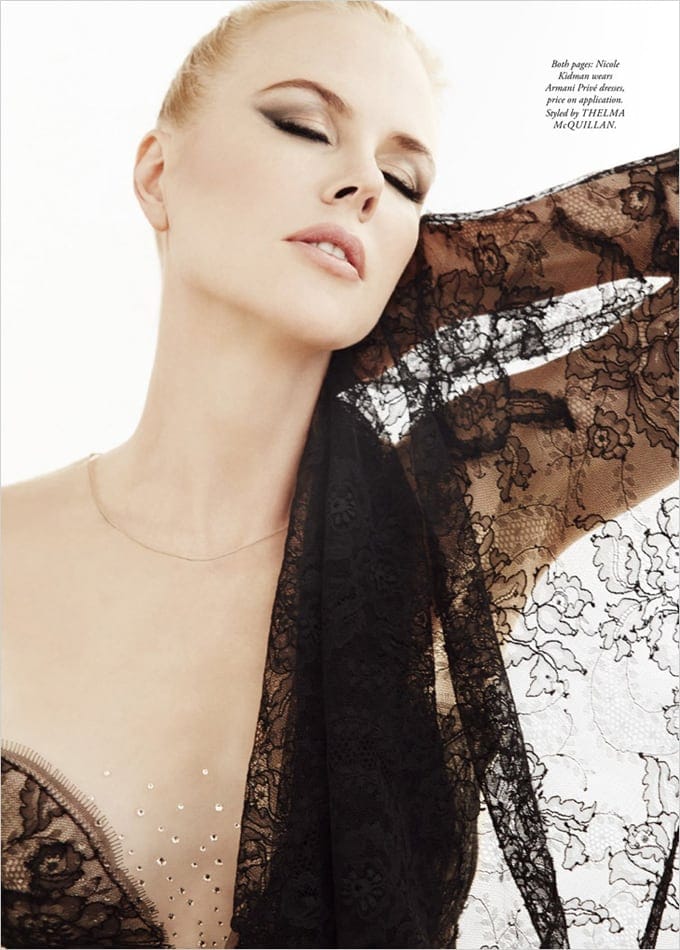


About Nicole Kidman
| Born | 20 June 1967, Honolulu, Hawaii, to Australian parents; raised in Australia |
|---|---|
| Nationality | Australian |
| Known for | Film acting, television roles, producing, and fashion and beauty campaigns |
| Breakthrough | Dead Calm (1989) |
| Common aliases | Kidman |
Read the full overviewHow did Nicole Kidman become such a major screen presence?, Why does she appear so often in fashion and magazine imagery?, What does her image communicate in practice?, How has she influenced contemporary celebrity portraiture?
How did Nicole Kidman become such a major screen presence?
Kidman began acting in Australia as a teenager, appearing in film and television before moving into international projects. Dead Calm gave her a first clear statement as a performer: precise, tense, and physically committed. Soon after, films such as Days of Thunder, Far and Away, and Batman Forever placed her in the centre of global commercial cinema.
What distinguishes her career is range. She has worked in melodrama, thriller, historical romance, comedy, prestige television, and art-house film, often shifting between overt style and psychological restraint. That flexibility has made her useful to directors and photographers alike: she can carry spectacle, but she can also make stillness look charged.
Why does she appear so often in fashion and magazine imagery?
Kidman photographs well because she brings strong formal qualities to an image: height, posture, pale colouring, sharp bone structure, and a manner that can read as both distant and vulnerable. Magazine editors and advertising art directors have repeatedly used that combination to sell elegance without softness. She often appears in carefully lit portraits, severe tailoring, sculptural gowns, or beauty campaigns that rely on composure rather than overt seduction.
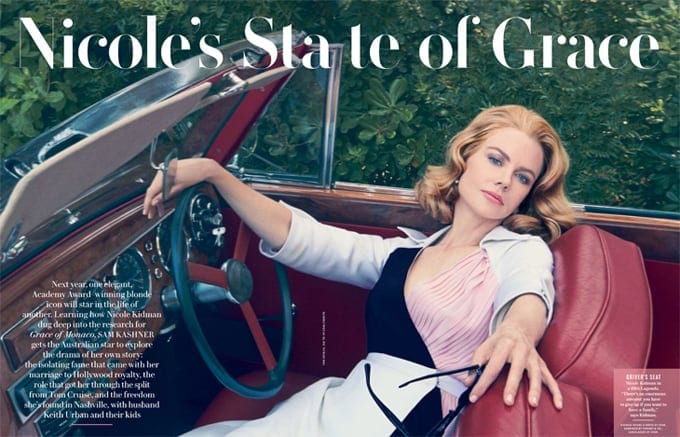
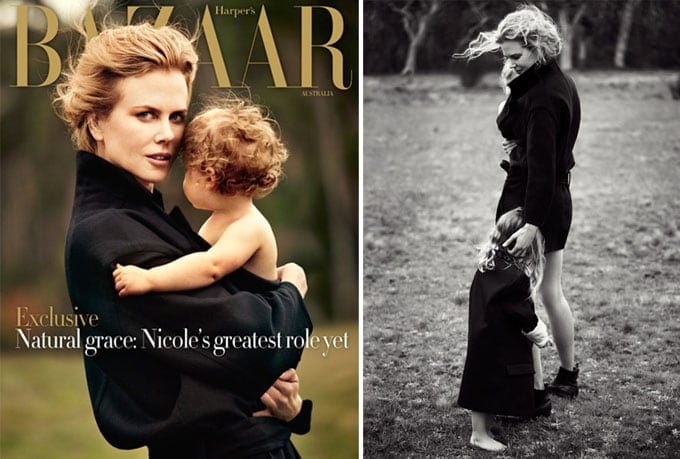
That visual usefulness is why she recurs in publications such as Harper’s Bazaar Australia, Vanity Fair, and Vogue, and in luxury advertising such as Jimmy Choo. These images are not just promotional. They also help build a public persona: glamorous, disciplined, slightly untouchable, and always controlled at the edge of excess.
What does her image communicate in practice?
Kidman’s public image has often been built through contrast. On screen, she can play formal, damaged, erotic, or cold; in portraiture, she often looks polished and composed. That tension gives photographers room to create images that feel expensive but unsettled. The result is a subject who can stand for old Hollywood glamour, contemporary fashion authority, and a kind of modern severity at once.
Her image also matters because it has remained adaptable over decades. Many stars are tied to one phase of fame, one genre, or one style of dress. Kidman has moved through changing beauty standards, changing fashion cycles, and changing ideas about mature femininity while remaining highly visible. That continuity has made her useful to editors looking for an established icon rather than a passing trend.
How has she influenced contemporary celebrity portraiture?
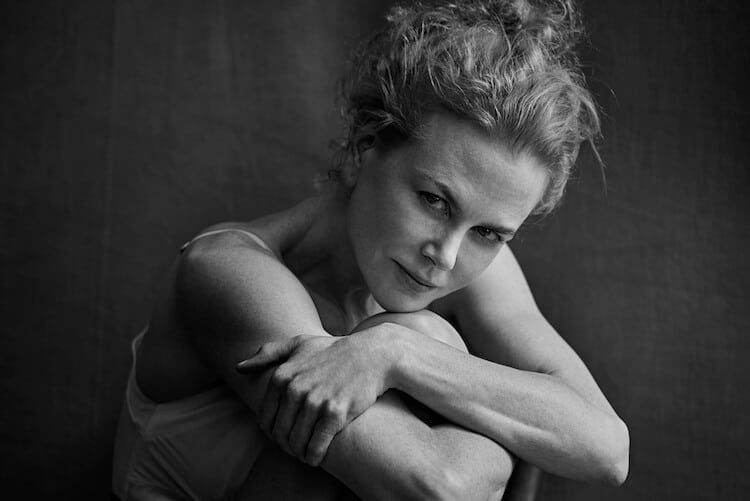
Kidman helped normalize a particular type of high-fashion celebrity portrait: formal, editorial, and emotionally ambiguous. In those images, the star is not presented as approachable or candid. Instead, the photograph treats her as an object of design, with wardrobe, lighting, pose, and setting working together to create meaning. This approach is common now in luxury magazines and advertising, but it depends on subjects who can hold the frame without over-explaining it.
Her career also shows how actors can become visual identities beyond film roles. The same face can serve cinema, magazine culture, fragrance or fashion advertising, and awards-season portraiture. Kidman has been effective in all of those spaces because her presence reads clearly at a distance and rewards close looking.
Frequently Asked Questions
Is Nicole Kidman mainly known as an actor or as a fashion figure?
She is primarily known as an actor, and that is the basis of her public stature. The fashion and editorial world draws on that stature because she brings authority, recognisability, and visual control to photographs and campaigns. Her image culture is important, but it rests on a long film career.
What made Dead Calm important in her career?
Dead Calm marked the point when she moved from Australian work into international attention. The film showed she could anchor a thriller and project tension with precision. It became the first role that made many outside Australia take her seriously as a major screen actor.
Why do magazines keep using Nicole Kidman in editorial shoots?
She brings a set of visual qualities that are useful in editorial photography: elegance, structure, and a face that can communicate distance, glamour, or fragility depending on styling. She also has enough fame to make the image instantly legible, but not so much overexposure that the photograph loses authority. For editors, that balance is difficult to find and valuable to use.