
Thai people are the main ethnic group of Thailand, with related communities spread across neighbouring parts of Southeast Asia and southern China. The term usually covers Central and Southern Thai, Northern Thai or Lanna, and many Isan people, all of whom belong to the wider Tai ethnolinguistic family. Thai identity formed through centuries of migration, regional kingdoms, state-building, and cultural exchange, and it is closely tied to the Thai language and to Theravada Buddhism.
Stories from Thai people
28 stories




About Thai people
- Ethnic identity: a broad national and cultural identity centred in Thailand.
- Language family: Thai belongs to the Tai–Kadai family.
- Religious majority: most Thai people follow Theravada Buddhism.
- Regional variety: the term includes several related regional populations, not a single uniform culture.
- Historical label: “Siamese” was the older English-language name for many Thai people.
Read the full overviewWhere did Thai people come from?, What does Thai culture look like in practice?, Why does the term include so many regional groups?, How Thai identity appears in art, design, and public space
Where did Thai people come from?
Thai people descend from Tai-speaking populations that moved south over many centuries from areas now in southern China and mainland Southeast Asia. As these groups settled in what is now Thailand, they mixed with older populations, adopted local customs, and formed political communities that later became kingdoms such as Sukhothai, Ayutthaya, and Rattanakosin. The modern nation-state of Thailand later brought many of these regional identities under one national frame.
That history matters because “Thai” is both an ethnic and a national term. It does not describe one sealed-off ancestry. It describes a people whose culture was shaped by migration, court life, village life, river systems, trade, and contact with Khmer, Mon, Lao, Chinese, Malay, and other neighbours.
What does Thai culture look like in practice?
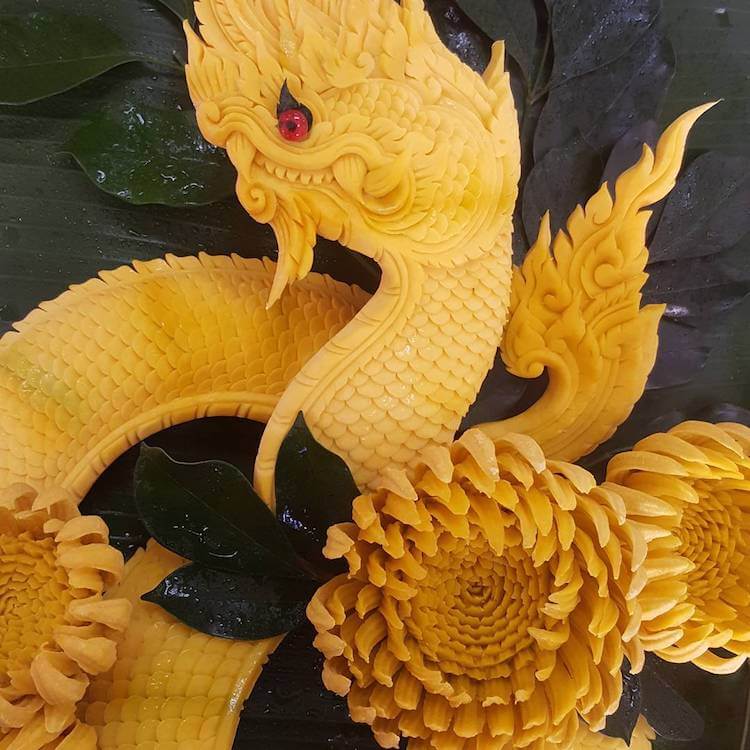
Thai culture appears in daily rituals as much as in official symbols. Theravada Buddhism shapes temple architecture, festival calendars, food offerings, funerary practices, and the rhythm of public life. The wat, or Buddhist temple complex, is a central built form: its gilded roofs, stupas, carved naga motifs, and painted ordination halls show how religious craft and regional aesthetics meet in one place.
Material culture also varies by region. Northern Thai weaving, Isan silk, southern forms of woodwork, and Central Thai court-influenced decorative arts each carry different techniques, dyes, patterns, and uses. In urban settings, Thai identity appears in shopfront lettering, food stalls, festival decorations, public murals, and contemporary design that reworks traditional motifs such as lotus forms, protective beasts, and layered roof silhouettes.
Why does the term include so many regional groups?
The category “Thai people” is broad because modern Thailand was built from many regional societies that share language roots and long histories of interaction. Central Thai culture became dominant through the institutions of the monarchy, bureaucracy, education system, and Bangkok as capital, but it did not erase local languages or customs. Northern Thai, Southern Thai, and Isan communities still retain distinct accents, foods, textiles, musical traditions, and place-based identities.
That breadth can be politically sensitive. In everyday use, “Thai” often functions as a national identity, while in scholarship it is important to distinguish it from the wider Tai family and from minority groups inside Thailand such as Malay Muslims, Khmer speakers, and hill communities. Careful naming avoids flattening a diverse population into one cultural stereotype.
How Thai identity appears in art, design, and public space
Thai people have shaped a visual culture that moves easily between sacred, civic, and commercial settings. Temple murals, lacquerware, puppetry, mask traditions, textile patterns, and royal iconography all feed into contemporary graphic design, fashion, architecture, and urban art. In Bangkok and other cities, contemporary makers often combine local materials like teak, bamboo, silk, ceramics, and brass with digital tools and modern construction methods.
In practice, Thai design often balances ornament and restraint. Rooflines curve upward, surfaces may be densely patterned, and gold or bright colour can signal prestige, devotion, or festivity. At the same time, many contemporary architects and artists work with climate, shade, ventilation, recycled materials, and vernacular building techniques, showing how Thai identity is carried not only by symbols but by practical responses to heat, rain, and communal life.
Frequently Asked Questions
Are Thai people the same as the people of Thailand?
Not exactly. Thai people are the largest ethnic group in Thailand, but the country also includes many other communities with different languages, histories, and identities. In common usage, the terms overlap because Thai national identity is powerful and widely shared.
What language do Thai people speak?
The main language is Thai, a tonal language in the Tai–Kadai family. Many people also speak regional varieties such as Northern Thai or Isan, and some communities use other languages at home. Thai script, derived historically from older Indic scripts, is one of the country’s most visible cultural forms.
Is Buddhism central to Thai identity?
For most Thai people, yes. Theravada Buddhism strongly shapes public ritual, family life, festivals, and the visual landscape of temples and monuments. It is not the only belief system present in Thailand, but it remains one of the most important cultural frameworks associated with Thai identity.