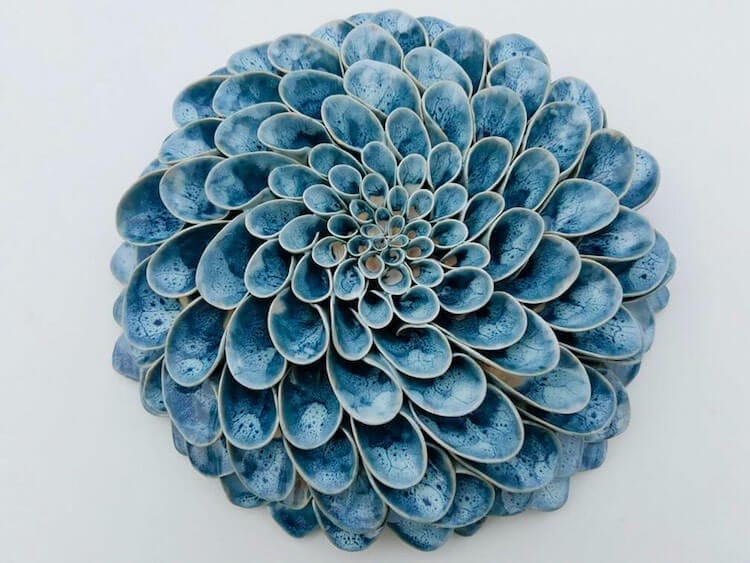
| Field | Detail |
|---|---|
| Who | Owen Mann is a maker associated with hand-built clay work, especially sculptural flowers and succulents. |
| Known for | Creating delicate botanical forms in clay that mimic living plants while remaining clearly handmade. |
| Materials | Clay, typically shaped, textured, and fired; often finished with glaze or surface treatments to suggest petals, leaves, and natural variation. |
| Practice | Small-scale ceramic sculpture, with close attention to form, color, and botanical detail. |
| Why it matters | His work sits between craft and sculpture, using ceramic technique to reframe flowers and succulents as lasting objects rather than temporary living forms. |
What Owen Mann makes
Owen Mann makes ceramic flowers and succulents, turning clay into highly detailed plant forms. The work depends on hand shaping rather than industrial replication, so each bloom or leaf carries slight differences in edge, texture, and proportion. That handmade variation is part of the appeal: the pieces look botanical, but they never fully pretend to be real plants.
This kind of work sits in a long ceramic tradition of making small objects that imitate nature. The subject matter matters because succulents and flowers already have strong formal qualities: layered petals, fleshy leaves, compact rosettes, and rhythmic branching. Clay gives those structures a permanent body and allows the maker to control color, surface, and fragility in a way that living plants cannot.
How are clay flowers made?
Clay flowers usually begin with forming separate components: petals, stems, leaves, centers, and bases. A maker can pinch, coil, slab-build, or sculpt each piece by hand, then assemble the parts while the clay is still workable. Fine tools, wire supports, and texturing implements help create veining, ruffles, and the slight irregularity seen in natural growth.
After shaping, the pieces dry slowly and are fired in a kiln, sometimes more than once if glaze is added. Surface color can be built through slip, underglaze, glaze, or paint-like ceramic finishes. In work like Mann’s, surface treatment does a lot of visual work: it can suggest waxy succulent skin, powdery bloom on a leaf, or the saturated color of petals without flattening the object into pure decoration.
Why this kind of ceramic sculpture matters
Ceramic flowers occupy a useful middle ground between decorative art and sculpture. They draw on techniques associated with craft, but they are not only ornamental. By translating living forms into fired clay, the maker changes the terms of looking: the subject becomes fixed, durable, and available for close inspection rather than seasonal decline.
That shift also changes how botanical imagery functions. A clay succulent cannot wilt, and a ceramic bloom cannot open or fade, so the work reads as a study in permanence, memory, and preservation. This is part of why ceramic botanicals remain compelling in contemporary visual culture: they borrow the recognition of plants while making the material itself impossible to ignore.
What does Owen Mann’s work look like in practice?
Work associated with Owen Mann is typically intimate in scale and attentive to surface detail. The forms often cluster around a single flower, a stem, or a succulent rosette rather than large arrangements. That scale invites close viewing, where the maker’s decisions become visible in the edges of petals, the ridges of leaves, and the transitions between matte and glossy areas.
Because the subject is familiar, the craft has to carry the interest. The success of this kind of work depends on balancing likeness with stylization: enough botanical accuracy to read as a plant, enough interpretation to keep it from becoming imitation. In that balance, the clay remains central. The material does not disappear behind the image; it gives the plant its new, permanent body.
Frequently Asked Questions
Is Owen Mann a ceramic artist or a sculptor?
He is best understood as a ceramic artist whose work also functions as sculpture. The distinction matters because the material process is central: clay, kiln firing, and surface finishing shape the final object. The work may be displayed as art, but it grows directly out of ceramic technique.
Why make flowers and succulents in clay instead of using real plants?
Clay allows the maker to freeze a fleeting form and study it in detail. Real plants change, age, and decay; ceramic plants hold their shape and surface indefinitely. That makes them useful as objects of contemplation, not just decoration.
What should be noticed first in this kind of work?
The first thing to notice is the surface: how petals, veins, and leaf edges are shaped, colored, and finished. After that, scale and assembly reveal how the piece was made and how closely it follows botanical structure. The strongest examples hold both likeness and obvious handwork at once.
Articles mentioning Owen Mann