
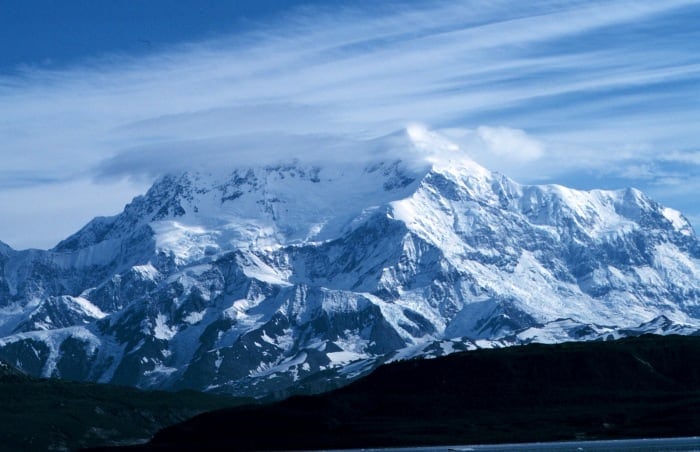
Wrangell–St. Elias National Park and Preserve is a United States protected area in south-central Alaska, combining a national park and a national preserve under National Park Service management. It was created in 1980 by the Alaska National Interest Lands Conservation Act and now forms part of a vast mountain, glacier, and wilderness landscape recognized internationally for its ecological and geological value.
| Type | National park and national preserve |
|---|---|
| Location | South-central Alaska, United States |
| Managing body | National Park Service |
| Established | 1980 |
| Legal basis | Alaska National Interest Lands Conservation Act |
| International designations | UNESCO World Heritage Site; International Biosphere Reserve |
Why it exists
Wrangell–St. Elias was set aside to protect one of the largest continuous wild areas in North America. The park and preserve cover towering mountain ranges, active glaciers, broad valleys, and subarctic ecosystems that still function on a huge scale. The preserve designation allows some uses that would not be allowed in a national park, especially subsistence activities and regulated hunting, while the park portion emphasizes conservation and public access under stricter rules.
The 1980 conservation act that created it was part of a larger federal effort to resolve land use in Alaska after statehood and rapid development pressure. That law drew boundaries across areas with major mineral, wildlife, and cultural importance, then folded them into a protected system rather than leaving them open to unchecked extraction.
What does Wrangell–St. Elias look like in practice?
The place is defined by scale. The Wrangell, St. Elias, Chugach, and Alaska ranges meet here, with peaks rising above glaciers that spill into long icefields and outwash plains. Mount St. Elias, one of the tallest mountains in North America, sits near the Gulf of Alaska side of the park system. Roads are few, settlements are tiny, and many areas are reachable only by plane, boat, or long overland travel.
Because of that remoteness, the human footprint is sparse and highly visible. Historic mining sites, old roads, and abandoned structures appear in places like Kennecott, where industrial copper history sits inside a landscape now governed primarily by preservation. The park therefore shows two kinds of infrastructure at once: the remains of earlier extraction and the minimal facilities required for modern access, ranger operations, and backcountry use.
Why does this place matter?
Wrangell–St. Elias matters for geology, climate, wildlife, and history. The area contains some of the largest glaciers in the United States, making it a significant place for studying ice dynamics, mountain building, and the effects of warming temperatures on high-latitude landscapes. It also supports bears, caribou, Dall sheep, and other species adapted to large, connected habitats.
The site also matters because it preserves a record of Alaska’s industrial and Indigenous histories in the same frame as wilderness conservation. Mining booms, Native subsistence patterns, transportation routes, and modern park policy all overlap here. The result is not an untouched postcard landscape but a working record of how land use, conservation, and national identity have been negotiated in Alaska.
How is it recognized internationally?
The park and preserve are part of the Kluane/Wrangell–St. Elias/Glacier Bay/Tatshenshini-Alsek UNESCO World Heritage Site, a transboundary designation that links protected landscapes across the United States and Canada. That recognition reflects the region’s exceptional glacial systems, wildlife habitat, and mountain scenery, but also the fact that its value extends beyond one country’s borders.
It is also included in an International Biosphere Reserve, which places it within a global network of sites meant to balance conservation with human use and research. These designations do not change day-to-day management in a dramatic way, but they do signal that the place is important not just as a park, but as part of a larger scientific and conservation system.
Frequently Asked Questions
Is Wrangell–St. Elias a park or a preserve?
It is both. The National Park Service manages it as a national park and preserve, a combined designation used in Alaska to allow different levels of protection within one unit. The park side is generally more restrictive, while the preserve allows certain activities such as hunting under state and federal rules.
Why is the area so large?
The boundaries were drawn to protect an exceptionally large and connected wilderness system, including mountain ranges, glaciers, wildlife habitat, and historic sites. Alaska’s land settlement history also influenced the size, since the 1980 conservation act had to settle competing claims from development, conservation, and local use. The resulting unit became one of the largest parks in the United States.
What is the easiest way to picture it?
Picture a vast mountain-and-ice landscape with very limited roads, a few isolated communities, and traces of older mining infrastructure. The place is less like a compact scenic park and more like a huge protected region where wilderness, geology, and history occupy the same terrain. That combination is what makes it distinctive.
At a glance
- Address
- Southeast Fairbanks Census Area, United States
- Coordinates
- 61, -142