
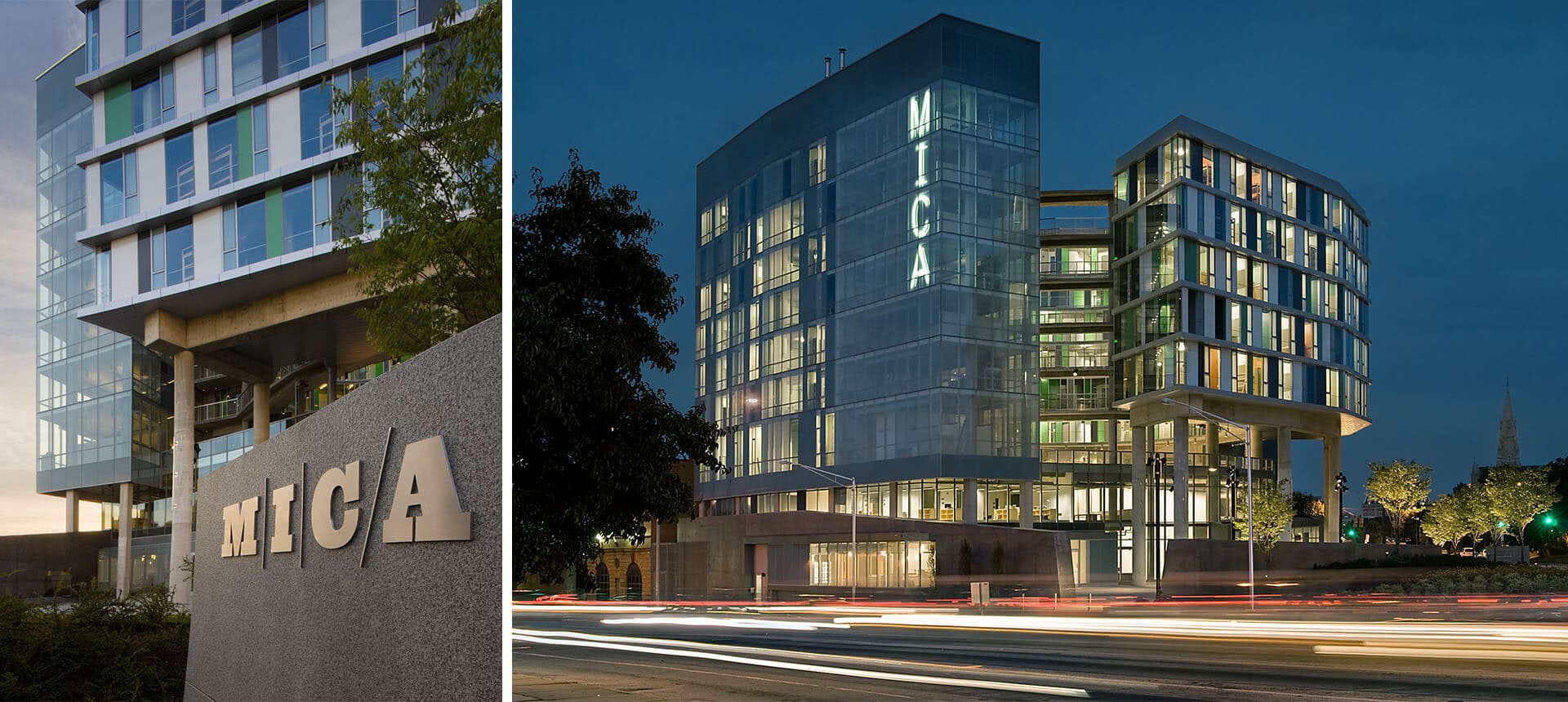
Maryland Institute College of Art is a private art and design college in Baltimore, Maryland, best known as one of the oldest art schools in the United States and as the home of a broad studio-based curriculum. Founded in 1826 as the Maryland Institute for the Promotion of the Mechanic Arts, it grew out of a movement to teach practical and artistic skills alongside industrial and mechanical knowledge.
| Founded | 1826 |
|---|---|
| Original name | Maryland Institute for the Promotion of the Mechanic Arts |
| Location | Baltimore, Maryland, USA |
| Type | Private art and design college |
| Common abbreviation | MICA |
| Known for | Fine arts, illustration, graphic design, and studio practice |
Why MICA matters
MICA matters because it helped define formal art education in the United States before art schools were common. Its early mission linked craft, mechanics, and design, which gave the institution a practical foundation rather than a purely academic one. That combination still shapes how the college is understood: as a place where drawing, printmaking, illustration, sculpture, textiles, and digital media sit close to the making of objects and images for public life.
The school’s reputation also comes from the artists and designers who have studied there and from the visibility of its graduate programs. In fields like graphic design, illustration, and fine art, MICA has long served as a point of reference for students seeking intensive studio training and a peer culture centered on making.
How did Maryland Institute College of Art begin?
The college began in 1826 as the Maryland Institute for the Promotion of the Mechanic Arts, part of a nineteenth-century effort to educate workers, makers, and artisans in a rapidly industrializing city. Baltimore had the commercial and manufacturing base to support that ambition. The early institute offered classes and exhibitions that connected design education to the needs of trades, printing, architecture, and manufacturing.
Over time, the institution shifted from a mechanics-oriented institute into a full art college. That change reflects a broader history in American education, where applied drawing and design schools gradually expanded into comprehensive fine arts programs. The result is a school with old roots and a modern identity, still shaped by the relationship between craft training and artistic experimentation.
What does MICA look like in practice?
At MICA, teaching centers on studios, workshops, critiques, and portfolio development. Students work in media such as painting, printmaking, illustration, ceramics, fiber, animation, photography, and graphic design, often with an emphasis on process as much as final presentation. A MICA education tends to value hand skills, material knowledge, and repeated revision, whether the work ends up on paper, on a wall, in a book, or on screen.
The college’s relevance to visual culture comes from that mix of traditional and contemporary methods. A student might learn letterpress, engraving, or screenprinting alongside digital layout and motion graphics. That blend matters for fields such as tattoo design, editorial illustration, and book arts, where an understanding of line, texture, reproduction, and composition can shape the finished image as much as the concept behind it.
How is it connected to artists and design culture?
MICA’s influence is often indirect: through alumni, faculty, visiting artists, and the visual language produced in its studios. Its graduates work across illustration, design, fine art, and craft-based practices, bringing school-trained habits of observation and material handling into the wider culture. For publications that track making, MICA stands for the kind of training that treats image-making as a learned discipline rather than an innate gift.
That helps explain why the college appears in contexts beyond the classroom. It is relevant wherever an artist’s line work, print sensibility, or material choices point back to academic studio training. In tattooing, for example, the influence can show up in disciplined draftsmanship, botanical study, engraving-like mark making, or a careful use of contour and shading.
Frequently Asked Questions
Is MICA only for fine artists?
No. Although fine arts are central to its identity, MICA also teaches graphic design, illustration, animation, photography, and other applied visual disciplines. The school has long balanced expressive work with professional and commercial uses of image-making.
Why is the college associated with craft and technique?
That association comes from its origin as a mechanics arts institute. The school’s early purpose was to teach useful skills connected to making, drafting, and design, not only theory or connoisseurship. Those roots still show in the importance it places on studio technique and material process.
Why does MICA come up in articles about tattoos or illustration?
Because tattooing and illustration both depend on drawing, composition, and line control. Artists trained at MICA often bring a strong foundation in those areas, along with familiarity with printmaking, engraving, and other traditions that influence tattoo style. In articles about visual work, that training can help explain the look and structure of the finished image.
At a glance
- Founded
- 1826
- Address
- Baltimore, United States
Articles mentioning Maryland Institute College of Art

