
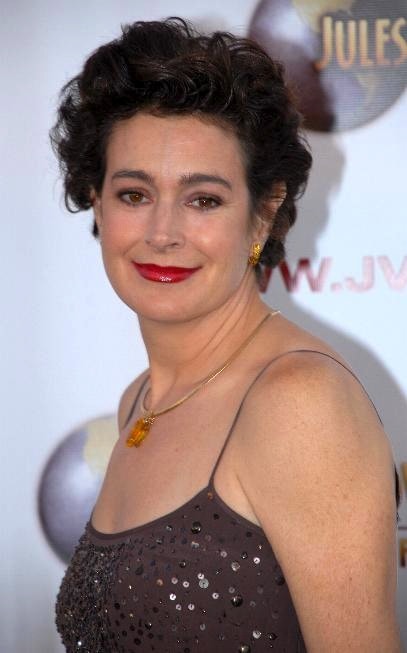
Sean Young is an American actress known for film roles in the 1980s, especially in Blade Runner, Dune, and No Way Out. She became associated with a particular kind of studio-era screen presence: striking, controlled, and often cast as women whose intelligence and vulnerability are central to the drama.
| Born | November 20, 1959 |
|---|---|
| Nationality | American |
| Known for | Film acting, especially 1980s science fiction and thrillers |
| Associated films | Blade Runner, Dune, No Way Out |
Why she became familiar
Young emerged during a period when American cinema still depended on star images built through large studio productions. Her best-known roles placed her in highly designed environments: neon-noir Los Angeles in Blade Runner, the imperial science-fiction world of Dune, and the polished political-thriller setting of No Way Out. Those productions relied on costume, lighting, and camera movement to shape character, and Young’s performances worked within those systems rather than outside them.
Her screen identity often depended on composure. She could read as elegant, remote, or emotionally exposed depending on the scene, which gave directors room to use her in stories about desire, control, and uncertainty. That made her a recognizable type of performer in the 1980s film market: not a comic or broadly expressive star, but one suited to tension and atmosphere.
What kind of roles did she play?
Young’s most visible parts were in genre films, especially science fiction and thrillers. In Blade Runner, she appeared in a production shaped by matte-painted cityscapes, practical sets, smoke, rain, and reflective surfaces. In Dune, she entered a heavily costumed world of factions, rituals, and stylized interiors. In No Way Out, the visual language shifted toward sleek offices, military spaces, and controlled interiors, but the dramatic function remained similar: she was used to sharpen suspense and emotional stakes.
These roles mattered because they sit at the intersection of performance and production design. Costumes, hair, makeup, and lighting did a great deal of the storytelling work, but they needed an actor who could hold focus inside those systems. Young’s appeal lay partly in that balance: she could be framed as an image, but she also gave those images tension.
How is Sean Young remembered in film history?
She is remembered less as a single-icon performer than as part of a broader 1980s visual culture. Her best-known films have remained influential because of their design, mood, and later critical status, and her performances are part of why those films still feel inhabited rather than merely constructed. When those movies are cited for their look, her presence is part of the evidence.
Young also occupies a familiar place in Hollywood history: the actor whose career is strongly associated with a small number of defining roles. That kind of reputation can be limiting, but it can also preserve clarity. Her name instantly suggests a specific period of American studio filmmaking, when genre pictures could still depend on a carefully managed star image.
What does her work look like in practice?
In practice, Young’s performances are often restrained. She uses stillness, directness, and an alert expression rather than broad physical movement. That style works well in films that rely on close framing, architectural sets, and controlled color palettes, because the camera can register small changes in gaze or posture.
Her work also shows how an actor can be shaped by production design. Heavy costumes, stylized hair, and visually dense sets can swallow a performance if the actor does not project force. Young’s roles show the opposite: the actor becomes one more designed element, but a necessary one, giving scale and human friction to the image.
Frequently Asked Questions
What is Sean Young best known for?
She is best known for 1980s film roles, especially in Blade Runner, Dune, and No Way Out. Those films established her as a memorable screen presence in science fiction and thriller cinema.
Was Sean Young mainly a stage actor or a film actor?
She is primarily known as a film actor. Her reputation comes from cinema rather than theatre, and from work that depends on camera close-up, costume, and production design.
Why do her roles still matter?
Her roles remain useful because they show how an actor can support a strong visual world without disappearing into it. In films that are often discussed for their design, she helps connect style to character.