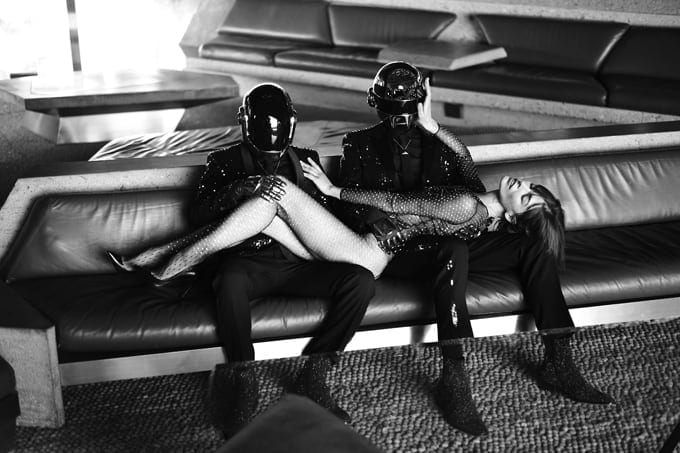
Daft Punk was a French electronic music duo made up of Guy-Manuel de Homem-Christo and Thomas Bangalter. Formed in Paris in the early 1990s, they became one of the most visible acts to emerge from the French house scene, combining house beats, synthpop, funk, and a sharp sense of visual presentation. Their music mattered not only for its sound but for the way it helped define how club music could cross into pop, fashion, and design culture.
- French duo: Guy-Manuel de Homem-Christo and Thomas Bangalter.
- Rose to prominence in the 1990s French house movement.
- Known for a polished mix of house, synthpop, disco, and electronic production.
- Built a distinct public image around helmets, anonymity, and highly controlled visuals.
- Influenced music, fashion campaigns, editorial photography, and branding well beyond dance floors.
Where did Daft Punk come from?
Daft Punk formed in Paris after the two musicians met as teenagers. Before Daft Punk, they played in a guitar band called Darlin’, which briefly drew critical attention before the project collapsed. That setback pushed them toward electronic production, sampling, and drum machines, placing them in the orbit of the French house boom that was taking shape around Paris in the mid-1990s.
Their early records arrived alongside a broader shift in French club culture, where DJs and producers were turning to filtered disco loops, compressed drums, and glossy synthesizers. Daft Punk’s work fit that moment, but it also sharpened it. Their tracks were built with the precision of studio pop and the propulsion of warehouse dance music, which helped them travel far beyond the clubs where they started.
What does Daft Punk sound like?
Daft Punk’s core sound blends house music’s four-on-the-floor rhythm with melody-driven hooks and heavily processed textures. Early releases such as Homework used gritty loops, chopped samples, and raw drum patterns. Later work became more layered and melodic, with polished chord progressions, vocoder-treated vocals, and a stronger sense of arrangement. Even at their most radio-friendly, their tracks retained a machine-like clarity.
That clarity mattered. Their production often separated elements so cleanly that basslines, percussion, and vocal fragments read almost like parts in a graphic composition. This made their records easy to remix, sample, and cite, which is one reason they became so important to producers in both dance music and mainstream pop.
Why did their image matter so much?
Daft Punk treated image as part of the work, not as a wrapper around it. After a studio accident in 1999, they began appearing in public as robot characters, using helmets and costumes to hide their faces. The decision gave them a controlled anonymity that was unusual in pop music and unusually effective in branding terms. The helmets became instantly recognizable without depending on celebrity portraiture.
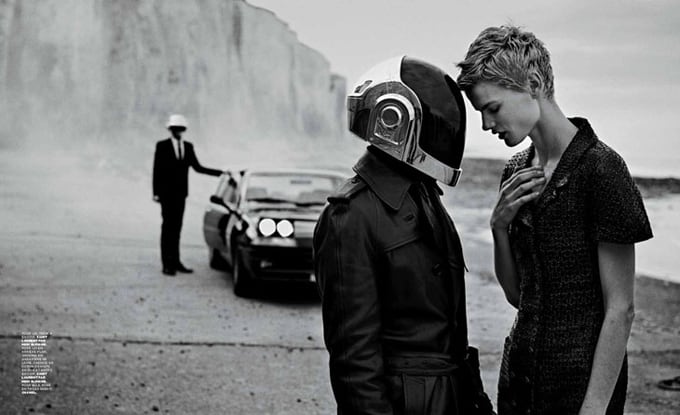
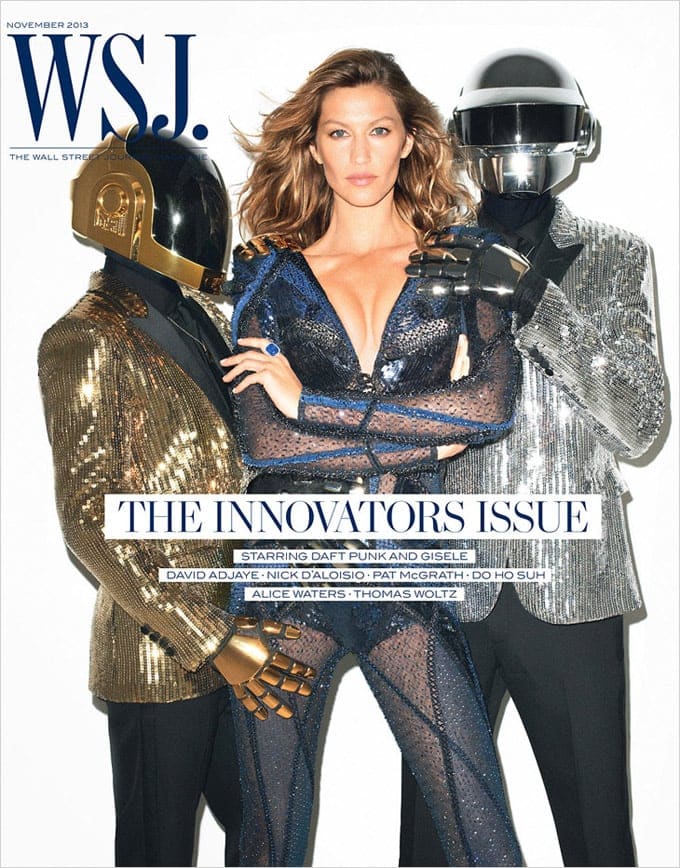
That visual system gave designers, photographers, and editors a clear object to work with. A Daft Punk image is rarely just a band photo; it is usually a study in reflective surfaces, black leather, chrome, geometric lighting, and the tension between human performers and manufactured identity. For fashion and editorial projects, that visual language offered a ready-made contrast between glamour and machinery.
How did Daft Punk shape visual culture?
Daft Punk influenced more than soundtracks and club sets. Their combination of anonymity, futurism, and retro disco references fed into fashion campaigns, magazine spreads, and art-direction choices across the 2000s and 2010s. The duo’s look suggested sleek technology without coldness, and nostalgia without obvious costume. That balance made them easy to place in glossy editorials while still reading as experimental.
Their impact also reached the way electronic music was presented. Album covers, press images, and live visuals borrowed from their logic of clean surfaces, bold silhouettes, and carefully managed spectacle. In practice, that meant making design decisions that felt both retro and forward-looking: metallic materials, saturated light, simple forms, and a refusal of casual realism.
Why do people still talk about Daft Punk?
Daft Punk remain central because they made a rare bridge between underground dance music and global pop culture. They helped define a generation of French electronic production, but they also showed that an electronic act could build a lasting identity through sound, fashion, and visual discipline. Their albums and performances continue to be cited by musicians, photographers, stylists, and set designers looking for a language of sleek futurism.
The duo also ended on their own terms. Their split in 2021 closed a chapter that had already become influential enough to outlive active touring and release cycles. What remains is not just a catalogue of tracks, but a model for how an act can use form, costume, and art direction to turn electronic music into a full visual culture.
Frequently Asked Questions
Were Daft Punk part of the French house scene?
Yes. Daft Punk were one of the most visible acts associated with French house in the 1990s, alongside producers and DJs who favored disco samples, filtered loops, and polished club grooves. Their early records helped define the scene’s international image.
Why did Daft Punk wear helmets?
They adopted helmets and robotic costumes after a studio accident and turned that anonymity into part of their identity. The look gave them a distinct public image while shifting attention toward the music and the design of the project itself. It also made them unusually legible as icons in fashion and editorial imagery.
What is Daft Punk’s lasting influence?
Their lasting influence lies in both production style and presentation. Musically, they helped normalize a glossy, sample-rich form of electronic pop. Visually, they showed how a music act could become a complete design system, with costumes, photography, and branding working as one.
At a glance
- Founded
- 1993
- Address
- Paris, France
Articles mentioning Daft Punk