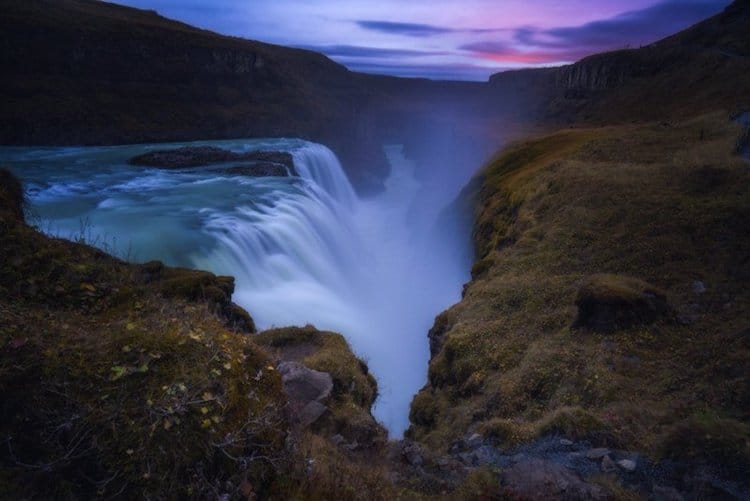
Albert Dros is a Dutch landscape photographer and multimedia specialist known for dramatic, carefully planned images of forests, volcanoes, eclipses, and other natural phenomena. His photographs often turn remote or fleeting scenes into highly composed pictures with painterly color, strong atmosphere, and clear structure. He has also worked across design, motion graphics, video, and audio, which helps explain the polished, cinematic feel of much of his output.
- He focuses on landscape photography, especially scenes that require timing, travel, and planning.
- His subjects include forests, Icelandic terrain, volcanic eruptions, and astronomical events such as solar eclipses.
- His work has circulated widely through major media outlets and image-led publications.
- He combines photography with a background in multimedia, which shapes his attention to composition and post-production.
What kind of photographer is Albert Dros?
Dros works in a mode of landscape photography that depends as much on preparation as on seeing. A volcanic eruption, a fog-bound forest, or an eclipse only gives a usable frame for a short period, so the image often begins long before the shutter click: with weather forecasts, location scouting, and a precise plan for light and angle. The result is not casual nature photography but a disciplined practice built around rare conditions.
His pictures tend to emphasize scale and atmosphere. Mountains, trees, ash clouds, and icy terrain become graphic forms, while color often carries much of the mood. That gives the work a look that can sit somewhere between documentary photography and visual interpretation, especially when the scene itself is already extreme.
Why do his images stand out?
Dros is known for making natural scenes feel ordered without flattening them. In the best-known images, a forest line may read almost like a brushstroke, or an eruption may appear staged against a clean sky. This comes from a careful balance of timing, viewpoint, and tonal control rather than from heavy manipulation alone.
The work also reflects a strong interest in rare or difficult subjects. Volcanic activity, aurora-like skies, eclipse moments, and winter forests all reward patience and technical control. In practice, that means carrying specialized gear, handling difficult exposure conditions, and returning to the same place more than once until the right conditions appear.
How does multimedia shape his practice?
Alongside photography, Dros has training in design and motion graphics, with a master’s degree in multimedia and entertainment technology. That background matters because it encourages a way of thinking that is closer to image-building than to simple image capture. Framing, sequencing, contrast, and rhythm all become part of the final result.
It also helps explain why his images travel well across digital media. They often have the visual clarity needed for publication, but they also carry a sense of spectacle that works in motion, on screens, and in editorial contexts. In that sense, his practice sits comfortably between fine-art landscape photography and commercial visual communication.
Where has his work appeared?
Dros’s photographs have been widely published in international media, including Time, Huffington Post, Daily Mail, and National Geographic. That level of circulation points to an image style that is both technically strong and immediately legible. Editors tend to use such work when they need a striking landscape image that can carry a story on its own.
For FreeYork readers, his relevance lies in the craft behind the image. His work shows how landscape photography can rely on field planning, environmental knowledge, digital workflow, and a strong sense of visual design. The pictures are not only about nature; they are also about how a photographer organizes nature into a compelling frame.
Frequently Asked Questions
What is Albert Dros best known for?
He is best known for landscape photographs of forests, volcanoes, eclipses, and other dramatic natural scenes. His images usually combine careful planning with strong composition and vivid atmosphere. They are widely shared because they feel both spectacular and controlled.
Is Albert Dros mainly a fine-art photographer or a documentary photographer?
He sits between the two. The images document real places and events, but they are also composed with a strong visual point of view. That makes the work feel interpretive rather than purely journalistic.
Why does his background in multimedia matter?
It helps explain the clean, polished look of his photographs and his interest in how images function across platforms. Skills in design and motion graphics can sharpen a photographer’s sense of structure, pacing, and presentation. In Dros’s case, that background supports a practice that is as much about visual construction as about field shooting.
Articles mentioning Albert Dros