
Andrew Tarusov on FreeYork
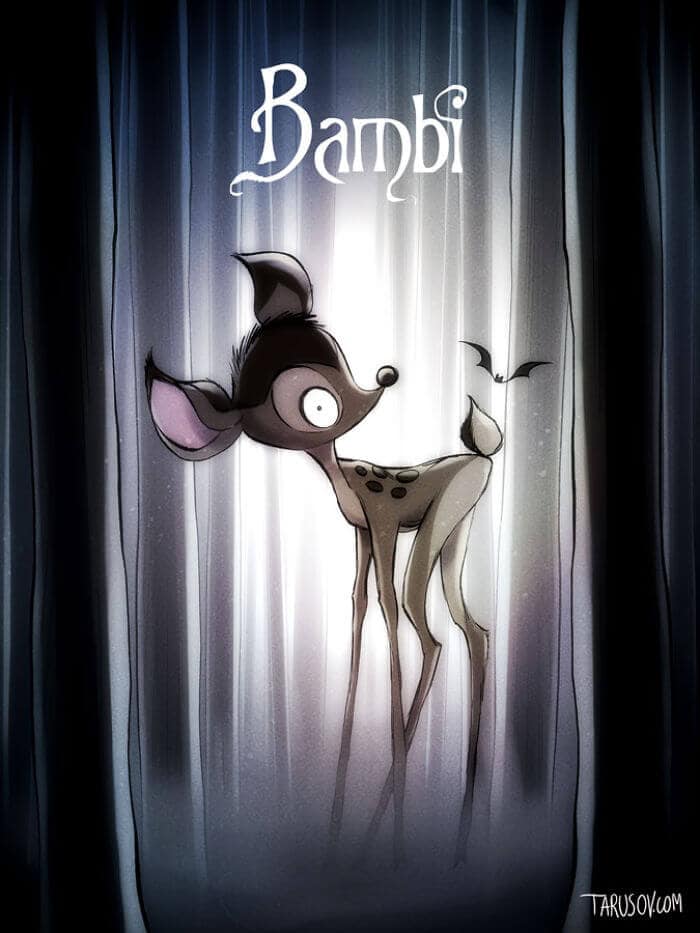


What kind of artist is Andrew Tarusov?
Andrew Tarusov is a Russian-born illustrator and animator known for turning familiar screen characters into polished, nostalgic pin-up images. His work sits where commercial illustration, fan art, and comic-book styling overlap: clean linework, exaggerated poses, bright colour, and a strong sense of character design. He has said that pin-ups, comics, and animation have shaped his interests from the start.
Tarusov came up through VGIK, the Russian State University of Cinematography, then spent roughly a decade working as an illustrator and animator before building a larger online audience. That background matters because his images are not loose tributes; they are tightly drafted and depend on the visual discipline of animation and the graphic clarity of illustration.
Why did his Disney and pop-culture images spread so widely?
Tarusov became especially visible through a series of transformations that recast well-known characters in a pin-up mode. In one set, Disney princesses are redrawn as glamorous adult figures with mid-century styling; in another, cartoon characters are shown as if they had aged into later life. The appeal lies in recognition plus disruption: the audience knows the original character immediately, then sees the image shifted into a different register of body type, costume, and mood.
These works are easy to circulate because they are built on shared cultural memory. Tarusov does not need to explain the reference point; the visual joke lands through costume, silhouette, and expression. At the same time, the drawings show controlled draftsmanship rather than parody for its own sake. He uses the language of pin-up illustration—curved poses, stylised faces, and surface polish—to make the subject feel both familiar and newly framed.
What does his process and style look like in practice?
Tarusov’s images typically rely on strong contour drawing, simplified anatomy, and an illustrative finish that recalls vintage poster art and comic-book production. The pin-up tradition depends on pose and presentation as much as likeness, so costume, hairstyle, and body language become central tools. Even when the source material comes from animation or fantasy television, the final image often reads as a designed object rather than a still from a story.
Because he works across illustration and animation, his figures tend to feel staged and readable at a glance. That clarity suits exhibition prints, online sharing, and editorial use. It also explains why his work travels well across different subjects, from Disney figures to Game of Thrones: the visual method stays consistent while the reference changes.
Where has he shown this work?
Tarusov showed personal artwork at Moscow Comic-Con in 2011, a setting that aligned closely with his interests in comics, animation, and fan culture. He also presented a solo exhibition at Solyanka that included material related to Game of Thrones. These appearances place him not just in the category of internet illustrator, but within a broader exhibition culture where digital-era images are also printed, framed, and installed.
After working in Russia, he later based himself in Los Angeles. That move places him within a transnational visual culture common to contemporary illustration: artists develop an audience online, exhibit in person, and move between entertainment, editorial, and fan-driven work. Tarusov’s career shows how a highly specific style can travel across those spaces without changing its basic visual vocabulary.
Questions
Is Andrew Tarusov mainly a pin-up artist?
Pin-up imagery is one of the clearest parts of his output, but it is not the whole of it. He also works as an illustrator and animator, and that training shows in the precision of his drawing and composition. The pin-up format is the visual frame through which many viewers first encountered his work.
Why does his work often use famous characters?
Famous characters give the image instant recognition, which lets the drawing pivot quickly into transformation or humour. Tarusov often uses that recognition to test how far a character can be reimagined while still remaining legible. The result is less about copying and more about redesigning a known figure in a different visual language.
What makes his illustrations distinct from ordinary fan art?
His work tends to be more controlled and design-led than casual fan art. The line quality, posing, and finish reflect a background in professional illustration and animation, so the images often feel like editorial illustrations or poster art. That polish helps explain why the work is used in exhibitions as well as online sharing.