Belfast is the capital and largest city of Northern Ireland, a port city on the River Lagan whose industrial growth, political history, and visual culture have shaped its modern identity. It sits mainly in County Antrim, with parts extending into County Down, and serves as the seat of the Northern Ireland Assembly. For artists, designers, photographers, and makers, Belfast matters as both a working city and a source of place-based imagery, from docks and shipyards to dense neighbourhood streets and the open water of Belfast Lough.
- Location: Northern Ireland, on the flood plain of the River Lagan
- Status: Capital city and seat of devolved government
- County boundaries: Mostly County Antrim; parts of east and south Belfast in County Down
- Population rank: Largest city in Northern Ireland, second largest on the island of Ireland
- Built character: Port infrastructure, industrial districts, Victorian and Edwardian streets, post-industrial waterfronts
Why Belfast matters
Belfast grew from a river crossing and market town into a major industrial city in the nineteenth century. Shipbuilding, linen production, engineering, and related trades left a strong physical imprint: dock systems, warehouses, factory buildings, workers’ housing, and a city plan shaped by commerce and extraction. Those industries declined, but the city retained a dense built fabric and a strong sense of material history. That combination gives Belfast a particular weight in visual culture. Its architecture and streets still show how labour, trade, and politics altered the city over time.
It also matters as a political centre. Belfast became the focus of Northern Ireland’s governance and, during the Troubles, a place where public space carried an unusually heavy political charge. Murals, banners, memorials, and street markings formed part of everyday life, turning walls into sites of identity, protest, and commemoration. That visual intensity has continued into the present, though with more varied cultural production and a broader arts scene.
What does Belfast look like?
Belfast has a mixed urban texture rather than a single dominant style. The city centre contains civic buildings, commercial streets, and redeveloped retail and cultural zones. Around it are terraces of brick housing, industrial remnants, and neighbourhoods that keep strong local identities. The River Lagan cuts through this fabric and links the city to its maritime edge, where former shipyard land has been reshaped by redevelopment while still carrying the scale of heavy industry.
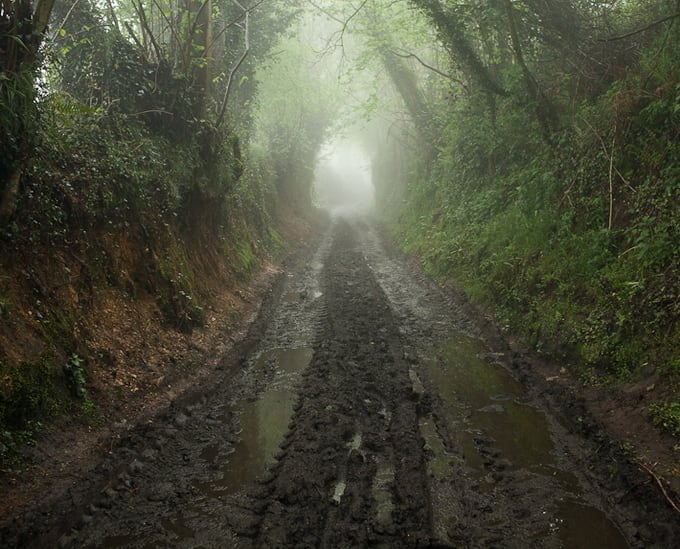
For photographers and artists, Belfast offers a contrast between hard surfaces and changing light. Wet weather, low cloud, river reflections, and the open line of the lough create a subdued palette in many images of the city. At the same time, murals, painted gables, and signage introduce sharp colour and graphic form. Belfast is often read through those contrasts: industrial and domestic, political and ordinary, historic and newly built.
How has Belfast influenced artists and makers?
Belfast has produced a strong visual language through its own streets rather than through a single school or style. Artists working there have often responded to the city’s material realities: brick, steel, water, fog, and the density of built form. The city’s mural tradition has also influenced how artists think about scale, public visibility, and image-making in shared space. A wall in Belfast is rarely just a wall; it often carries memory, territorial meaning, or community identity.
Contemporary artists and photographers associated with Belfast frequently work with place as a subject in itself. That can mean recording landscapes around the city, documenting the edges where urban development meets water or field, or using local colour, folklore, and family memory as visual material. Belfast appears in this work not as a backdrop but as a structure of lived experience, where architecture and politics remain tightly linked.
Frequently Asked Questions
Is Belfast the capital of Northern Ireland?
Yes. Belfast is the capital city of Northern Ireland and the location of the Northern Ireland Assembly. It is also the largest city in the region by population. That political role adds to its importance as a civic and cultural centre.
Why is Belfast important in visual culture?
Belfast matters because it has a highly legible urban surface shaped by industry, conflict, and redevelopment. Murals, docklands, terraces, and civic buildings all carry visible traces of the city’s history. Artists and photographers often use those elements to explore memory, identity, and the built environment.
What kind of city is Belfast today?
Belfast is a working capital with a strong post-industrial identity. It combines government, education, culture, tourism, and still-visible traces of manufacturing and shipbuilding. The city remains defined by change, but its older structures continue to shape how it looks and feels.
At a glance
- Address
- Belfast, United Kingdom of Great Britain and Ireland
- Coordinates
- 54.596943, -5.929167
Articles mentioning Belfast