
Beth Cavener Stichter is an American sculptor known for large ceramic animal figures that stand in for human emotion, conflict, and vulnerability. She works from a studio in Washington state and builds suspended, often life-sized animals whose strained postures and exacting surfaces turn clay into a study of psychology. Her work sits between figurative sculpture and animal form, using one to reveal the other.
Beth Cavener Stichter on FreeYork

What makes her work distinct?
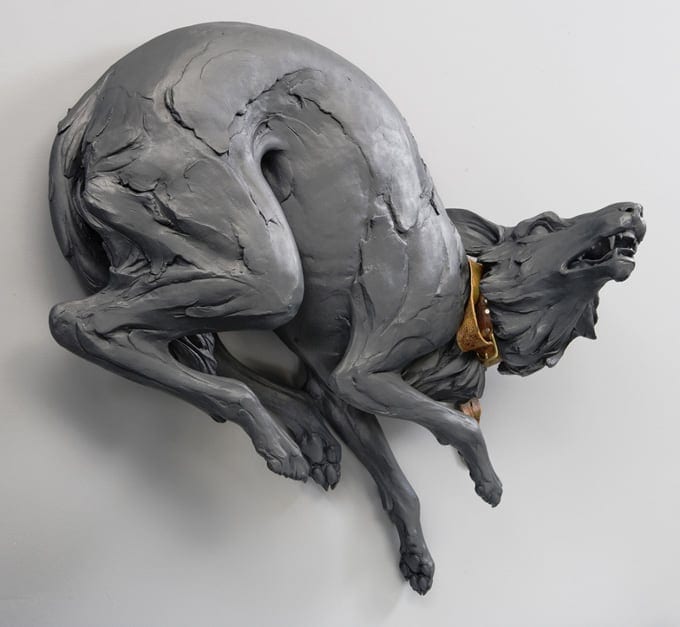
Cavener Stichter does not use animals as decoration or as simple symbols. She treats them as a way to bypass polite human language and show emotion through posture, weight, and strain. A rabbit, fox, goat, or hare may crouch, twist, or hang as if caught mid-conflict, but the point is not zoological accuracy. The point is the tension between the body’s form and the feeling it carries.
That approach gives her sculptures a sharp emotional edge. Their faces and limbs are modeled with enough anatomical clarity to feel believable, yet their gestures are exaggerated enough to suggest a psychological event. The result is work that looks theatrical without becoming illustrative, and specific without turning into narrative illustration.
How are her sculptures made?
Her process relies on ceramic technique at a demanding scale. The figures are typically built in clay, shaped by hand, and constructed in parts so they can survive drying, firing, and assembly. Surface finish matters as much as silhouette: fur, skin, and muscle are modeled to preserve a sense of living presence, even when the figure is posed in impossible suspension.
Ceramic sculpture at this scale is unforgiving. Large works can crack or collapse during drying, and kiln firing introduces further risk. That technical pressure is part of what gives the finished pieces their charge. The fragility of the material sits against the emotional heaviness of the subject, so the work feels both physically grounded and psychologically unstable.
Why does she use animal forms?
Animal imagery lets Cavener Stichter stage human feeling without relying on literal portraiture. A human face often invites quick biography or easy empathy; an animal body slows that response and makes viewers read gesture, balance, and tension instead. The animal form becomes a container for social behavior: dominance, fear, submission, desire, and withdrawal.
This strategy also avoids sentimentality. Her creatures are not pets and not fables. They are altered by human states but remain recognizably animal, which keeps the work unsettled. That ambiguity is central to its meaning, because the sculptures suggest that instinct and culture are not separate realms but overlapping ones.
Where does her work sit in contemporary sculpture?
Cavener Stichter belongs to a strong current of contemporary figurative sculpture that uses craft precision to address difficult emotional subjects. Her work is rooted in ceramic hand-building rather than industrial fabrication, and that choice matters. The labor visible in the surface and structure reinforces the intensity of the figures themselves.
She is also part of a broader shift in sculpture away from detached abstraction and toward bodies, identity, and affect. Even so, her work does not simply return to realism. It uses recognizable forms to build psychological scenes, where anatomy, material, and pose all carry meaning at once.
Questions
Is Beth Cavener Stichter a ceramic artist or a sculptor?
She is a sculptor whose best-known medium is ceramic. The work depends on ceramic knowledge, but the aim is not pottery in the usual sense. Her pieces function as large-scale sculpture, with clay used as a structural and expressive material.
Are her animal figures meant to represent specific people?
Generally, no. They stand for emotional and behavioral states rather than named individuals. The figures are intentionally general enough to hold many readings, which is why they can feel personal without being portraits.
Why do her sculptures often look tense or suspended?
Tension is central to her subject matter, so she builds it into the pose, balance, and weight of the figures. Suspended bodies also heighten the sense that something has just happened or is about to happen. That in-between moment gives the sculptures much of their force.