Bob Carlos Clarke was an Irish-born British photographer known for stylised, erotic, and often darkly comic images of women, fashion, and celebrity. He worked across portraiture, advertising, editorial photography, and art practice, and became one of the most recognisable commercial photographers of late-20th-century Britain.
- Born: 24 June 1950, Cork, Ireland
- Died: 25 March 2006
- Known for: Fashion, portrait, advertising, and erotic photography
- Style: Glossy black-and-white imagery, staged glamour, strong contrast, and theatrical lighting
- Reputation: Often compared to Helmut Newton for his provocative approach to the female figure
What made his photography distinctive?
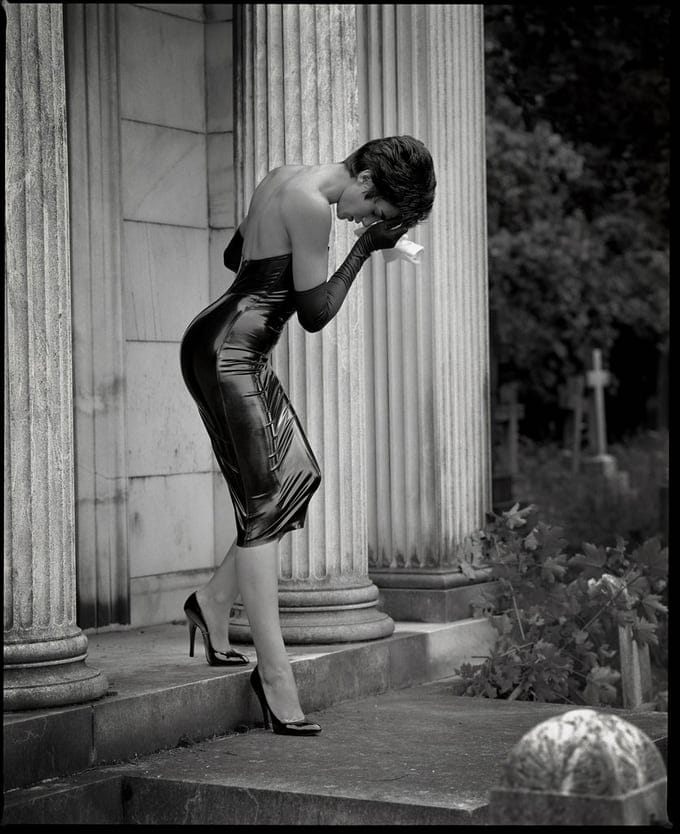
Clarke built images with a sharp commercial finish and a mischievous edge. His photographs often combined polished composition with overt sensuality, using dramatic lighting, clean backdrops, and carefully posed figures to create scenes that felt both seductive and slightly unsettling. He worked in black and white as well as colour, but his strongest images often rely on contrast, hard shadows, and a sculptural use of the body.
He was not simply a portrait photographer who happened to take erotic pictures. The eroticism was central to the work, but so was control: props, costumes, mirrors, cigarettes, latex, and studio sets all helped him construct a world that looked deliberately artificial. That made his photographs easy to recognise and difficult to confuse with documentary work.
Where did Bob Carlos Clarke come from?
Clarke was born in Cork and later moved to Britain, where he developed most of his career. He came of age at a time when advertising photography, fashion magazines, and editorial portraiture were changing fast, and he adapted those channels to a more explicit and highly stylised sensibility. His work belongs to the post-1960s moment when commercial photography could be both marketable and openly provocative.
He became prominent in London, where the worlds of publishing, fashion, and nightlife fed each other. That environment suited his taste for glamour, excess, and performance. His pictures often reflect the energy of that scene: polished surfaces, theatrical attitudes, and a fascination with celebrity, sex, and identity as constructed things.
Why does he matter?
Clarke mattered because he helped push British commercial photography toward a bolder visual language. He showed that advertising and editorial work could borrow from fine art, film noir, and fetish imagery without losing their commercial force. For many viewers, his pictures helped define an era in which fashion photography became more explicit, more staged, and more self-aware.
His influence also lies in the debate his work generated. Some saw the photographs as witty, elegant, and formally accomplished; others criticised them for objectifying women or relying on macho fantasy. That tension is part of his significance. Clarke’s reputation rests not on consensus, but on how insistently his pictures force questions about glamour, desire, and power.
How was his work made in practice?
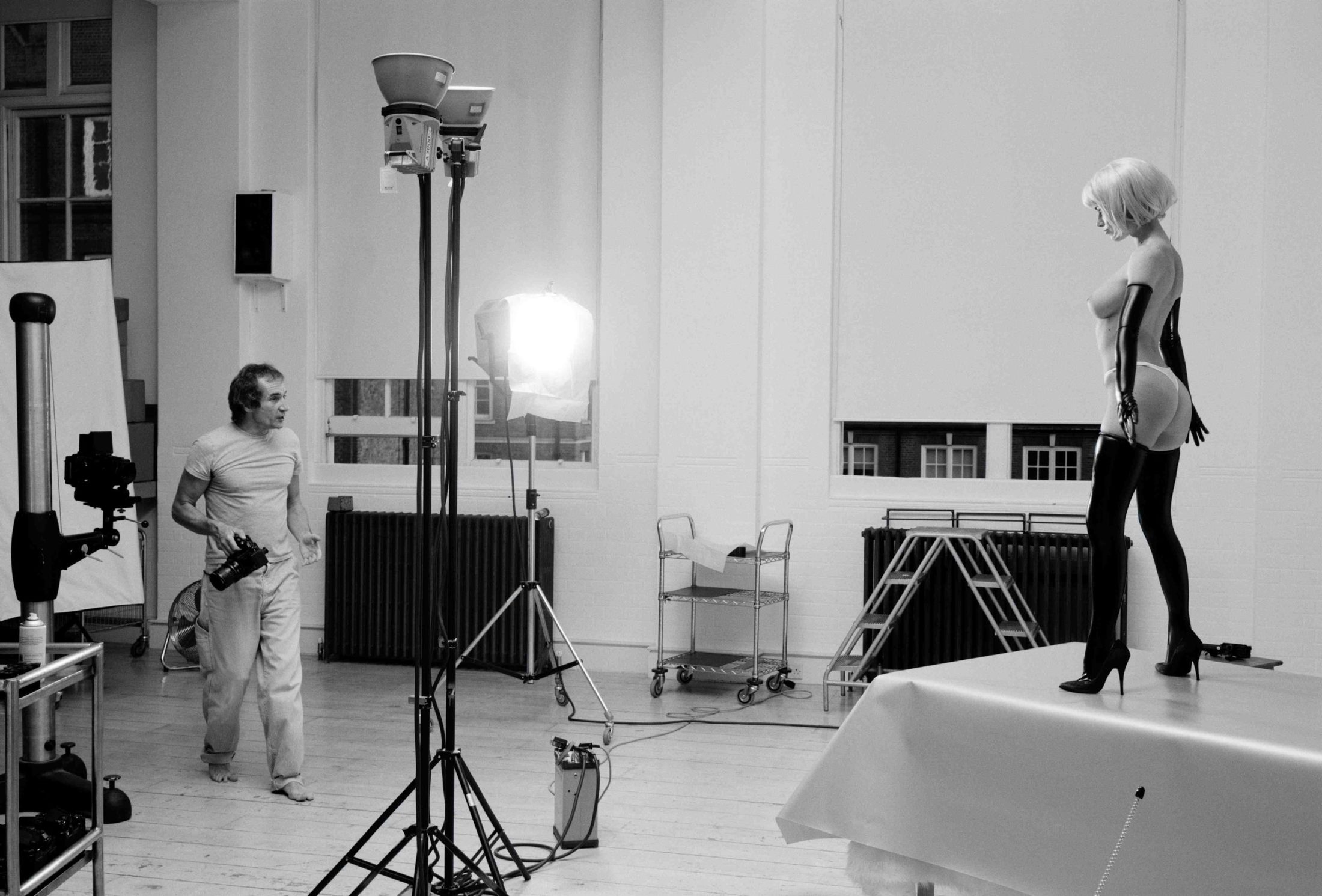
Clarke’s images were usually carefully constructed in the studio or in controlled locations. He relied on lighting that sharpened edges and modelled skin, and he often used deliberate posing rather than candid gesture. The result looks spontaneous only because the staging is so controlled that it can hide its own labour.
He also understood the importance of printing and presentation. Contrast, tonal depth, and crisp detail mattered to the final effect, especially in black-and-white work where the surface of skin, fabric, metal, or smoke could carry the image. That technical precision helped give his photographs their glossy authority, even when the content was deliberately transgressive.
Frequently Asked Questions
Was Bob Carlos Clarke mainly a fine art photographer or a commercial photographer?
He worked in both areas, but commercial photography formed a large part of his career. Fashion, advertising, and editorial assignments gave his imagery wide circulation and helped establish his visual identity. His art photography shared the same sensibility, so the boundary between the two was often thin.
Why is he often compared to Helmut Newton?
The comparison comes from their shared interest in glamour, eroticism, and powerful staged images of women. Both photographers used studio precision, strong lighting, and a fetishised sense of style to create pictures that felt luxurious and confrontational at once. Clarke’s work is distinct, but the comparison points to a similar visual territory.
Is his work controversial?
Yes. His photographs have long divided opinion because they often place women in overtly sexualised, carefully controlled scenes. Supporters value the wit, technical skill, and confidence of the images, while critics focus on how they frame gender and desire. That controversy is part of his legacy rather than a footnote to it.
Articles mentioning Bob Carlos Clarke