Buffalo, New York is a city on the eastern shore of Lake Erie, at the head of the Niagara River, and the second most populous city in New York State. It is the county seat of Erie County and the main city in the Buffalo-Niagara Falls metropolitan area, the largest urban area in Upstate New York.
| Fact | Detail |
|---|---|
| Type | City |
| State | New York |
| Region | Western New York |
| Waterfront | Lake Erie and the Niagara River |
| County seat | Erie County |
| Metropolitan area | Buffalo-Niagara Falls |
Why Buffalo matters
Buffalo matters because its location made it a major American industrial and transportation city. The Erie Canal linked the Great Lakes to the Atlantic through New York State, and Buffalo became a transfer point for grain, raw materials, manufactured goods, and people moving between the interior and eastern markets. That commercial history left a dense stock of warehouses, grain elevators, civic buildings, and factory structures that still shape the city’s visual character.
The city also matters as a place where making has remained visible. Former industrial buildings now house studios, galleries, workshops, and small manufacturers. For artists and designers, Buffalo offers a landscape of brick mill buildings, steel infrastructure, and lakefront light that supports a strong sense of material place rather than a generic urban backdrop.
What does Buffalo look like on the ground?
Buffalo’s built environment mixes nineteenth-century commercial blocks, early twentieth-century civic architecture, postwar roads, and waterfront industrial remnants. Its older neighborhoods often contain narrow streets, front stoops, masonry row buildings, and churches with distinctive spires, while the lakefront and river corridors show the scale of shipping, milling, and power generation. Grain elevators are among the city’s most recognizable forms: tall concrete and steel storage towers that read as both infrastructure and sculpture.
Weather is part of the city’s appearance. Heavy snow, lake-effect clouds, winter haze, and strong seasonal light change how surfaces read, especially brick, stone, metal, and painted wood. That climate has practical consequences too, shaping building materials, maintenance, and the rhythms of daily life. Buffalo’s visual culture often reflects that blunt relationship between environment and form.
How did Buffalo develop as a city?
Buffalo grew rapidly in the nineteenth century because it connected water routes, rail lines, and industrial processing. Grain from the Midwest passed through its elevators and mills. Steel, shipping, meatpacking, and machinery production followed. As in many Great Lakes cities, the result was a civic landscape built from working capital: offices, yards, docks, warehouses, parks, and infrastructure assembled to support commerce.
That growth also brought ambitious urban design. Buffalo became known for large-scale planning and landscape architecture, including parkways, park systems, and civic spaces that helped define its layout. The city’s legacy includes a strong tradition of architecture and public works, even as deindustrialization reduced population and shifted investment away from older manufacturing districts.
Why do artists and designers keep returning to Buffalo?
Artists and designers return to Buffalo because the city offers large, affordable spaces and a visually charged industrial environment. Empty mills, converted warehouses, and repurposed commercial buildings support printmakers, painters, metalworkers, textile artists, and installation makers who need room, light, and lower overhead. The city’s material history is not hidden; it is part of the working surface of creative life.
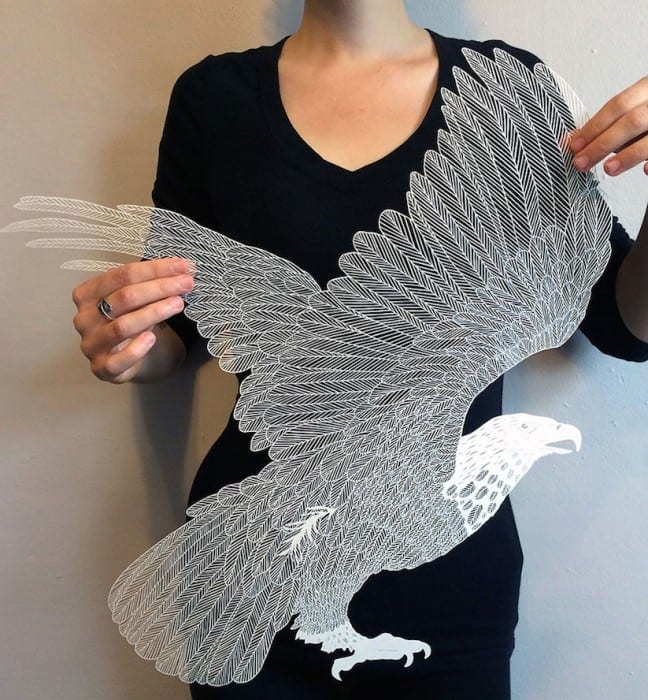
Buffalo also has a strong reputation for craft and community-based making. Local makers often work with paper, metal, wood, textiles, and found materials in ways that respond to the city’s weathered infrastructure and reuse culture. That is part of why an artist like Maude White, known for delicate hand-cut paper work, can be discussed in relation to Buffalo: the city provides a setting where precise handwork sits alongside larger industrial forms rather than in opposition to them.
Frequently Asked Questions
Is Buffalo the same as Buffalo-Niagara Falls?
No. Buffalo is the city; Buffalo-Niagara Falls is the larger metropolitan area built around Buffalo and nearby cities and towns, including Niagara Falls. The metro area reflects the regional economy and commuting patterns, while Buffalo itself is the central city and county seat.
What is Buffalo best known for visually?
Buffalo is best known for its grain elevators, industrial waterfronts, masonry neighborhoods, and major civic and park architecture. The city also has a strong winter atmosphere, with snow and lake weather shaping how its streets and buildings feel. That combination gives Buffalo a distinctive visual identity rooted in infrastructure and climate.
Why does Buffalo come up in discussions of art and design?
Buffalo comes up because it has a long history of making, building, and reusing space. Its industrial buildings, affordable studios, and active craft communities make it relevant to artists, designers, and makers. The city’s material legacy gives context to work that values handwork, texture, and the visible trace of process.
At a glance
- Address
- Erie County, United States
- Coordinates
- 42.904724, -78.84944
Articles mentioning Buffalo, New York