Carrie Fisher was an American actor, writer, and performer whose public image fused screen fame with sharp, self-mocking writing about addiction, mental health, and celebrity. She became internationally known for playing Princess Leia in the original Star Wars trilogy, then built a second career from novels, screenplays, memoir, and stage work that turned private damage into public form.
- Best known for Princess Leia, one of cinema’s most recognisable heroines.
- Wrote fiction, memoir, screenplays, and a one-woman stage show.
- Made celebrity material into candid, often comic self-portraiture.
- Her work helped define a modern kind of cross-media author-performer.
Why did Carrie Fisher matter beyond Star Wars?
Fisher mattered because she was never only a franchise actor. Her writing gave her a second identity as an author who described Hollywood with uncommon bluntness, especially in Postcards from the Edge, a novel drawn from her own experience and later adapted into a screenplay by Fisher herself. That ability to move between performance and authorship made her unusually visible across film, publishing, and theatre.
She also became an emblem for a particular public honesty. Fisher spoke openly about bipolar disorder, addiction, and the pressures of fame, but she did so without turning herself into a cautionary tale. Her voice was clipped, funny, and unsentimental, which made the confessional mode feel crafted rather than merely exposed.
What did she actually make?
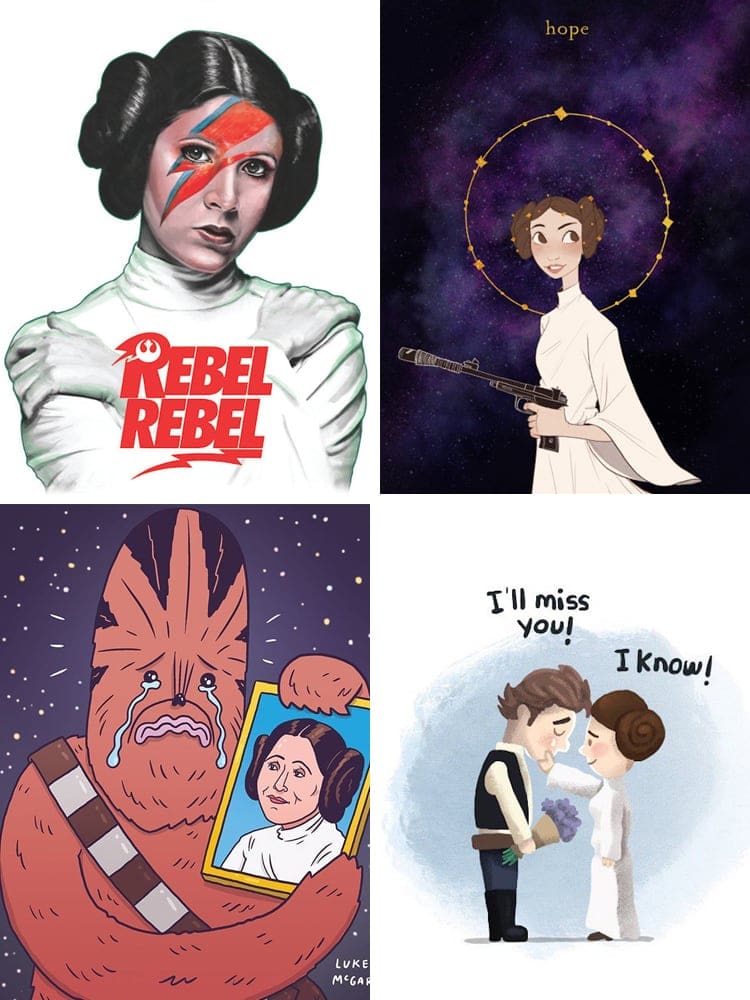
Fisher’s best-known screen role was Princess Leia, first seen in 1977. The costume became iconic, but her contribution was not only visual. She gave Leia a dry authority that helped the character stand apart from the more archetypal heroic women of the period. In later years, that image was endlessly reproduced in posters, fan art, tribute prints, and merchandise, making Fisher’s face and posture part of the visual language of science fiction itself.
Her printed work is just as important. Postcards from the Edge and Wishful Drinking both use comedy, compression, and self-revision as tools of narration. Wishful Drinking began as a one-woman play and became a book, showing how Fisher treated stage performance, literary prose, and direct address as interchangeable forms. She also wrote screenplays and revisions for other films, including uncredited script work that reflected how often her skills were used behind the scenes.
How is Carrie Fisher remembered in visual culture?
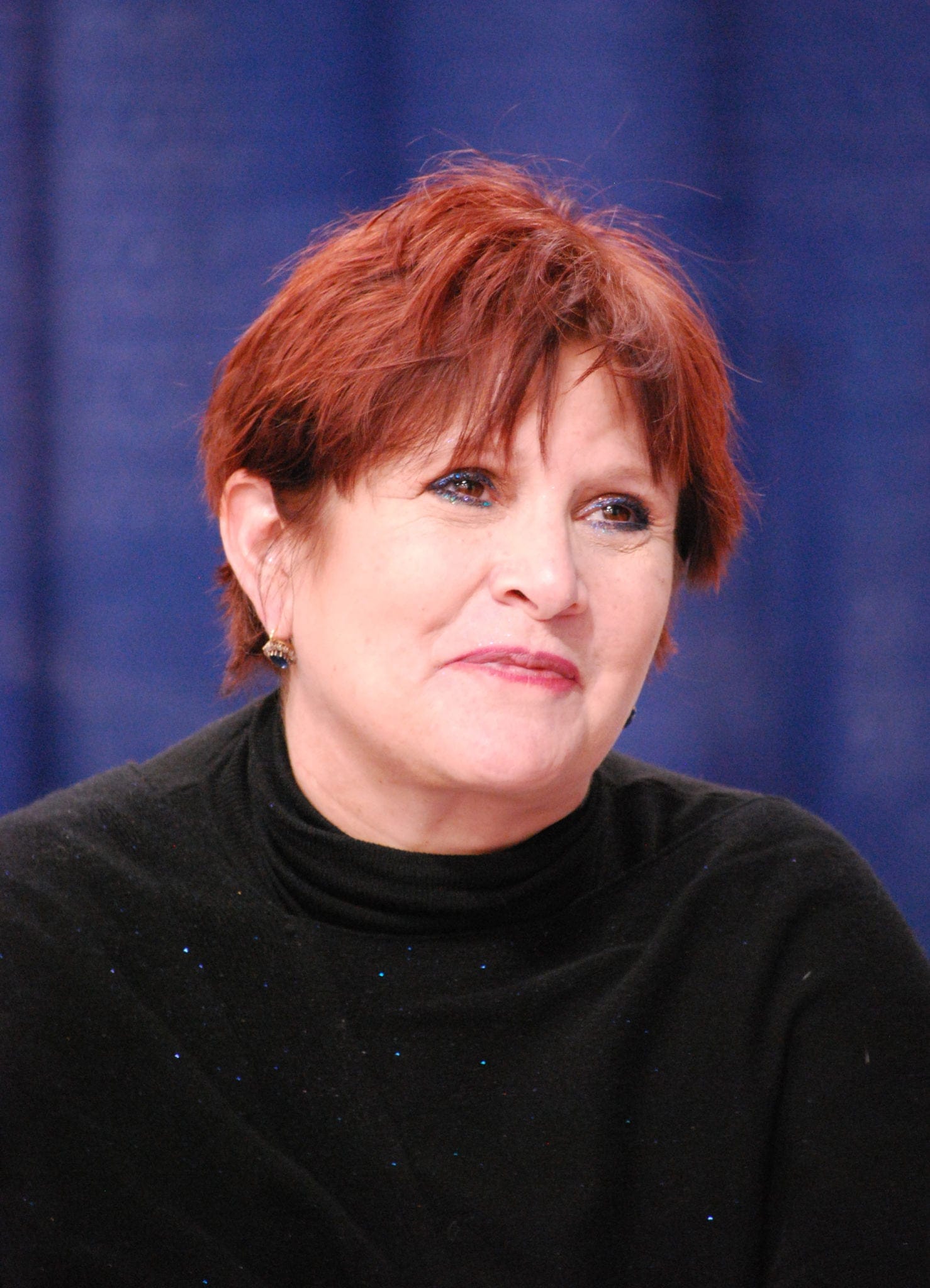
Fisher’s image circulates in two distinct ways. One is the polished, canonical version: Leia in white, in costume, fixed as a symbol of resistance, leadership, and fandom. The other is the self-aware Fisher of interviews, memoir covers, and tribute art, where the emphasis falls on expression, wit, and the gap between persona and person. Both survive because her public identity was built from images as much as from text.
Designers and artists keep returning to her because she sits at the intersection of pop mythology and private candour. A tribute portrait of Fisher often borrows the iconography of Leia while adding the sagging posture, cigarette, or wry expression that signals lived experience. That tension gives her afterlife a distinct look: reverent, but not solemn.
What kind of figure was she in practice?
In practice, Fisher worked as a hybrid maker. She was a studio actor, but also a writer who shaped dialogue, structure, and tone. She was a public personality, but also someone who turned that personality into material for books and stage performances. Few contemporary figures moved so easily between blockbuster image-making and intimate literary self-portrait.
That mix matters because it broadened what a celebrity author could be. Fisher showed that autobiography did not have to be solemn, and that genre fame did not exclude critical intelligence or craft. Her work remains useful to designers, writers, and artists because it demonstrates how a single persona can be translated into costumes, covers, posters, stage lighting, and printed pages without losing its edge.
Frequently Asked Questions
Was Carrie Fisher mainly an actor or a writer?
She was both, and the balance changed over time. She became famous as an actor, but her writing gave her lasting cultural range and a different kind of authority. Many readers and viewers know her first through Star Wars, then discover that her prose is as recognisable as her performance.
What is Postcards from the Edge about?
Postcards from the Edge is a semi-autobiographical novel about addiction, recovery, and a difficult mother-daughter relationship inside Hollywood. Fisher adapted it into a screenplay, which reinforced her position as a writer who could convert lived experience into tightly controlled narrative. Its tone is sharp, funny, and unafraid of embarrassment.
Why do so many tributes to Fisher use Leia’s image?
Leia is the most widely known version of Fisher in visual culture, so tributes often start there. The costume instantly communicates recognition, while the expression and pose can be adjusted to stress strength, irony, or loss. That makes Leia a flexible template for memorial design, fan art, and editorial illustration.
Articles mentioning Carrie Fisher