Charlize Theron is a South African actor and former fashion model known for moving between studio blockbusters, independent films, and high-fashion image making. She became internationally familiar in the late 1990s and later built a career that combines screen performance, luxury-brand campaigns, and visible public advocacy.
| Field | Actor, model, producer |
|---|---|
| Born | Benoni, South Africa, 1975 |
| Known for | Film roles ranging from thrillers and dramas to action films; long-running work in fashion and beauty imagery |
| Early breakthrough | The Devil’s Advocate, Mighty Joe Young, The Cider House Rules |
| Associated with | Editorial fashion photography, Dior campaigns, Hollywood leading roles |
How she became a public figure
Theron first entered the public eye as a model before turning to acting. That shift mattered because her career was built through image as much as through performance: she was introduced to audiences through faces, styling, and the controlled drama of publicity photography, then expanded into roles that gave that image more range and force.
Her early screen work established her as more than a decorative presence. Films such as The Devil’s Advocate, Mighty Joe Young, and The Cider House Rules placed her in mainstream circulation, and by the early 2000s she was being cast as a lead rather than as a supporting beauty.
Why does Charlize Theron matter in fashion and film?
Theron matters because she has been a durable bridge between cinema and fashion imagery. In editorial and advertising contexts, she reads as polished, modern, and severe in a way that suits luxury brands; on screen, she often uses that same clarity of presentation to complicate the roles she plays. That combination makes her useful to photographers and directors who want a subject with instant recognisability and disciplined expressiveness.
She is also important as a South African performer who built a global career without becoming fixed to one register. Her work helped normalise the idea that a model-turned-actor could become a serious dramatic lead, action star, and fashion icon without those identities cancelling each other out.
What does her public image look like in practice?
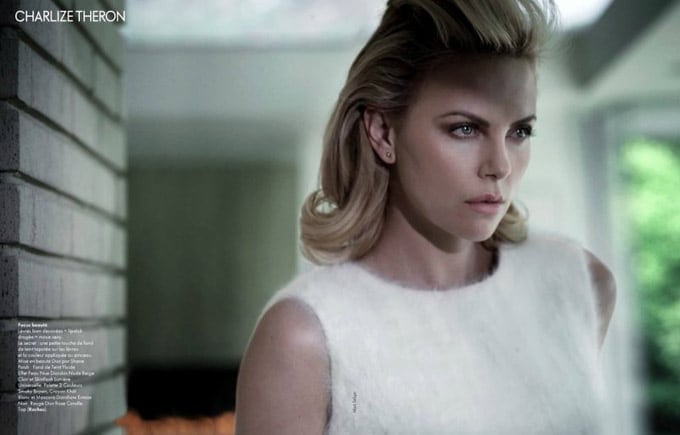
Theron’s image is usually built through contrast: severity and glamour, restraint and force, tailoring and exposure. In fashion photography, that often means clean lines, strong shoulders, pared-back colour palettes, and a face used as the main graphic element. In moving-image work, the same qualities can be redirected into toughness, wit, or volatility.
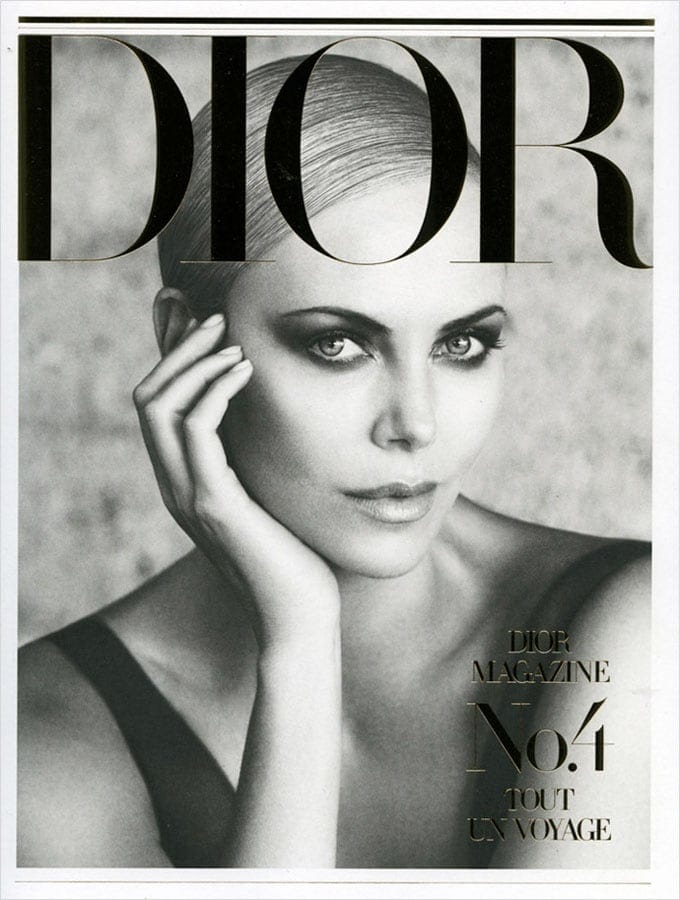
Her association with Dior reinforced this high-contrast visual language. Luxury beauty campaigns often depend on exact control of lighting, skin finish, gesture, and framing, and Theron fits that system well because her face reads clearly under stylised conditions. That has made her one of the more recognisable examples of a celebrity whose commercial image is inseparable from her acting identity.
What kinds of roles define her career?
Theron has worked across genres, but several patterns recur: dramatic roles with emotional pressure, glamorous roles that depend on composure, and physically demanding action parts. This range has helped separate her from the narrow casting often imposed on former models. It also explains why photographers continue to use her in editorial contexts: she can project character with very little movement.
Her career has also included producing, which gives her more control over what gets made and how women are represented in popular film. That practical involvement matters in a field where actresses are often treated as only the final face of a project rather than as a maker with influence over scripts, packaging, and casting.
Frequently Asked Questions
Is Charlize Theron mainly known as an actor or a model?
She is mainly known as an actor, but her model background remains central to how she is presented in magazines and campaigns. The fashion industry continues to treat her as someone who can carry a luxury image with precision, while film has given her longer-lasting cultural visibility.
Why do fashion magazines use her so often?
She photographs with strong structure in the face and body, which makes her useful in tightly controlled editorial work. She can project elegance, distance, and intensity without heavy performance, which suits luxury fashion photography and beauty advertising.
What makes her different from other celebrity cover subjects?
Theron brings both screen authority and editorial credibility. Many celebrities are famous enough for covers, but fewer have a career that already depends on image discipline, making them especially effective in fashion contexts.
Articles mentioning Charlize Theron