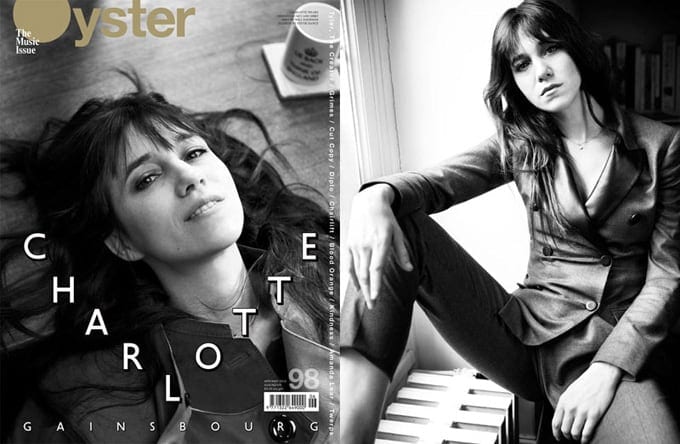
Charlotte Gainsbourg is an Anglo-French actress and singer whose work moves between art cinema, pop songwriting, and a public image shaped by both French and British cultural life. Born in London in 1971, she began recording as a teenager, then built a second music career in adulthood alongside a long filmography that includes collaborations with Lars von Trier and other directors known for demanding, visually exacting work. She is one of the few contemporary figures to be recognized at the same level in both film and music, with major awards in each field.
- Born in London in 1971 to the singer-actress Jane Birkin and the musician Serge Gainsbourg.
- First recorded with her father as a teenager, then returned to music decades later with adult solo albums.
- Known on screen for restrained, psychologically intense performances in European art films.
- Worked repeatedly with Lars von Trier, whose films often require controlled, physically demanding acting.
- Won major honours including a César Award and the Cannes Film Festival Best Actress Award.
How did Charlotte Gainsbourg become known?
Gainsbourg entered public life through family name and collaboration before she had a fully separate career of her own. Her father, Serge Gainsbourg, was a major French songwriter; her mother, Jane Birkin, was an actor and singer. Their duet album Lemon Incest made her visible as a teenager, but it did not yet establish the adult voice that later defined her music.
That separation mattered. For years she was better known as a figure in the cultural orbit of her parents than as a self-contained artist. When she returned to music in adulthood, the work sounded markedly different: softer, more intimate, and shaped by producers and collaborators who treated her voice as a fragile instrument rather than a star turn.
What kind of music does she make?
Gainsbourg’s recordings are often built from understatement. Her singing is light, slightly hushed, and close-miked, which gives songs a confessional tone even when the writing is sparse or electronically arranged. Her adult albums, especially 5:55, IRM, and Rest, combine French and English lyrics, minimalist pop structures, and atmospheric production.
Her music matters because it resists the polished vocal performance expected of mainstream pop. Instead of projecting power, it uses softness, hesitation, and clear diction to create emotional weight. That approach also fits the visual culture around her records: monochrome photography, clean typography, and imagery that often feels modern, severe, and a little exposed.
How did her film career shape her image?
Gainsbourg’s screen work gave her a parallel identity as an actress of controlled intensity. She has appeared in French and international productions, but her most discussed roles come from films that ask for discomfort, vulnerability, or emotional risk. Lars von Trier used her in several projects, including Antichrist, Melancholia, and Nymphomaniac, where her performances became part of the films’ stark visual and psychological design.
That association shaped how audiences read her presence off-screen as well. She often appears in photography and film publicity with minimal styling, subdued makeup, and precise tailoring. The effect is not blankness but discipline: a look that matches work built from restraint rather than display. Awards such as the César and the Cannes Best Actress prize confirmed that this was not simply inherited fame, but a serious acting career on its own terms.
Why does Charlotte Gainsbourg matter in visual culture?
Gainsbourg matters because she sits at the point where celebrity, authorship, and image-making meet. She is both a legacy figure and a maker in her own right, which makes her useful to photographers, stylists, album designers, and film directors who want a subject with cultural history already attached. Her face and voice carry a recognisable tension: elegance without polish, fame without loud self-promotion.
In practice, that makes her a recurring reference in fashion and editorial contexts. She works well in black-and-white portraiture, severe tailoring, and images that depend on mood rather than glamour. She also exemplifies a European mode of stardom in which music, cinema, and personal style reinforce one another instead of remaining separate industries.
Frequently Asked Questions
Is Charlotte Gainsbourg mainly a singer or an actor?
She is both, and neither role fully explains her public reputation on its own. Her early fame came from music, but her adult music career arrived later, after she had already established herself as an actor. Many people know her equally for her films and her records.
What makes her singing style distinctive?
Her voice is quiet, intimate, and often emotionally exposed rather than forceful. Producers have often arranged songs around that fragility, using sparse instrumentation or cool electronic textures. The result is a style that sounds deliberate and personal rather than broadly commercial.
Why is she so often linked to fashion photography?
Her look suits editorial image-making because it combines recognisable heritage with restraint. She photographs well in severe, minimal styling, and her public image avoids the overexplanation that can flatten a portrait. That gives photographers and art directors room to build atmosphere around her rather than against her.
Articles mentioning Charlotte Gainsbourg