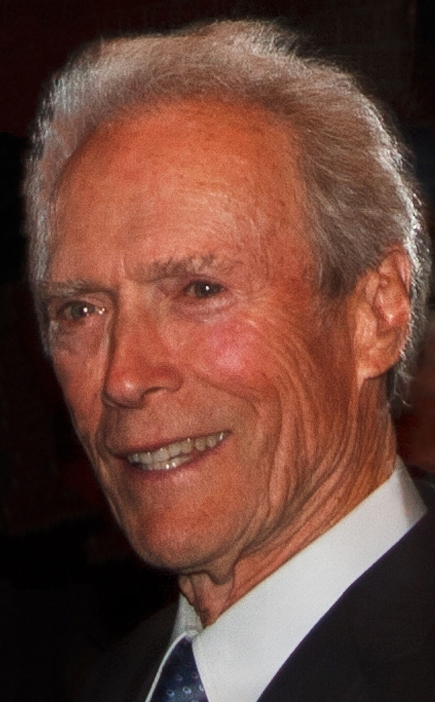
Clint Eastwood is an American actor, director, producer, and composer whose career moved from television westerns to some of the most commercially successful and recognisable films in postwar American cinema. He first became known on Rawhide, then turned into a global star through Sergio Leone’s spaghetti westerns and the Dirty Harry films. He later built a long directing career that made him a major figure behind the camera as well as in front of it.
- Born in 1930 in San Francisco, California.
- Broke out on television in Rawhide before becoming a film star.
- Defined two enduring screen personas: the silent gunslinger and the hard-edged cop.
- Directed and produced many of his own later films through Malpaso Productions.
- Also served as mayor of Carmel-by-the-Sea, California, in the 1980s.
How did Clint Eastwood become famous?
Eastwood’s rise began with television, where Rawhide gave him weekly visibility and a physically plain, controlled screen presence that fit the western genre. His career changed when Sergio Leone cast him in A Fistful of Dollars, For a Few Dollars More, and The Good, the Bad and the Ugly. Those films used close framing, long silences, and stylised violence to make Eastwood’s stillness feel magnetic rather than passive.
That western image followed him into the 1970s, when Dirty Harry turned him into a symbol of taciturn authority and hard reaction to crime. The role was controversial because it mixed audience pleasure, police power, and moral bluntness. It also made Eastwood one of the few actors whose persona became a cultural shorthand.
What does an Eastwood performance look like?
An Eastwood performance usually depends on economy. He uses few gestures, limited vocal inflection, and a fixed gaze that can suggest calculation, impatience, or exhaustion. On screen, that restraint gives directors room to shape tension around him, especially in genres that value silence, framing, and delayed action.
His best-known characters often carry weapons, but the performance is rarely about spectacle alone. In the westerns, costume, hat brim, dust, leather, and gun belt help build an image of rough simplicity. In the police thrillers, the blazer, badge, and revolver create a different kind of authority: modern, urban, and more openly aggressive.
Why does his directing matter?
Eastwood’s directing career matters because it showed that a star persona could be turned into a long-term filmmaking practice rather than a fixed brand. Through Malpaso Productions, he made films with relatively lean crews, efficient schedules, and a preference for clean coverage over showy camera movement. That practical method became part of his reputation as a director who valued speed and clarity.
His films as a director range across westerns, crime dramas, war films, and intimate character studies. Titles such as Unforgiven, Mystic River, Million Dollar Baby, and Gran Torino show an interest in guilt, ageing, violence, and damaged institutions. He often returns to worn surfaces, plain interiors, and everyday clothing rather than decorative excess, which makes the emotional pressure in the scenes feel direct and unadorned.
What is Eastwood’s place in American culture?
Eastwood occupies a rare position: he is both a star of genre cinema and a mainstream auteur. His image has been used to represent toughness, self-reliance, and an unsentimental version of American masculinity. At the same time, his films often complicate that image by showing loneliness, physical decline, grief, or the cost of violence.
He also moved into politics, serving as mayor of Carmel-by-the-Sea for one term in the 1980s. That public role reinforced the impression that his screen persona and public identity overlapped, even when his films were more ambivalent than his image suggested. For portrait photographers, that combination of recognisable face, weathered features, and long cultural memory makes him a highly legible subject.
Frequently Asked Questions
Is Clint Eastwood best known as an actor or a director?
He is widely known first as an actor, because the westerns and Dirty Harry films made his face and voice instantly recognisable. But his directing career is equally important in film history because it lasted for decades and produced some of his most acclaimed work. Many viewers know him for both, and the two sides of his career are hard to separate.
What made his screen persona so distinctive?
His persona relied on restraint: minimal speech, still posture, and a look that suggested control under pressure. This style worked especially well in westerns and crime films, where audiences often read silence as strength. It also made him easy to photograph, because a small shift in expression could carry a scene or an image.
Why do photographers often use Eastwood as a subject?
Photographers often use Eastwood because he brings with him a long visual history. His features, clothing, and posture can instantly evoke film genres, American masculinity, ageing, and celebrity longevity. That makes even a straightforward portrait feel loaded with references, which is useful in editorial photography.
Articles mentioning Clint Eastwood