
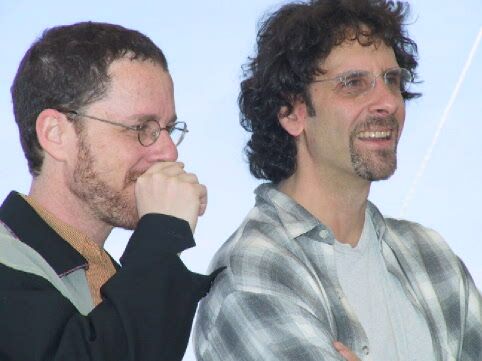
The Coen brothers are Joel Coen and Ethan Coen, American filmmakers known for writing, directing, and producing films together with a distinctive mix of deadpan comedy, crime plots, and exacting visual style. Working as a pair since the 1980s, they built a body of work that ranges from low-budget noir to period westerns and literary adaptations.
| Essential fact | Details |
|---|---|
| Members | Joel Coen, born 1954, and Ethan Coen, born 1957 |
| Origin | United States; they began collaborating after film school and early independent work |
| Known for | Writing, directing, and producing films together |
| Signature works | Blood Simple, Fargo, The Big Lebowski, O Brother, Where Art Thou?, No Country for Old Men, True Grit |
| Style | Carefully composed imagery, dry dialogue, moral absurdity, and genre filmmaking with sharp control of tone |
How did the Coen brothers work?
Their partnership is unusually tight for mainstream filmmaking. They wrote scripts together, shared story development, and usually shaped the film all the way through post-production, with one brother traditionally credited as director and the other as producer. That division has shifted over time, but their work has long been understood as a single authorship built from two closely aligned sensibilities.
That collaborative method gave their films a strong internal consistency. Dialogues sound precise and slightly off-kilter; violence can arrive suddenly; humour often comes from characters trapped by their own bad judgments. The films feel engineered, but not cold. Each scene tends to serve plot, rhythm, and visual setup at the same time.
What do their films look and feel like?
Coen brothers films are often easy to recognize by their framing and pacing. They favor strong geometric compositions, clear spatial relationships, and a controlled use of colour and texture. Interiors can feel cramped and fussy, while exteriors often carry a dry, regional specificity: snowy Minnesota streets, dusty Texas roads, or sun-bleached western landscapes.
They also borrow freely from genre cinema. Blood Simple uses noir; Fargo blends crime film with dark comedy and a regional portrait of the Upper Midwest; No Country for Old Men strips the thriller down to pursuit and consequence. Even when the plots are varied, the visual logic stays steady: strong design, careful blocking, and a camera that observes rather than performs.
Why do they matter?
The Coen brothers became important because they proved that highly stylized filmmaking could still reach a wide audience. Their films move between art-house precision and popular genre forms without treating either as secondary. They can make a robbery story, a courtroom drama, or a folk-music comedy feel formally exact and still broadly accessible.
They also helped define a particular mode of American irony in contemporary cinema. Their characters are often desperate, self-deluding, or unlucky, but the films do not mock them from a distance. Instead, they arrange situations so that incompetence, violence, and fate collide with comic timing. That balance has influenced many later directors working in crime, indie comedy, and revisionist westerns.
What kind of craft sits behind the style?
Although the brothers are usually discussed as writers and directors, their films depend heavily on production design, sound, editing, and music. They work with recurring collaborators who help create the lived-in look of their worlds: modest interiors, period-specific objects, and landscapes that feel grounded rather than ornamental. The design choices support the storytelling instead of advertising themselves.
Their films also show close attention to how a story is built in edits. Repetition, abrupt reversals, and long stretches of mounting tension depend on controlled cutting and rhythm. Even the funniest scenes often turn on timing rather than punchlines. That technical discipline is a major part of why their work feels so polished, even when the characters are falling apart.
Frequently Asked Questions
Are the Coen brothers still making films together?
They have worked together for most of their careers, but their collaboration has changed in recent years. Joel Coen made The Tragedy of Macbeth without Ethan, and Ethan later began directing solo projects as well. Their earlier films remain the core of what people usually mean by the Coen brothers.
Why are they often discussed as a single creative voice?
They write and shape their films so closely that their work has a unified signature. The scripts, visual decisions, and tonal control align so tightly that critics and audiences often treat them as one authorial presence. That does not erase the division of labour; it reflects how intertwined the collaboration has been.
Which film is the best starting point?
Fargo is often the easiest entry point because it balances crime, comedy, and plainspoken regional detail. The Big Lebowski shows their comic side, while No Country for Old Men reveals their severe, stripped-down approach to suspense. Any of those films gives a clear sense of how they build mood, character, and structure.