Donatella Versace is an Italian fashion designer and the chief creative force behind Versace after the death of her brother, Gianni Versace. Born in 1954, she helped turn the family label into a global luxury brand known for glamour, sharp tailoring, and a highly recognisable visual identity. Her name is tied not only to clothing but to the broader culture of fashion branding, celebrity dressing, and high-end collaboration.
| Born | 2 May 1954 |
|---|---|
| Nationality | Italian |
| Known for | Fashion design, brand direction, luxury image-making |
| Role at Versace | Vice-President and chief designer |
| Associated brand | Versace |
How did Donatella Versace come to shape the brand?
Donatella grew up in Reggio Calabria, where her family ran a modest dressmaking business before Versace became an international label. She did not enter fashion as a detached outsider. She came to it through family, fitting, styling, promotion, and the practical work of helping a designer translate ideas into an image that could travel beyond the runway.
When Gianni Versace founded the house in 1978, Donatella became one of his closest collaborators and public faces. After his murder in 1997, she took on a central creative role and helped keep the company visible at a moment when the brand could easily have lost direction. That continuity matters: fashion houses often survive by preserving a recognisable design language while changing hands. Donatella became the person responsible for that balance at Versace.
What does Donatella Versace’s style look like?
Donatella’s work is associated with high-gloss luxury: body-conscious silhouettes, bold colour, metallic surfaces, printed silk, black leather, and a strong use of the Medusa emblem and baroque ornament. Versace under her direction has often favoured visible confidence over understatement. The clothes are designed to be seen from across a room, photographed under flash, and remembered in a single glance.
That visual approach extends beyond garments. Donatella has shaped the brand through runway staging, campaign imagery, and collaborations that place Versace inside pop culture as much as in fashion retail. She understands luxury as a total presentation: cut, surface, casting, accessories, and attitude all carry the same message. For FreeYork’s readers, that makes her relevant not only as a designer but as a maker of a complete visual system.
Why does she matter in fashion history?
Donatella Versace matters because she helped define how a luxury house could survive the death of its founder without becoming anonymous. Some brands become more conservative after a transition; Versace remained theatrical, sensual, and recognisable. Her tenure shows how inheritance in fashion is not only legal or financial. It is also technical and visual, involving pattern, materials, presentation, and the disciplined repetition of a signature style.
She also became one of the most visible women leading a major global fashion house in the late 20th and early 21st centuries. That visibility had consequences beyond sales. It made her part of the public performance of fashion itself, where a designer’s image can become inseparable from the brand’s identity. In Donatella’s case, platinum hair, dark sunglasses, and a controlled, glamorous persona became part of the Versace language.
How is Donatella Versace connected to fashion objects and collaborations?
Versace has often worked through objects as much as through clothing, and Donatella’s era kept that strategy active. The house expanded its reach into accessories, home goods, and celebrity-driven projects, where the same design cues could be applied to a bottle, a chair, a print, or a dress. This matters in design history because it shows luxury brands operating as systems of style rather than single-product makers.
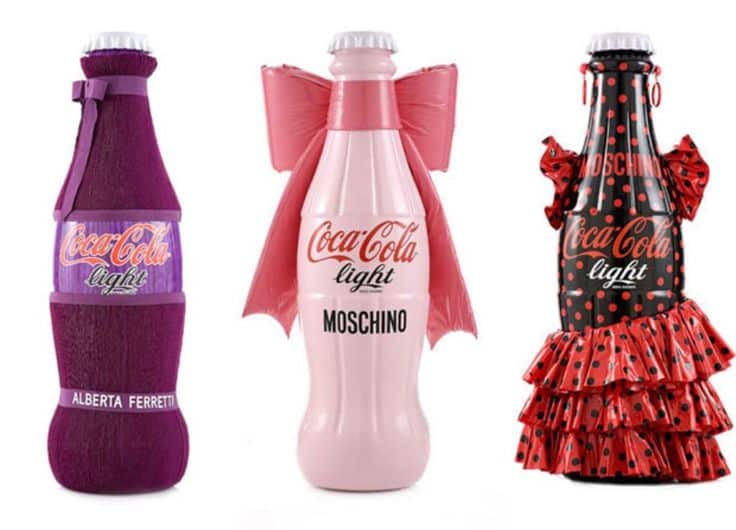
Her name also appears in collaborations outside the runway, including mass-market design tie-ins and promotional objects. A fashion designer lending a visual identity to something like a Coca-Cola bottle changes the object’s meaning immediately: the bottle becomes a branded collectible as well as a container. That kind of crossover depends on a designer with a strong signature and a house willing to export it into everyday formats.
Frequently Asked Questions
Is Donatella Versace the founder of Versace?
No. Gianni Versace founded the company in 1978, and Donatella worked closely with him before taking a larger leadership role after his death. Her importance lies in sustaining and reshaping the house rather than starting it. She became the designer most associated with its later identity.
What is Donatella Versace known for designing?
She is known for glamorous, body-skimming fashion with strong colours, prints, and metallic finishes. She also oversees the wider Versace image, which includes accessories, campaigns, and collaborations. The work is as much about visual impact and brand recognition as it is about individual garments.
Why is Donatella Versace important to design culture?
She shows how a designer can turn a fashion house into a complete visual language. Her influence reaches into clothing, branding, celebrity culture, and product collaboration. That makes her a useful figure for understanding how luxury design circulates across different kinds of objects.
Articles mentioning Donatella Versace