
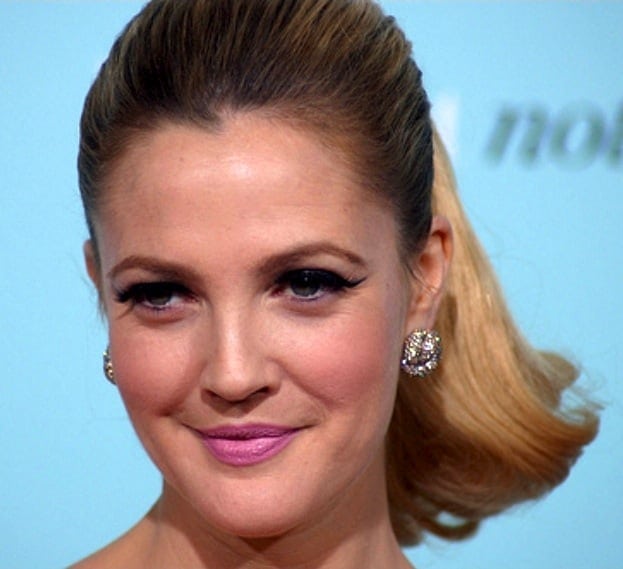
Drew Barrymore is an American actor, producer, director, and screenwriter whose career began in infancy and has moved across child stardom, mainstream film, television, and brand-led lifestyle work. She became famous as a child actor in the early 1980s, then rebuilt her career as an adult through romantic comedies, production, and hosting. Barrymore also belongs to the Barrymore acting family, which gives her public image a strong link to American screen and stage history.
- Born in 1975 in California into the Barrymore acting family.
- Started working before age one, first in advertising and then in film.
- Broke out worldwide with E.T. the Extra-Terrestrial in 1982.
- Later became a producer and co-founded Flower Films.
- Her image often mixes nostalgia, polished femininity, and informal warmth.
How did Drew Barrymore become famous?
Barrymore became famous unusually early. She appeared in an advertisement at 11 months old and made her film debut in Altered States in 1980. Her breakthrough came with Steven Spielberg’s E.T. the Extra-Terrestrial, where her performance made her one of the most recognisable child actors of the decade.
That early fame shaped the rest of her public life. Unlike many child stars who disappear, Barrymore remained visible through adolescence and adulthood, even as her career changed direction. Her story is often used to illustrate both the opportunities and pressures of growing up in public.
What kind of work has she done?
Barrymore has worked across acting, directing, producing, writing, and modelling. As an actor, she became closely associated with accessible mainstream films, especially romantic comedies such as The Wedding Singer, Never Been Kissed, and 50 First Dates. As a producer, she helped build projects through Flower Films, the company she co-founded, which gave her more control over the kinds of stories and images attached to her name.
She has also worked in television and lifestyle media, most visibly as host of The Drew Barrymore Show. That role extends her public persona beyond performance into a conversational, domestic, and retail-friendly image. In practice, this means her name is often attached to beauty, home, and fashion campaigns as much as to films.
Why does Drew Barrymore matter in visual culture?
Barrymore matters because her image has been unusually flexible for a star so closely associated with childhood fame. She has moved from child innocence to adult charisma without losing public recognition, and that makes her a useful reference point for fashion, advertising, and celebrity branding. Brands often use her to signal familiarity, softness, and a kind of approachable glamour rather than severe prestige.
Her visual identity tends to rely on candid-looking smiles, warm color palettes, relaxed styling, and an unforced presentation of personality. That is part of why she works well in campaigns: she can look like a movie star, a host, a founder, or a neighbourly friend depending on the context. The effect is carefully managed, even when it appears casual.
What does her public image look like in practice?
Barrymore’s public image often blends old-Hollywood inheritance with contemporary marketability. Because she comes from the Barrymore family, her name carries cultural weight, but her own career has depended on a more approachable and less formal style. In photographs, interviews, and advertisements, she is frequently presented with bright expression, loose hair, and clothing that suggests comfort rather than distance.
That look has made her a strong fit for retail campaigns and lifestyle branding, including fashion partnerships such as her work with Neiman Marcus. The visual formula is consistent: recognisable fame, softened edges, and a sense of ease that feels intentionally unguarded. In a media landscape that often rewards polish or irony, Barrymore’s image is built around warmth and directness.
Frequently Asked Questions
Is Drew Barrymore mainly known as an actor?
She is best known as an actor, but that is only part of her career. Barrymore has also produced films, directed, written, and hosted television. Those roles matter because they show how her name functions as both a performance credit and a brand.
Why is her family name important?
The Barrymore name links her to a long American acting lineage, including stage and film history. That connection gives her fame a hereditary dimension that audiences often notice immediately. It also makes her a bridge between classical celebrity dynasties and modern entertainment branding.
Why do fashion and beauty brands use her so often?
Barrymore projects familiarity, optimism, and a softened kind of glamour. Those qualities suit campaigns that want to feel approachable rather than distant or elite. Her image can carry nostalgia and freshness at the same time, which is valuable in retail and lifestyle media.