
Durban is South Africa’s largest city in KwaZulu-Natal and the country’s busiest port, a coastal metropolis built around a warm Indian Ocean shoreline. Known in Zulu as eThekwini, the name refers to a bay or lagoon, which fits the city’s geography: a sheltered harbour, long beaches, and a humid subtropical climate have shaped its growth, economy, and image.
Stories from Durban
3 stories
About Durban
- Major port city on South Africa’s east coast
- Part of the eThekwini metropolitan municipality
- Important centre for trade, shipping, and tourism
- Known for surf, beaches, and warm weather
- Often used as a setting for work tied to the ocean and coastal life
Read the full overviewWhy does Durban matter?, What does Durban look like?, How has the city influenced visual culture?, Frequently Asked Questions
Why does Durban matter?
Durban matters because it is a working port as much as a leisure city. Cargo ships, container terminals, and dock infrastructure define its economy, while its beaches and mild winters draw visitors and shape the city’s public identity. That combination makes Durban a place where industry and recreation sit side by side rather than in separate districts.
The city also matters in South African urban history. Its scale, coastal position, and colonial-era development made it a key node in trade between southern Africa and the Indian Ocean world. Today, the city’s economy still depends heavily on logistics, shipping, manufacturing, and tourism, all of which leave visible marks in the built environment.
What does Durban look like?
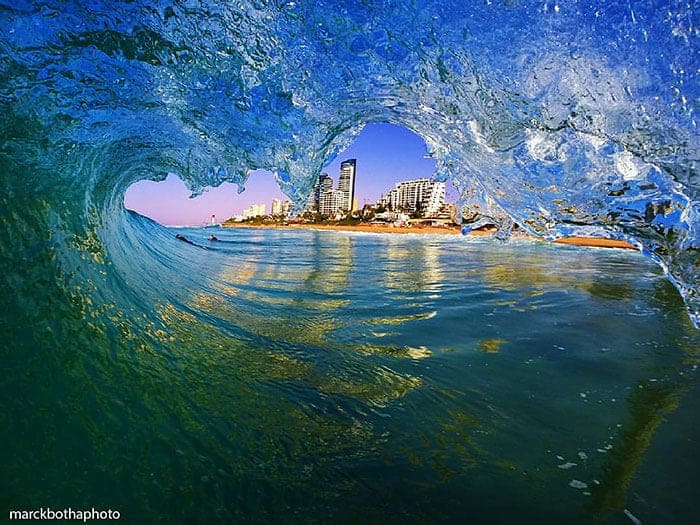
Durban has a layered urban form: a dense central business district, port infrastructure, beachfront promenades, and suburbs spreading inland and along the coast. The city’s best-known public edge is the Golden Mile, a long strip of beach-fronted urban space with hotels, apartment blocks, surf breaks, and leisure facilities. In the harbour area, the mood changes sharply to cranes, container stacks, and industrial water fronts.
The climate affects the city’s look and use. Warm, humid conditions support subtropical planting and encourage an outdoor urban life that is visible on beaches, in markets, and along promenades. The sea is rarely a distant backdrop in Durban; it is part of daily movement, work, and recreation.
How has the city influenced visual culture?
Durban appears often in photography, film, and design because it offers strong contrasts: calm surf and violent weather, leisure architecture and industrial machinery, sea-level horizons and tightly packed urban streets. Artists and photographers use those contrasts to stage scenes about motion, labour, race, class, and the South African coast. The city’s port and shoreline make it especially useful for work that depends on rhythm, repetition, and scale.
In practical terms, Durban offers subjects that are hard to separate from process. Waves break against seawalls and harbour piers; ships enter and leave the port on a schedule; beach infrastructure gets repaired, repainted, and weathered by salt air. For image-makers, that gives the city a visual texture built from tide, erosion, transport, and dense human use.
Frequently Asked Questions
Is Durban just a beach city?
No. Durban has a strong beach identity, but its importance comes equally from its port, logistics network, and industrial base. Tourism is visible and influential, yet the city functions first as a major commercial and transport hub.
What does eThekwini mean?
eThekwini is the Zulu name associated with Durban and the surrounding metropolitan municipality. It is commonly glossed as “bay” or “lagoon,” a reference to the sheltered coastal geography that helped shape the city’s development.
Why do artists and photographers use Durban as a subject?
Durban gives artists clear visual contrasts: oceanfront leisure, shipping infrastructure, intense weather, and a diverse urban population. Those elements produce strong images without needing heavy staging. The city also carries political and economic histories that add weight to documentary and editorial work.