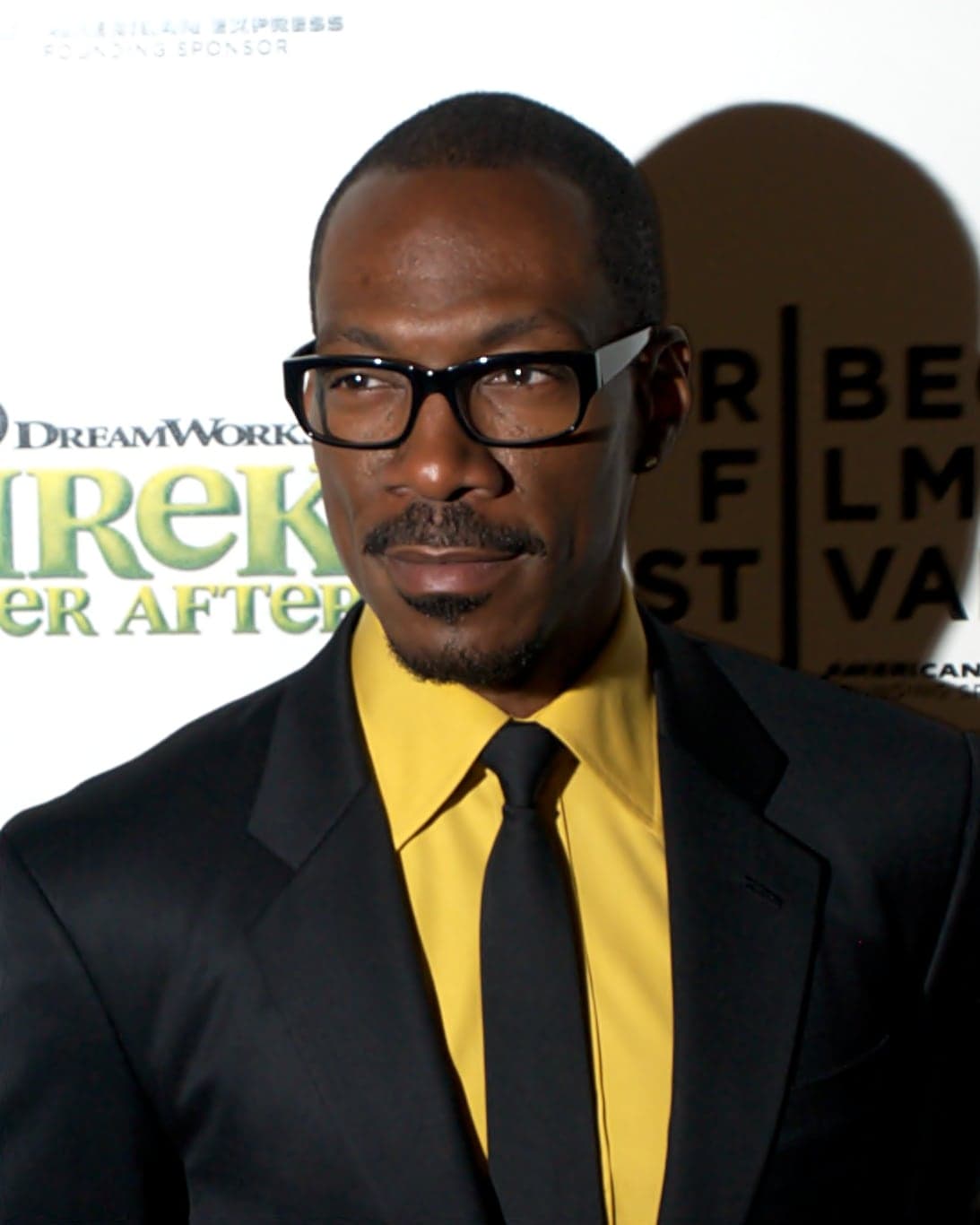
Eddie Murphy is an American comedian, actor, writer, singer, and director whose stand-up and film work helped define mainstream comedy from the 1980s onward.
| Born | April 3, 1961, in Brooklyn, New York |
|---|---|
| Known for | Stand-up comedy, Saturday Night Live, film comedy, voice acting, and musical performance |
| Breakthrough | National exposure on Saturday Night Live in the early 1980s |
| Notable strength | Character-based performance, vocal impersonation, and fast, physical comic timing |
How did Eddie Murphy become famous?
Murphy first reached a wide audience as a teenager in New York club comedy, where he developed the self-assured stage presence that later became his trademark. He joined Saturday Night Live in 1980, at a time when the show needed new energy, and quickly became one of its main draws. His characters such as Buckwheat, Gumby, and Mister Robinson showed how he could build comedy around voice, gesture, and abrupt shifts in attitude.
That television exposure led directly to film. 48 Hrs. and Trading Places established him as a leading screen comic, and Beverly Hills Cop made him one of the biggest box-office stars in the United States. Murphy’s early fame came from speed and range: he could play streetwise, polished, loud, vulnerable, and absurd without losing control of the performance.
What makes his comedy style distinctive?
Murphy’s best-known work depends on character invention. He does not simply tell jokes; he creates people who talk, posture, and collide with one another. In stand-up specials such as Delirious and Raw, he used storytelling, exaggeration, and taboo material to push the audience toward discomfort and laughter at the same time. The performances are physical and vocal, with abrupt changes in pitch and rhythm that make even simple lines feel animated.
That same approach carries into his film roles. In The Nutty Professor, he played multiple members of one family, using makeup, costume, and voice to distinguish each character. In the Shrek films, his voice work as Donkey turned quick improvisation into a major animated performance. Murphy’s style matters because it connects stand-up, sketch comedy, live-action film, and voice acting as parts of one practice: building comic identity through performance craft.
Why does Eddie Murphy matter in American entertainment?
Murphy changed what a Black leading comedian could look like in commercial film and television. He moved from sketch comedy into studio features at a scale that few performers had managed before him, and that crossover opened space for later comedians to build careers across stand-up, TV, and film. His success also showed that comic charisma could carry action, fantasy, family films, and animation, not just explicit comedy.
He also helped widen the business model around comedy. A performer could sell stadium-level stand-up, headline studio movies, and record pop and R&B tracks without leaving the public eye. Murphy’s career has had uneven periods, but the overall shape is unusually durable: a teenage club comic becoming a television standout, then a movie star, then a recurring reference point for later generations of performers.
How has he worked as a performer over time?
Murphy’s career has moved in phases. The early years were defined by stand-up and rapid-fire fame; the mid-1980s to 1990s brought blockbuster films and a dominance in mainstream comedy; the later years included family films, voice roles, and periodic returns to adult-oriented performance. That pattern matters because it shows a performer adapting to changing studio economics and audience expectations without abandoning core skills.
He has also worked as a singer, recording singles that reached the charts and bringing music into his comic persona. His public image often blends confidence, coolness, and mischief, but the underlying technique is disciplined. Whether in a nightclub set, a studio comedy, or a voice role, Murphy relies on timing, character control, and a strong sense of how far to push a moment before pulling back.
Frequently Asked Questions
Was Eddie Murphy first known as a stand-up comedian or an actor?
He first built his reputation as a stand-up comedian and as a standout cast member on Saturday Night Live. Film success followed soon after, with early 1980s hits turning him into a major movie star. The stand-up foundation remained important even when acting became the larger part of his career.
What are Eddie Murphy’s most influential works?
Saturday Night Live, Delirious, Raw, Beverly Hills Cop, The Nutty Professor, and Shrek are among the most influential. Each shows a different part of his range: live performance, film stardom, character acting, and voice work. Together they explain why his career has mattered across several entertainment formats.
Why is Eddie Murphy important to comedy history?
Murphy helped define the modern comic superstar. He proved that a comedian could move from live performance to television to blockbuster film without losing a distinct personal style. His impact is visible in later performers who treat comedy as a cross-platform career built on voice, persona, and character work.
Articles mentioning Eddie Murphy