
Edgar Allan Poe was an American writer, editor, and critic whose poems and stories helped shape modern horror, detective fiction, and the short story. Born Edgar Poe in 1809, he wrote during the American Romantic period and became known for tightly built tales of dread, obsession, and mental collapse, along with formal, musical verse. His influence spread far beyond literature: visual artists, filmmakers, and designers still borrow from the atmosphere, symbolism, and puzzle logic of his work.
Stories from Edgar Allan Poe
1 story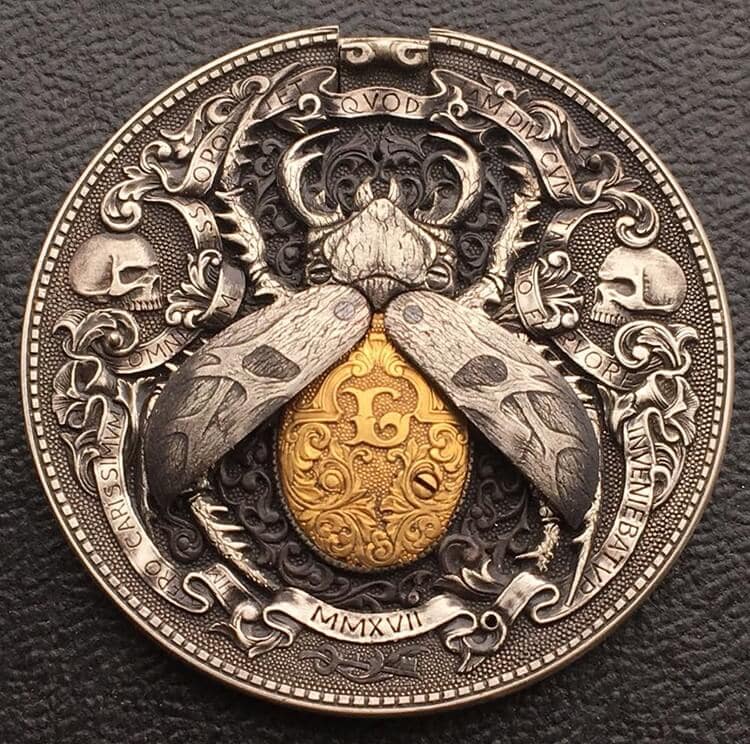
About Edgar Allan Poe
- He wrote poems, criticism, and prose fiction, but his best-known work is the short story.
- His stories often rely on first-person narration, enclosed settings, and a slow tightening of suspense.
- He helped establish detective fiction through stories such as The Murders in the Rue Morgue.
- His name is closely tied to Gothic imagery, premature burial, doubles, and psychological breakdown.
- His work continues to inspire illustration, engraving, film, and other visual forms that favor darkness and precision.
Read the full overviewWhat made Poe different?, How did he shape horror and detective fiction?, What does Poe look like in practice?, Why does Poe still matter?
What made Poe different?
Poe wrote with unusual control over pace, sound, and structure. Even when the subject is madness or decay, the prose often stays exact and rhythmic. That precision matters because his stories depend on atmosphere as much as plot: a room, a face, a sound in the wall, or a repeated gesture can carry the whole meaning of the piece.
He also treated short fiction as a crafted machine. Poe argued that a story should be read in one sitting and should produce a single emotional effect. That idea shaped later short-story writers and critics, and it remains one reason his work feels compact and engineered rather than loose or anecdotal.
How did he shape horror and detective fiction?
Poe’s horror does not rely only on monsters or violence. It often grows from unreliable perception, guilt, obsession, and the fear that the mind cannot be trusted. In stories such as The Tell-Tale Heart and The Fall of the House of Usher, the setting presses in on the characters until architecture, weather, and interior psychology seem to merge.
He is also central to the history of detective fiction. In the Dupin stories, especially The Murders in the Rue Morgue, a brilliant amateur solves a crime through observation, deduction, and attention to detail. That model later appears in Sherlock Holmes and much of modern crime fiction: the puzzle, the clues, the explaining narrator, and the final reconstruction of events all trace back to Poe’s method.
What does Poe look like in practice?
In practice, Poe’s writing is full of enclosed spaces, repeated sounds, and objects charged with symbolic weight. A heart beating under the floorboards, a raven on a bust, a house split by a crack, or a pit opening in darkness are not decorative details; they drive the story’s logic. His best-known poems and tales turn atmosphere into structure, so the reader experiences form as suspense.
That is why artists continue to adapt him visually. The dark page layouts, high-contrast illustrations, engravings, and chiaroscuro imagery often used with Poe mirror the way his fiction works: through contrast, pressure, and fine detail. Even a miniature object, such as an engraved coin, can echo his style if it uses dense texture, concealment, and the tension between surface beauty and hidden menace.
Why does Poe still matter?
Poe matters because he helped define how modern readers expect a narrative of fear or mystery to work. He made interior states visible, turned deduction into drama, and showed that short fiction could carry as much force as a novel. His influence runs through writers of genre fiction, but also through symbolist poetry, modern criticism, and visual culture that values mood and technical control.
His reputation has also been shaped by contradiction. He was a literary innovator and a harsh critic, a writer of elegant form and grotesque subject matter, a figure of American letters whose most durable themes feel strangely contemporary. The tension between intelligence and instability gives his work its lasting charge.
Frequently Asked Questions
Was Edgar Allan Poe mainly a horror writer?
Horror is the most familiar part of his legacy, but it is not the whole of it. Poe also wrote satire, criticism, and some of the most important early detective fiction in English. His work is better understood as a study of intensity, with horror as one of several forms that intensity takes.
Did Poe invent detective fiction?
He did not invent every part of the genre from nothing, but he is widely credited with creating its core structure. His Dupin stories established the model of the brilliant investigator, the baffling crime, and the rational explanation that follows. Later detective fiction built on that template.
Why do artists still use Poe’s imagery?
Poe offers a strong visual vocabulary: ravens, masks, crumbling houses, clocks, lamps, and sealed rooms. These images are easy to translate into engraving, illustration, theater design, and film because they combine clear shapes with psychological pressure. The result is work that looks ornate on the surface but feels uneasy underneath.