
Eduardo Kobra is a Brazilian muralist known for large-scale street paintings that combine photorealistic portraiture with bright geometric patterning. He became widely recognized for turning public walls into vivid, highly legible images of cultural figures, historical scenes, and social messages, often using spray paint and acrylic to cover entire building facades.
Eduardo Kobra’s work on FreeYork
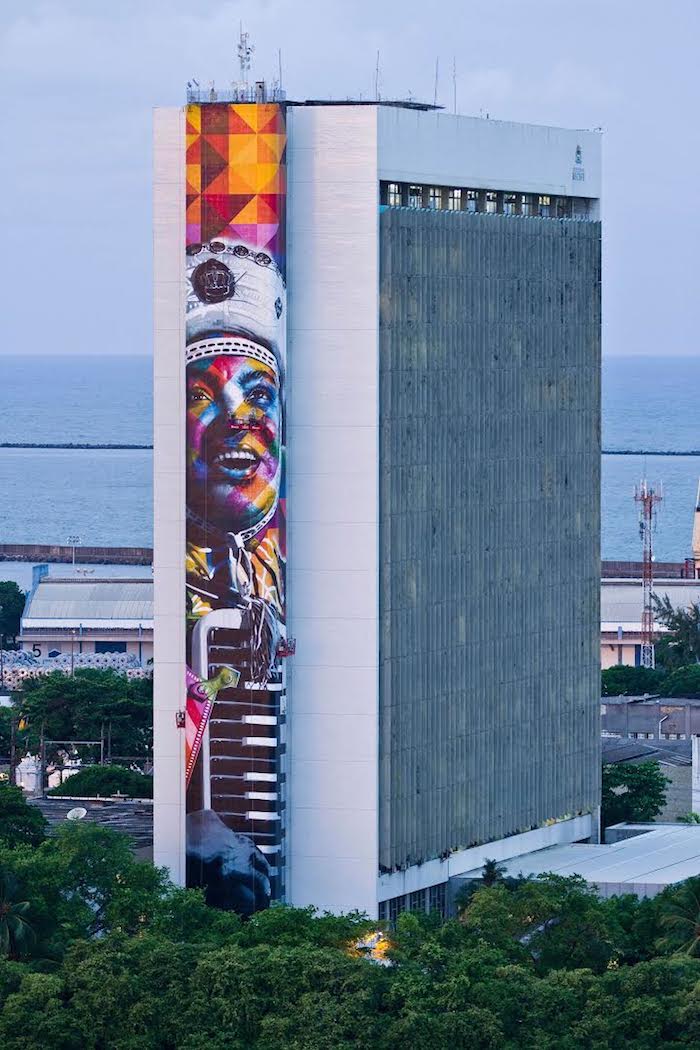 New Mural by Eduardo Kobra in Recife, Brazil
 New Colorful Mural of Basquiat and Andy Warhol by Eduardo Kobra in Brooklyn // NYC
 Alfred Nobel Mural by Eduardo Kobra in Borås // Sweden
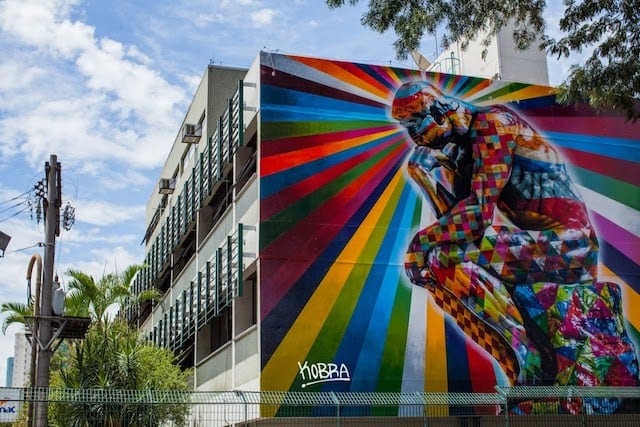 The Thinker – New Mural by Eduardo Kobra in Sao Paulo // Brazil
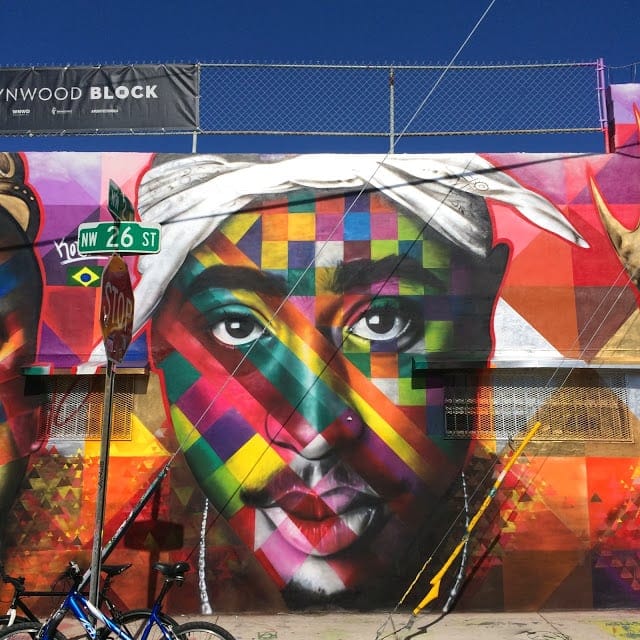 2Pac and Biggie Tribute Mural by Eduardo Kobra for Art Basel 2013
About Eduardo Kobra
- Born in São Paulo in 1976, Kobra emerged from Brazil’s street-art scene.
- He is best known for monumental murals made with sharp outlines, color blocks, and checkered or striped backgrounds.
- His work often depicts musicians, artists, activists, and anonymous people at mural scale.
- Recurring themes include memory, urban life, environmental damage, and peace.
- He has painted commissions in cities across Europe, North America, Africa, and South America.
Where did Eduardo Kobra come from?
Kobra grew up in São Paulo, a city with a strong graffiti and mural culture, and his work first took shape in that environment. He began as a street artist and developed a visual language that made his murals stand out from both conventional graffiti and polished advertising imagery. That background matters: his work belongs to public space, not the gallery wall, and it depends on the scale, speed, and visibility of the street.
By the early 2000s, he was producing what he called his Memory Walls, a body of work built around recollection, public history, and portraiture. These murals helped establish the format he still uses: a central figure or scene rendered with realistic detail, then fractured or surrounded by hard-edged fields of color. The result is recognisable from far away and busy up close.
What does Kobra’s work look like?
Kobra’s murals usually pair a realistic face or figure with a background of triangles, stripes, diamonds, or checkerboard patches. He often works in saturated blues, yellows, reds, and greens, then sets those colors against black-and-white photographic imagery or muted flesh tones. The contrast creates a poster-like clarity that reads quickly on a street corner or the side of a tower block.
His painting style borrows from portraiture, graphic design, and optical patterning. In practice, that means careful drafting, large areas of spray-painted color, and crisp transitions between sections rather than loose, gestural brushwork. Many of his murals are polished enough to feel planned like billboards, but they still carry the physical scale and surface variation of hand-painted walls.
Why does his work matter?
Kobra matters because he helped make monumental mural painting a mainstream public form without stripping away its street-level energy. His best-known works place historical figures, musicians, and anonymous people in civic space where they can be seen without a ticket or a museum visit. That accessibility is part of the point: the wall becomes a shared public image instead of a private object.
His subjects also give the work a social register. Kobra has repeatedly returned to themes such as war, environmental destruction, and the fragility of memory, using portraiture to connect those ideas to specific faces and bodies. Even when the content is celebratory, the work often carries a warning about damage, loss, or the uneven shape of modern life.
What kinds of murals is he known for?
Kobra’s most circulated works are tribute murals: portraits of musicians, artists, writers, and political figures painted at a size that turns a single likeness into a city landmark. He has also made murals that function more like public memorials, using a single figure or symbolic scene to hold a larger story about history or identity. The scale is part of the meaning; these images insist on being encountered as architecture, not decoration.
One of his most visible signatures is the use of black-and-white source imagery set inside intense color fields. That device gives the figure a historical or documentary feeling while the background pushes it into the present. It is a simple formula, but it gives his work a clear rhythm and a strong graphic identity.
Questions
Is Eduardo Kobra a graffiti artist or a muralist?
He is usually described as a muralist, though his practice grew out of graffiti and street art. The distinction matters because his works are often commissioned, large in scale, and planned for specific walls. They keep graffiti’s public orientation while using a more controlled, image-led approach.
What materials does he use?
Kobra commonly works with spray paint and acrylic paint on exterior walls. Those materials suit his method because they allow fast coverage, sharp edges, and bright color on rough architectural surfaces. The finished murals depend as much on the wall and weather-resistant paint as on the drawing underneath.
Why are his murals so colorful?
The color does more than decorate the image. It creates contrast with the black-and-white portrait sections and helps the mural read from a distance. It also gives the work a sense of urgency and optimism, even when the subject is serious or commemorative.