Edward Steichen was an American photographer, painter, curator, and key figure in early modern photography who helped turn the medium into a serious art form. He worked in pictorialist, fashion, portrait, and exhibition contexts, and later shaped major museum shows that defined how photography was collected and seen. His career connected making images, designing printed matter, and organizing institutions that gave photography cultural authority.
- Born in Luxembourg in 1879; active in the United States for most of his career.
- Made soft-focus pictorialist photographs early on, then moved toward clearer modern portrait and fashion work.
- Regularly appeared in Camera Work and helped design the magazine’s logo and type.
- Co-founded the Little Galleries of the Photo-Secession, later known as 291.
- Served as curator of photography at the Museum of Modern Art and directed the landmark exhibition The Family of Man.
From pictorialism to modern photography
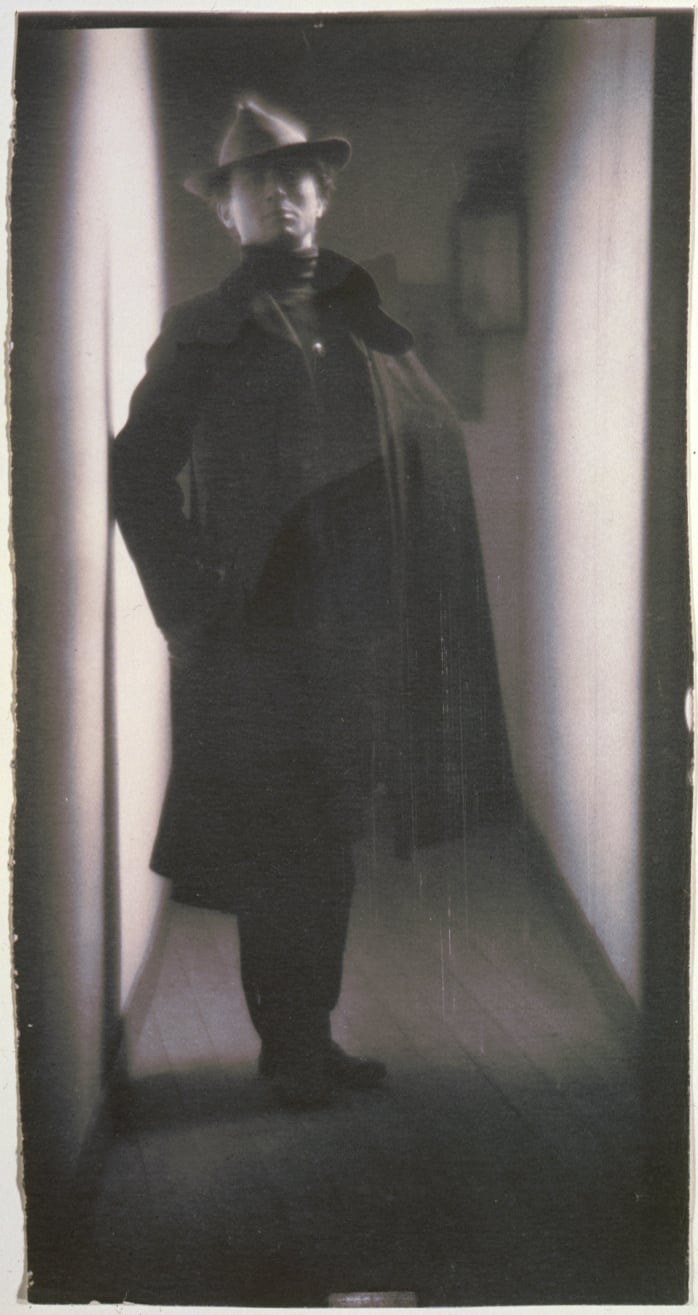
Steichen began as a pictorialist photographer, a style that treated the photograph like a crafted art print rather than a neutral record. He used careful printing, softened focus, atmospheric tonality, and darkroom manipulation to make images that felt closer to painting or drawing. That approach fit the artistic ambitions of the Photo-Secession group, which argued that photography deserved the same critical attention as other fine arts.
Over time, his work changed with the medium itself. He moved toward sharper, cleaner photographs in portraiture and fashion, especially in the 1920s and 1930s, where he made elegant studio images for magazines and commercial clients. Those pictures helped establish the polished, lit-from-the-front look that became standard in editorial photography.
What did Edward Steichen actually make?
Steichen made photographs, but he also made the conditions for photography to be seen as art. In Camera Work, Alfred Stieglitz’s influential magazine, Steichen was one of the most frequently reproduced photographers. He also contributed the magazine’s logo and a custom typeface, which shows how closely image-making, graphic design, and print culture overlapped in this period.
His prints often depend on subtle tonal ranges rather than dramatic subject matter. Early examples can feel hazy and painterly, while later portraits are precise and socially polished. The material craft mattered: exposure, paper choice, platinum or silver printing, retouching, and studio lighting all shaped the final image.
Why 291 mattered
In partnership with Stieglitz, Steichen helped open the Little Galleries of the Photo-Secession in New York, soon known simply as 291 after its address. The gallery became a crucial site for modern art in the United States, showing photography alongside European modernism and helping audiences understand it as part of a larger visual culture. It was not just a display room; it was a curatorial argument about what counted as serious art.
291 mattered because it linked artists, publishers, collectors, and critics in one small space. Steichen’s role there shows that his influence went beyond taking pictures. He helped build an infrastructure for photography: print publication, exhibition design, and the circulation of new aesthetic ideas.
How did he shape photography at museums?
Steichen’s later career at the Museum of Modern Art extended that institutional work. As curator of photography, he assembled exhibitions that presented photographs as historical, social, and aesthetic evidence, not just decorative images. His most famous project, The Family of Man in 1955, gathered images by many photographers into a humanist narrative about birth, labor, love, conflict, and death.
The exhibition reached an enormous public and became one of the most widely seen photography shows in history. Critics later argued about its universalism and sentiment, but its scale was undeniable. Steichen showed that photography could operate as mass culture, museum culture, and visual argument at the same time.
Frequently Asked Questions
Was Edward Steichen mainly a photographer or a curator?
He was both, and the two roles fed each other. As a photographer he helped define pictorialist and fashion portrait styles; as a curator he gave photography a bigger public and institutional framework. His importance comes partly from that combination of making images and deciding how they should be presented.
Why is Steichen associated with Camera Work?
Camera Work was the central journal of the Photo-Secession, and Steichen appeared in it more often than almost any other photographer. The magazine reproduced his photographs and also carried his design contributions, including a logo and typeface. That made him visible not just as an artist but as a participant in the graphic identity of modern photography.
What is Steichen best known for today?
He is often remembered for The Family of Man, his landmark Museum of Modern Art exhibition, and for his role in making photography respectable in art institutions. Scholars also value his early pictorialist prints and his later portrait and fashion work. His career shows how photography moved from a marginal art practice into galleries, magazines, and museums.
Articles mentioning Edward Steichen