
Farfalle is a pasta shape made from pinched rectangles or squares of dough, creating the familiar bow-tie or butterfly form. The name comes from the Italian farfalla, meaning butterfly, with the final -e marking a feminine plural form, so the word literally means butterflies. The shape dates to the 16th century and is associated with Lombardy and Emilia-Romagna in northern Italy.
Stories from Farfalle
2 stories
About Farfalle
- A shaped pasta, not a sauce or dish
- Named for its butterfly-like silhouette
- Originated in northern Italy in the 1500s
- Used in both traditional cooking and contemporary design objects
- Recognizable by a pinched center and flared ends
Read the full overviewWhat farfalle looks like, Where did farfalle come from?, Why does this pasta shape matter?, How farfalle appears in practice
What farfalle looks like
Farfalle starts as a sheet of pasta dough cut into small rectangles or squares. A central pinch compresses the dough so the middle stays dense while the edges spread into two flared wings. That small structural move gives the pasta a strong visual identity and also changes how it cooks: the thick center stays firm, while the thin edges soften quickly.
The shape is compact, symmetrical, and easy to recognize from the side. It reads as decorative without losing its function. In dried form, farfalle often appears ridged or smooth, but the defining feature is always the pinch in the middle and the broad ends on either side.
Where did farfalle come from?
Farfalle emerged in northern Italy, with early associations in Lombardy and Emilia-Romagna. Its history reaches back to the 16th century, making it older than many of the pasta shapes now treated as everyday pantry staples. Like many regional Italian pastas, it developed from practical kitchen methods rather than industrial design.
The shape likely began as a way to make use of fresh dough in a form that dried well and looked distinct on the plate. Over time, it became standardized in factories and familiar far beyond Italy. The name stayed tied to the original image of butterflies, which helped the shape survive as both a culinary form and a visual shorthand.
Why does this pasta shape matter?
Farfalle matters because it shows how a small change in form can alter both utility and meaning. The pinched center and wide edges create different textures in the mouth, which makes it useful with light sauces, cream sauces, and pasta salads. At the same time, the shape carries a long visual memory: it is one of the few pasta forms whose name clearly describes its appearance.
That visual clarity has made farfalle useful outside the kitchen as well. Designers and artists borrow familiar food forms when they want an object to feel approachable, playful, or immediately legible. Farfalle’s silhouette, in particular, translates well into pattern, jewelry, and furniture because it is simple, repeated, and instantly readable.
How farfalle appears in practice
In cooking, farfalle is often chosen for dishes where shape matters as much as flavor. The broad surfaces hold sauce, while the pinched center gives each piece a firmer bite. It is also common in chilled dishes because the shape keeps some structure after cooking and cooling. Industrial producers make it by extruding or rolling dough and then cutting and pinching it into shape, while artisanal makers may form it by hand from fresh pasta sheets.
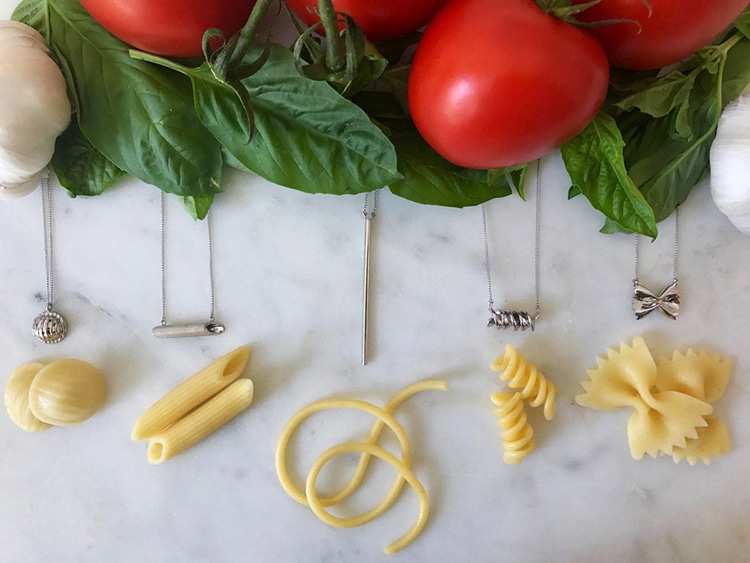
In visual culture, farfalle appears as an icon of domestic form translated into other materials. Recent work has used the shape in 3D-printed furniture and silver jewelry, where the pasta form becomes a module, ornament, or structural motif. Those uses depend on the same qualities that make the pasta recognizable at a glance: symmetry, repetition, and a strong outline.
Frequently Asked Questions
Is farfalle the same as bow-tie pasta?
Yes. “Bow-tie pasta” is the common English nickname for farfalle because the shape resembles a tied ribbon or butterfly. The Italian name is more specific and older, and it points to the butterfly comparison directly.
What does the name farfalle mean?
Farfalle comes from the Italian word farfalla, meaning butterfly. The ending -e is the feminine plural, so the term means butterflies. That plural form fits the way the pasta is usually spoken of as a set of pieces rather than a single object.
How is farfalle different from other pasta shapes?
Farfalle is distinguished by its pinched center and flared ends, which create a lighter texture at the edges and a firmer core. Unlike tubular shapes or long strands, it has a compact flat profile that looks decorative and cooks evenly. That combination makes it especially useful in dishes where appearance and texture both matter.