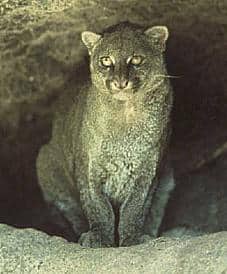
Felinae is a subfamily of the cat family Felidae that includes most living small- to medium-sized cats, along with a few larger species such as the cougar and the cheetah. It groups together the lineages usually called “feline” cats: animals that share a common evolutionary branch but differ widely in size, coat pattern, hunting style, and habitat.
- A taxonomic subfamily within Felidae, the cat family
- Includes most familiar cats, from house cats to lynxes, pumas, and cheetahs
- Appeared in the fossil record by the late Miocene, around 9 million years ago
- Useful for distinguishing “true cats” from other felids such as big cats in Pantherinae
- Shows how modern cats diversified into different body sizes and hunting adaptations
What does Felinae include?
Felinae is one of the two major living subfamilies within Felidae. It covers the cats most people recognize first: domestic cats, wildcats, lynxes, servals, caracals, margays, ocelots, pumas, and cheetahs. The group is defined by shared ancestry, not by a single size or coat pattern, so it can contain animals that look quite different from one another.
That breadth matters. A house cat, a sand cat, and a snow leopard do not belong to the same subfamily, even though they are all cats. Felinae helps biologists place them on the family tree and trace how cat traits evolved over time.
Where did it come from?
The earliest known feline fossils are often linked to Felis attica, a cat from the late Miocene of western Eurasia, roughly 9 million years ago. Fossils from this period show the early spread of cat lineages across Eurasia, followed by repeated diversification into different climates and hunting niches.
Over time, Felinae split into multiple branches as cats adapted to forests, grasslands, deserts, and mountains. Some lineages became compact and agile climbers; others developed longer legs for running or stalking in open country. The subfamily captures that long evolutionary experiment in body plan and behavior.
How is Felinae different from other cats?
Felinae sits beside Pantherinae, the subfamily that includes the lion, tiger, leopard, and jaguar. The division is not just about popular “big cats” versus “small cats.” It reflects deeper anatomical and genetic differences, including skull structure, larynx anatomy, and aspects of the voice and skeletal build.
In practice, Felinae tends to include cats that cannot roar in the same way pantherines do, though cheetahs and pumas are larger felines and can make powerful vocalizations of their own. The subfamily is therefore a taxonomic tool, not a size category. It groups species by ancestry and shared traits, while still leaving room for striking variation.
Why does Felinae matter?
Felinae matters because it organizes the diversity of modern cats in a way that is useful for science, conservation, and identification. When researchers study disease, genetics, hunting behavior, or habitat loss, they often need to compare species that are closely related but ecologically different. Felinae provides that framework.
It also helps explain why cats so often look similar yet behave differently. Domestic cats, for example, share ancestry with many wild felines, but domestication changed their relationship to people rather than their fundamental place in the cat family tree. In museum collections, field guides, and zoological writing, Felinae is the label that connects those animals back to a common lineage.
Frequently Asked Questions
Is Felinae the same as “small cats”?
No. Felinae is not simply a size class. It includes many small cats, but also larger forms such as the cougar and cheetah. The term describes evolutionary relationships, not just body size.
Does Felinae include domestic cats?
Yes. Domestic cats belong to Felinae through the genus Felis. That places them within the same subfamily as many wild cats, even though domestication changed their behavior and relationship to humans.
Why do scientists use subfamilies like Felinae?
Subfamilies help biologists sort species into meaningful evolutionary groups. They make it easier to compare anatomy, genetics, ecology, and conservation status across related animals. In a large family like Felidae, that structure keeps the diversity readable.
Articles mentioning Felinae