Florence and the Machine is an English indie rock band led by singer Florence Welch, known for dramatic vocals, dense percussion, and songs that mix pop structure with gothic, folk, and art-rock textures. The group emerged in London in the late 2000s and became widely known after early BBC support, especially through BBC Introducing. Their recordings and performances pair large emotional register with carefully built sound: harp, piano, hand percussion, choirs, and layered backing vocals often sit beside guitars and electronic accents.
- Formed in London and fronted by Florence Welch, with Isabella Summers as a key collaborator.
- Breakthrough came through BBC radio support before mainstream chart success.
- The band’s sound often combines indie rock with baroque pop, soul, folk, and theatrical production.
- Visual presentation is central: costumes, movement, and stage design are treated as part of the work.
- The name is usually styled as Florence + the Machine, reflecting Welch plus the larger collaborative group.
Where did Florence and the Machine come from?
Florence Welch began performing in London with a loose network of musicians rather than a fixed band line-up. Isabella Summers, who helped shape the early material, gave the project its “Machine” idea: the name suggests Welch as a singular voice supported by an adaptable ensemble. That structure has stayed consistent. Florence and the Machine is less a standard rock band than a project built around one performer, with musicians changing across tours and recordings.
Their early reputation grew through radio sessions and media attention rather than an overnight hit. BBC Introducing helped place the group in front of a larger audience, and that support mattered because the songs were unusual for mainstream radio at the time: grand, emotionally charged, and often more ornate than standard indie rock.
What does the band sound like?
Florence and the Machine are known for songs that start quietly and then expand. The arrangements often build from piano or simple drum patterns into thick climaxes, with Welch’s voice pushed to the foreground. Her delivery can sound urgent, ecstatic, or unsettled, which gives even polished studio tracks a sense of strain and release. That tension is a major part of the band’s identity.
Production varies from album to album, but the group often uses a mix of live and studio-constructed elements: hand drums, timpani-like hits, strings, choir-like vocals, organ, and electric guitar. The result is not minimalist indie rock. It is layered, theatrical, and emotionally direct, closer in spirit to large-scale pop performance than to bedroom lo-fi.
Why does Florence and the Machine matter in visual culture?
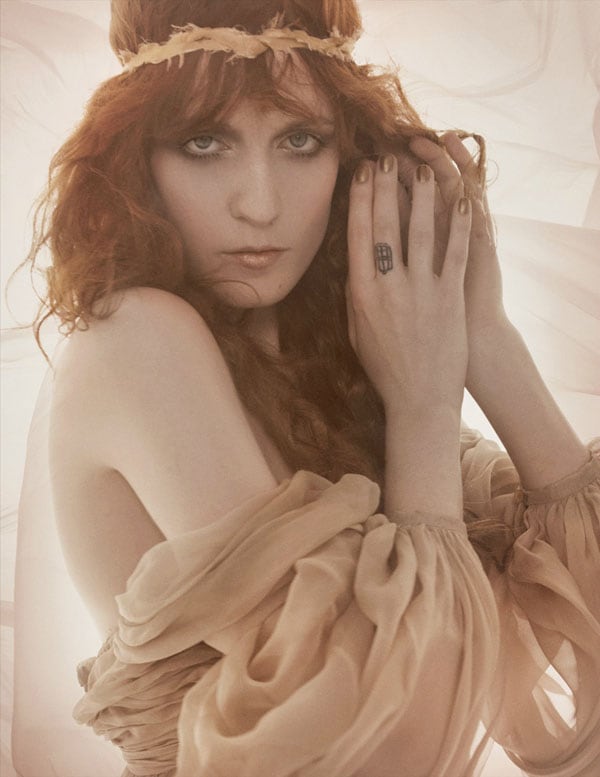
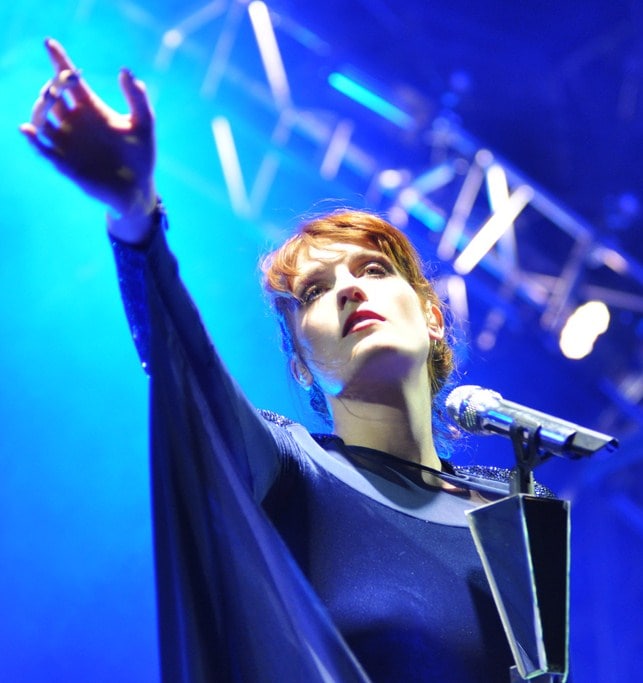
The band matters because image and performance are not secondary to the music. Florence Welch’s public presentation has often used long dresses, strong silhouettes, folklore references, and motion-heavy performance. That visual language supports the music’s themes of ritual, heartbreak, body, and transformation. Onstage and in editorial photography, the band tends to read as deliberately composed rather than casually lived-in.
This makes Florence and the Machine relevant to fashion and art publishing as well as music coverage. Their work often appears in contexts where clothing, gesture, lighting, and set design carry meaning. A magazine cover or performance still can feel like a continuation of the songs: the same emphasis on drama, scale, and symbolic detail appears in both.
How is the “Machine” part of the name understood?
The “Machine” signals collaboration, not anonymity. Florence Welch remains the clear centre, but the project depends on arrangers, instrumentalists, producers, designers, and touring musicians. The band’s sound is built collectively, even when Welch’s voice dominates the final result. That balance between the individual and the group is part of the name’s appeal.
In practice, the name also marks a shift from singer-songwriter framing. It suggests something assembled, powered, and larger than one person alone. For listeners and viewers alike, that idea helps explain why the band feels both intimate and ceremonial: a personal voice is presented through an elaborate, engineered structure.
Frequently Asked Questions
Is Florence and the Machine a solo project?
No. Florence Welch is the frontwoman and the most recognisable figure, but Florence and the Machine functions as a collaborative band project. Isabella Summers has been especially important in shaping the early identity, and many other musicians and producers contribute to recordings and live shows.
Why did BBC support matter so much?
BBC Introducing gave the band early exposure before they had broad commercial reach. That mattered because their music was stylistically distinct and benefited from being heard by listeners who trusted BBC tastemakers. The support helped turn critical attention into wider public recognition.
What kind of aesthetic is the band associated with?
The band is associated with theatrical, romantic, and often slightly gothic imagery. Florence Welch frequently uses flowing garments, strong colour, and dramatic movement, which complement the music’s intensity. The overall look feels constructed and ceremonial rather than casual or documentary.
At a glance
- Founded
- 2007
- Address
- London, United Kingdom
Articles mentioning Florence and the Machine