
Florent Tanet is a French photographer and art director based in Paris, known for still-life images that turn everyday objects into carefully arranged compositions. Born in 1987, he moved fully into photography and art direction in 2013 and has built a practice that sits between sculpture, graphic design, and image-making. His work treats objects less as subjects to be documented than as materials to be staged, cut, stacked, balanced, and re-seen.
Stories from Florent Tanet
1 story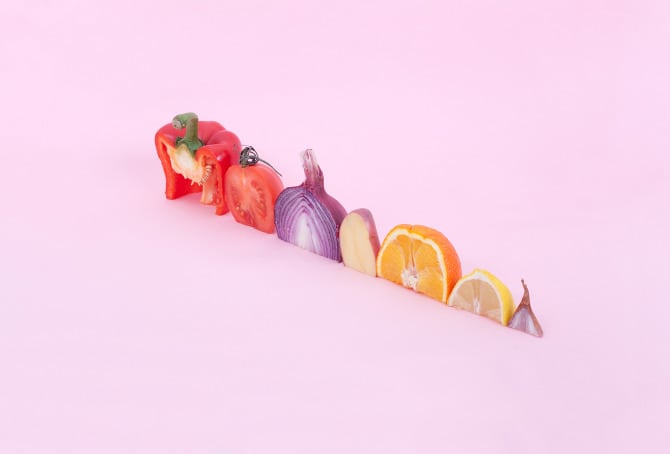
About Florent Tanet
| Fact | Detail |
|---|---|
| Born | 1987 |
| Nationality | French |
| Base | Paris |
| Field | Photography, art direction |
| Main focus | Still life and object-based composition |
Read the full overviewWhat kind of work does Florent Tanet make?, How does he use objects?, Why does his work matter?, What does his practice look like in the studio?
What kind of work does Florent Tanet make?
Tanet’s photographs usually start with ordinary things: packaged goods, fruit, flowers, fragments of furniture, paper, plastic, glass, or fabrics. He arranges them with a high level of control, then photographs the result so that shape, color, scale, and texture become the main content of the image. The final picture often feels both direct and constructed, with the object’s normal function pushed aside in favor of form.
This approach gives his work a sculptural quality. Rather than waiting for a found scene, he builds one, using objects as if they were components in a temporary installation. That method places him close to art direction and set design, but the photograph remains the finished work rather than a record of the setup.
How does he use objects?
Tanet’s practice depends on treating objects as raw material. He gives them “freedom” in the sense that they are no longer obliged to stay in their usual categories: a bottle can become a vertical line, a lemon a bright sphere, a crumpled wrapper a patch of reflective texture. The object is valued for its visual behavior, not its use.
That shift matters in still life, a genre often associated with display, commerce, or quiet realism. Tanet keeps the ordinary object in view, but he changes how it reads. The result can feel playful, precise, or slightly strange, because familiar things are arranged to reveal odd angles, tensions, and relationships.
Why does his work matter?
Tanet’s images show how close photography can be to design. They do not just present an object; they organize a visual argument about color, order, and material contrast. In that sense, his work belongs to a broader contemporary interest in image-making as construction, where the studio is as important as the camera.
He also demonstrates how still life can stay current. The genre has a long history in painting and photography, but Tanet refreshes it through a graphic sensibility and a contemporary object world shaped by packaging, consumer goods, and polished surfaces. His images make that everyday world look formal, deliberate, and worth close looking.
What does his practice look like in the studio?
A Tanet image is usually the result of arrangement rather than capture. That means choosing objects for their color or silhouette, testing how they sit together, and adjusting the frame until the composition locks into place. Lighting, shadow, and surface finish all matter, because they control whether the image feels flat, glossy, dense, or airy.
This process is why his work sits comfortably across photography and art direction. The set is not hidden; it is the point. Even when the final image looks effortless, it depends on an assembled scene in which the distance between object, sculpture, and graphic composition has been carefully managed.
Frequently Asked Questions
Is Florent Tanet mainly a photographer or an art director?
He works as both, and the two roles overlap in his practice. Photography provides the final image, but art direction shapes the arrangement, pacing, and visual logic that lead to it. That combination is central to how his still lifes function.
What subjects does he photograph most often?
He often works with everyday objects and still-life materials rather than portraits or documentary scenes. Food, packaging, household items, and simple geometric forms fit well within his method because they can be rearranged into strong visual structures. The subject matters less than the object’s shape, color, and surface.
Why is he associated with still life?
Still life gives Tanet the freedom to build images from scratch and treat objects as design elements. The genre lets him control every part of the frame, from placement to lighting, which suits his interest in precision and composition. His work uses still life not as a traditional category, but as a flexible studio method.