Freddie Mercury was a British singer, songwriter, and performer, best known as the lead vocalist of Queen and one of rock’s most recognisable frontmen. Born Farrokh Bulsara in 1946 and dying in 1991, he built a career on theatrical presentation, precise studio craft, and a voice that could move from a hard-edged rock attack to lyrical sweetness within the same song.
| Born | 5 September 1946, in Zanzibar |
|---|---|
| Died | 24 November 1991, in London |
| Known for | Lead vocalist and lyricist of Queen |
| Main work | Rock songs built for layered vocals, drama, and audience participation |
| Performance style | Flamboyant stage persona, strong physical command, and wide vocal range |
Why Freddie Mercury matters
Mercury mattered because he joined two things that are often kept apart: exacting musicianship and unapologetic spectacle. Queen’s records depended on arrangement and production as much as on melody, and Mercury wrote for that structure. Songs such as “Bohemian Rhapsody,” “Killer Queen,” “Somebody to Love,” and “We Are the Champions” are memorable not just for their hooks, but for their construction: stacked harmonies, abrupt shifts in mood, and a sense of scale that makes them feel larger than ordinary pop songs.
He also changed how a rock singer could occupy a stage. Mercury’s performances were not casual expressions of personality. They were tightly controlled acts of presence, built from gesture, timing, costume, and vocal force. That mix made him influential far beyond rock music, shaping ideas of pop performance, frontman charisma, and the visual language of arena concerts.
How did Freddie Mercury sing and write?
Mercury’s singing stood out for power, clarity, and range. He could push a song forward with a rough, percussive attack and then turn to clean, sustained lines that carried emotional weight. The range often cited in descriptions of his voice matters less as a number than as a tool: it let him write songs with dramatic contrasts, and Queen’s recordings often use his voice as a multi-part instrument rather than a single lead line.
As a songwriter, he worked in strong images and strong structures. “Bohemian Rhapsody” is the clearest example: part ballad, part operatic montage, part hard rock explosion. “Crazy Little Thing Called Love” shows a different skill, stripping the arrangement down to a rockabilly framework. Mercury was not tied to one genre, but he understood how style could carry character, and he used genre shifts to create surprise.
What did his performances look like?
Mercury’s public image relied on contrast. On stage he could seem extravagant, commanding, and confrontational; off stage he often protected his privacy. In performance, he used the full body: arms thrown wide, fists raised, shoulders forward, torso leaning into the crowd. The look was matched by costuming, from fitted stage clothes to the famous white tank top and jeans that made later live appearances feel stripped-down and direct.
That visual fluency is why artists and makers keep returning to him as a subject. He reads clearly even in small-scale portraiture because his silhouette is so distinct: the moustache, cropped hair, sharp cheekbones, and expressive posture all become shorthand for performance itself. In visual culture, Mercury often stands for more than biography; he stands for excess, precision, and the idea that a performer’s image can be as carefully authored as a recording.
Why do makers keep portraying Freddie Mercury?
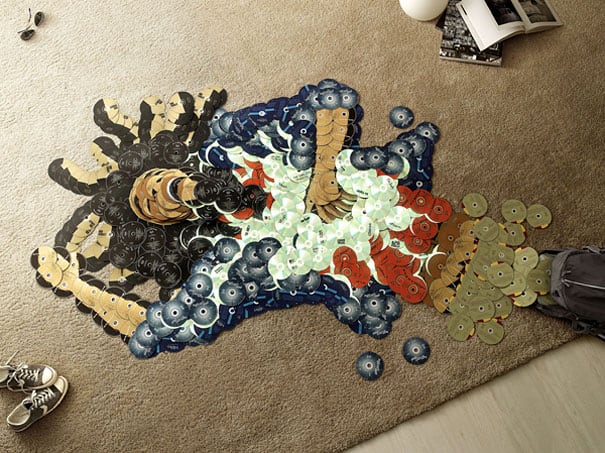
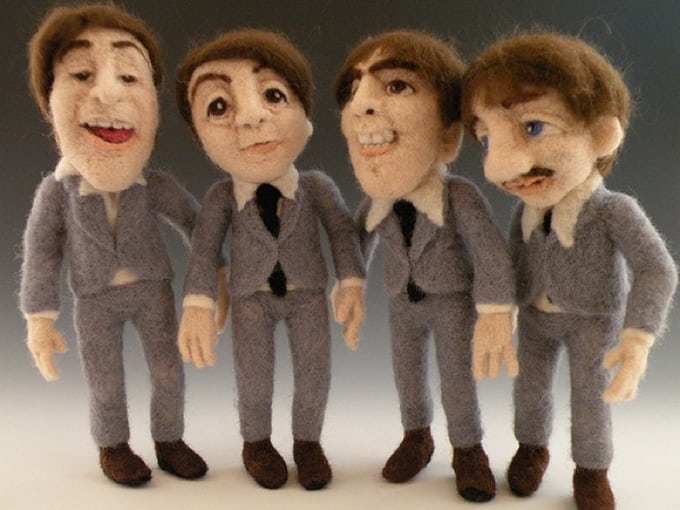
Mercury remains a strong subject for illustration, sculpture, and portrait work because his features and wardrobe translate well into stylised form. Artists can capture him through colour, posture, and texture without needing a full narrative scene. That is one reason he appears in works made from unexpected materials, including portrait pieces assembled from CDs or needle-felted wool: the recognisable outline does much of the work.
Those material choices matter. CDs echo the recorded medium that carried Queen’s music, turning portraiture into a reflection on reproduction and sound. Felted wool adds softness to a figure associated with theatrical force, creating a deliberate tension between material and persona. Mercury’s image survives well in these formats because it is both specific and iconic.
Frequently Asked Questions
Was Freddie Mercury only important because of Queen?
Queen was the centre of Mercury’s career, and his legacy is inseparable from the band. But his importance comes from how he shaped the band’s identity: songwriting, vocal arrangement, and performance style all passed through him. Without Mercury, Queen would have sounded and looked very different.
What made Freddie Mercury different from other rock singers?
He combined technical vocal ability with a theatrical sense of timing and image. Many singers had power; many had flair. Mercury made both part of the same performance, and he treated the studio and the stage as places to build drama rather than simply record songs.
Why is Freddie Mercury still used in art and design?
He is instantly recognisable, which makes him useful to artists working in portrait, collage, sculpture, and graphic design. His image also carries clear ideas about glamour, music, identity, and performance. That combination gives makers a subject that can be read quickly while still supporting interpretation.
Articles mentioning Freddie Mercury