
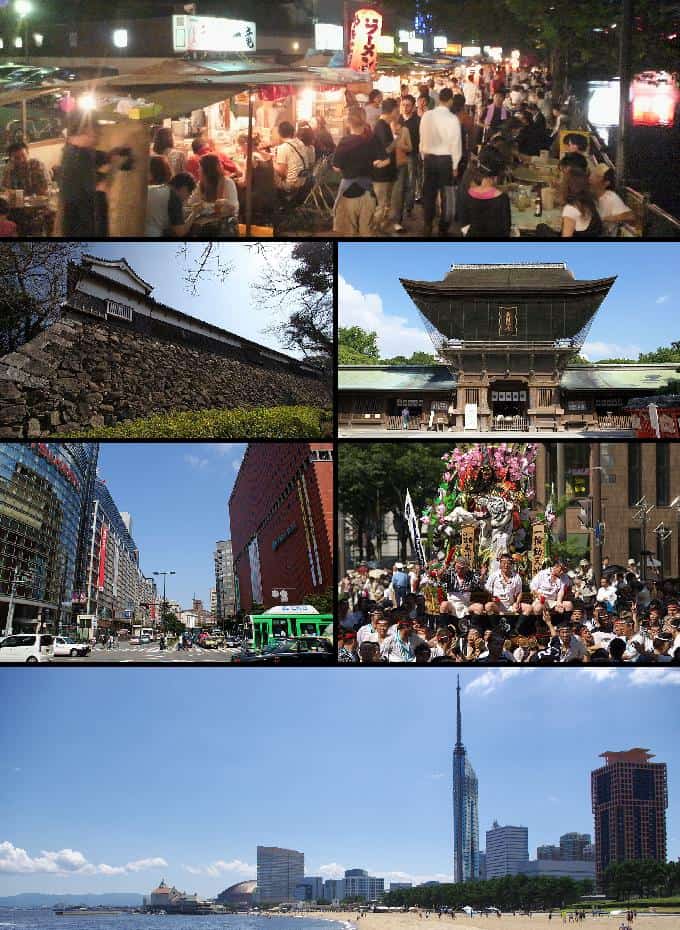
Fukuoka is a major city on the northern shore of Kyushu in Japan and the capital of Fukuoka Prefecture. It is the largest city in Kyushu, the island’s main gateway to trade, travel and cultural exchange with mainland Asia. As a designated city since 1972, it combines a dense urban core with a visible waterfront, parks and a compact street life that makes it useful as both a commercial center and a setting for design, food and contemporary culture.
- Capital of Fukuoka Prefecture on the north coast of Kyushu
- Largest city and metropolitan area in western Japan outside the Keihanshin region
- Known for a livable scale, green public spaces and access to the sea
- Important port and transport hub linking Kyushu to the rest of Japan and to Asia
- Appears in contemporary design and visual culture as a city with a strong urban identity and craft scene
Why Fukuoka matters
Fukuoka matters because it sits at a strategic and cultural crossroads. Historically, the city has been one of Japan’s closest large urban centers to the Asian continent, which shaped its role as a port, administrative seat and commercial hub. That position still matters in publishing, food, hospitality, craft and product design, where Fukuoka often appears as a place that feels distinctly Japanese but less overdetermined than Tokyo or Osaka.
Its reputation also comes from livability. International rankings have praised Fukuoka for balancing a metropolitan population with access to parks, seawalls, beaches and easy movement across the city. For makers and designers, that balance matters because it supports a scene that is urban but not hyper-saturated: galleries, studios, small retailers and event spaces can operate in a city that is large enough to sustain them but compact enough to feel navigable.
What does the city look and feel like?
Fukuoka is not a single visual style, but several overlapping ones. The city includes modern towers, shopping districts and transport infrastructure, alongside older commercial streets, shrines, coastal edges and pockets of domestic-scale architecture. The urban fabric often feels open and horizontal by Japanese standards, with broad roads, visible sky and easy access to water.
In practice, that means Fukuoka often appears in images as a place of clean lines and everyday movement: buses, pedestrian crossings, waterfront promenades, market streets and public plazas. Its food culture is also part of its visual identity, especially the yatai street stalls that cluster at night and create a temporary, brightly lit public scene. For publications about objects and interiors, this mix of modern infrastructure and informal street life gives the city a recognizable setting without a single signature monument.
How has Fukuoka shaped design and culture?
Fukuoka’s role in design culture is less about a single school or movement and more about atmosphere, access and production. As a port city with strong retail and hospitality sectors, it supports small manufacturers, independent labels and event-based work. Designers use the city for launches, installations and collaborations because it offers good logistics and a clear urban identity without the scale and congestion of Japan’s biggest capitals.
The city’s broader cultural life also helps. Museums, public events, gardens and temporary exhibitions create a setting where visual culture can move between commercial and civic spaces. That matters for photography, animation, furniture and floral design alike: work made in or shown in Fukuoka tends to sit between polished urbanism and local specificity.
Why does it appear in FreeYork articles?
Fukuoka appears in FreeYork because it works as more than a backdrop. In articles about furniture, animation or seasonal imagery, the city can signal a particular kind of Japanese urban setting: contemporary, compact, livable and shaped by both local culture and international exchange. It is the kind of place where a collection or an installation gains context from the city around it.
That makes Fukuoka useful to readers tracking where visual culture happens, not just what it looks like. The city’s built environment, transport links and public spaces all affect how work is made, shown and circulated. For that reason, it belongs in a reference collection for design and culture as a place with practical influence, not just geographic importance.
Frequently Asked Questions
Is Fukuoka a city or a prefecture?
Fukuoka is both the name of a city and a prefecture. The city of Fukuoka is the prefectural capital, located on the northern coast of Kyushu. In everyday use, the name usually refers to the city unless the prefecture is being discussed specifically.
What is Fukuoka known for visually?
Fukuoka is known for a mix of waterfront urbanism, public green space and active street life. The city is also closely associated with yatai, the open-air food stalls that light up at night and create a distinctive social scene. Its visual character is modern but not severe, with a softer scale than many larger Japanese cities.
Why do designers and artists use Fukuoka as a setting?
Designers and artists use Fukuoka because it offers a legible urban environment with strong infrastructure and a recognizable cultural identity. It is large enough to support exhibitions, launches and collaborations, but compact enough to make movement and production easier. That combination makes it attractive for work that depends on atmosphere as much as logistics.
At a glance
- Address
- Fukuoka Prefecture, Japan
- Coordinates
- 33.583332, 130.4
Articles mentioning Fukuoka

