
Georgetown is a historic neighborhood in northwest Washington, D.C., on the Potomac River, known for its early port, brick streets, Federal-era houses, and dense commercial corridors. Founded in 1751, it existed decades before the federal city of Washington and remained a separate municipality until 1871, when Congress folded it into the District of Columbia government. Today it functions as a residential district, shopping area, and cultural destination.
Stories from Georgetown (Washington, D.C.)
5 stories



About Georgetown (Washington, D.C.)
- Founded as a port town in 1751, before Washington, D.C. was established.
- Developed on a riverfront site that shaped its trade, warehousing, and street pattern.
- Preserved much of its 18th- and 19th-century building fabric, especially brick rowhouses and Federal-style architecture.
- Shifted from independent town to a neighborhood within the District of Columbia in 1871.
- Now combines heritage streetscapes with retail, restaurants, institutions, and tourism.
Read the full overviewWhy Georgetown matters, What does Georgetown look like on the ground?, How did Georgetown change over time?, Why does Georgetown appear in art and design stories?
Why Georgetown matters
Georgetown matters because it preserves an older layer of Washington that predates the capital itself. Its streets show how a Mid-Atlantic port town grew around shipping, commerce, and river access before the federal city reoriented the region toward government and planning. The neighborhood’s continued visibility comes from that combination of age, intact architecture, and everyday use.
As a place, Georgetown also shows how preservation and reinvention can coexist. Historic blocks now hold shops, galleries, cafes, universities, and offices. The neighborhood is often used as shorthand for old Washington, but its significance is more specific: it is one of the city’s clearest reminders of the settlement patterns that existed before the national capital was laid out.
What does Georgetown look like on the ground?
Georgetown’s built environment is compact and varied. Many streets are lined with brick rowhouses, narrow lots, and 19th-century commercial facades, while larger institutional buildings and embassies sit nearby. The architecture ranges from Federal and Greek Revival forms to later additions and careful restorations, often with a scale that feels lower and tighter than the monumental center of Washington.
The neighborhood’s relationship to the river still shapes its identity, even though shipping no longer drives its economy. Steep approaches, older alleys, and the historic street grid reflect a place formed before large-scale federal planning. In practice, that means Georgetown reads as layered: residential at one scale, retail at another, and historically maritime in its underlying geography.
How did Georgetown change over time?
Georgetown began as a tobacco port and market town in colonial Maryland. Its location on navigable water made it useful for trade, and its commercial life grew well before the District of Columbia was created in 1790. When the federal city rose nearby, Georgetown remained distinct, with its own local government, economy, and civic identity.
That independence ended in 1871, when Congress reorganized the District and unified its administration. Over time, Georgetown shifted from working port to affluent historic neighborhood. The warehouses and docks that once anchored its economy gave way to retail, restaurants, and preservation-minded redevelopment, though the neighborhood still carries the layout and material traces of its commercial past.
Why does Georgetown appear in art and design stories?
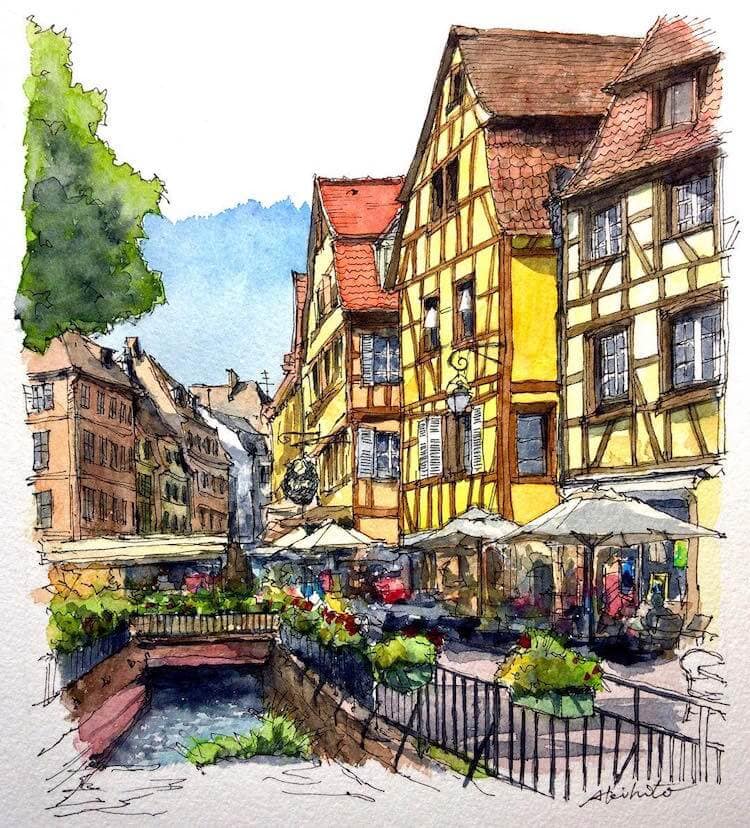
Georgetown often appears in art and design coverage because its streets offer a dense concentration of old masonry, historic facades, and recognizable Washington architecture. For artists drawing buildings, photographing urban texture, or studying American domestic and civic styles, it supplies a legible set of forms: brick, lintels, cornices, stoops, windows, and regulated streetscape rhythms.
The neighborhood also matters as a visual reference point because it sits between elite residential culture and public history. That makes it useful for work that depends on atmosphere as much as subject matter. A portrait of a place like Georgetown can stand in for tradition, wealth, preservation, and the layered city, all at once.
Frequently Asked Questions
Is Georgetown part of Washington, D.C.?
Yes. Georgetown is now a neighborhood within Washington, D.C., specifically in the city’s northwest quadrant along the Potomac River. It was once a separate municipality, but it became part of the consolidated District government in 1871.
What is Georgetown best known for?
Georgetown is best known for its historic architecture, riverfront setting, and commercial streets. It also has a long reputation as one of Washington’s most recognizable and affluent neighborhoods. The area’s preserved buildings and walkable blocks make it a frequent reference in discussions of urban history and design.
Why is Georgetown historically important?
Georgetown existed before the federal capital and helped shape the early economic geography of the region. Its port supported trade, and its street pattern preserves evidence of that older town. Because much of its historic fabric survives, it offers a clear view of Washington before monumental planning took over.