
Guinness World Records is an annual reference book and record-certification organisation that documents verified extremes, from human feats and collections to the largest, smallest, longest, fastest, and most unusual examples in nature and culture. It began as a promotional idea for Guinness Brewery and grew into a global media brand, but its core function remains the same: to identify, standardise, and publicise record claims.
Stories from Guinness World Records
6 stories


About Guinness World Records
- Started in the 1950s as a marketing book for Guinness Brewery.
- Publishes annual editions and maintains a record-verification process.
- Covers both human achievements and natural extremes.
- Has become a cultural shorthand for measurable superlatives.
- Depends on evidence, rules, and strict category definitions.
Read the full overviewWhere did Guinness World Records come from?, How does a record get accepted?, Why does it matter in visual culture?, What does it look like in practice?
Where did Guinness World Records come from?
The project began in 1951, when Sir Hugh Beaver, then managing director of Guinness Brewery, became interested in the kind of argument that could not be settled quickly: what is the fastest game bird in Europe? He realised that bars and pubs needed a reliable book for answering pub-room disputes. The first Guinness Book of Records appeared in 1955, compiled by the twins Norris and Ross McWhirter, who turned a promotional giveaway into a compact compendium of measurable extremes.
What started as a brand extension became a durable publishing format. The title changed over time, and the organisation later moved beyond the book into television, events, games, and digital publishing. Even so, the annual book remains the best-known form, and its brand identity still rests on the same basic promise: a record is only useful if it can be measured, compared, and independently checked.
How does a record get accepted?
Guinness World Records does not simply celebrate anything unusually large or fast. It sets rules for each category, asks for evidence, and decides whether a claim meets the criteria exactly. A successful application usually needs documentation, timing or measurement by approved methods, witnesses, and clear proof that the attempt followed the published rules.
This system matters because the category itself shapes the record. “Longest,” “largest,” or “most” can sound simple, but each term depends on what counts as one object, where the boundaries lie, and how the measurement is taken. That is why the organisation has become both a record keeper and a referee: it makes comparison possible by narrowing the field to a standard form.
Why does it matter in visual culture?
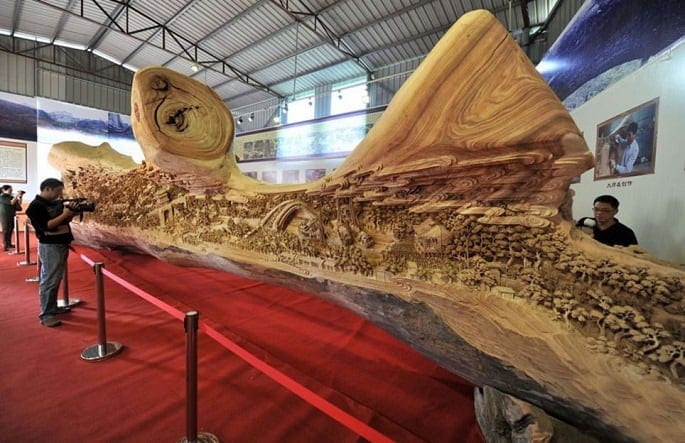
Guinness World Records turns spectacle into a format. A giant paper mosaic, a carved wood panorama, a balancing stunt on skis, or an enormous collection of branded objects gains visibility when it can be translated into a verifiable superlative. For artists, makers, athletes, and hobbyists, the record label can convert months or years of labour into a single headline number.
That number matters because it changes how work is seen. A record can highlight craft, endurance, scale, repetition, and technical control, even when the object itself would otherwise sit outside mainstream art or design criticism. In practice, the organisation rewards projects that are legible as quantifiable achievements, which is why it often appears beside feats involving construction, accumulation, precision, or physical control.
What does it look like in practice?
In practice, Guinness World Records looks like a rulebook attached to a stage. A claimant often has to plan the work around the record criteria from the start: how wide the panel is, how many items are included, how long the attempt lasts, or what counts as a completed action. The final result is usually documented through photographs, video, witnesses, and measurement, then turned into a certificate or published entry.
The visual style of the brand has stayed consistent for decades: bold cover typography, bright colors, and a celebratory look that makes comparison immediate. Behind that surface sits a bureaucratic process. The drama is real, but it is produced through administration as much as performance.
Frequently Asked Questions
Is Guinness World Records the same as the Guinness brewery?
No. The book began as a project commissioned by Guinness Brewery, but the record organisation now operates as its own media and certification brand. The beer company supplied the name and the original marketing purpose, not the substance of the records themselves.
Are all Guinness records about human achievement?
No. Many records track human feats, but the book also includes natural extremes such as the tallest tree, the largest flower, or the fastest animal in a category. The organisation has long mixed culture and nature, which is part of why the book appeals to such a wide audience.
Why do people care so much about records?
Records offer a simple way to rank effort, scale, and rarity. They turn complicated activities into a single number or title, which makes them easy to understand and easy to repeat in media. That clarity gives them lasting power, even when the achievement itself is temporary or highly specialised.