
The Gurung people, also called Tamu, are an ethnic group native to the hill and mountain regions of central Nepal, with communities also spread across nearby parts of the Himalayas. Their history is closely tied to high-altitude settlement, transhumant farming, and mountain trade, and their culture has long combined older shamanic practice with Tibetan Buddhist influence.
Stories from Gurung people
2 stories
About Gurung people
- Gurungs are one of Nepal’s many indigenous Himalayan communities.
- Their homeland lies mainly in central Nepal’s valleys and slopes, where steep terrain shaped daily life.
- Traditional Gurung religion included Bön and other shamanic practices before later Buddhist influence.
- Gurung identity appears in dress, ritual, kinship, and forms of labour adapted to mountain life.
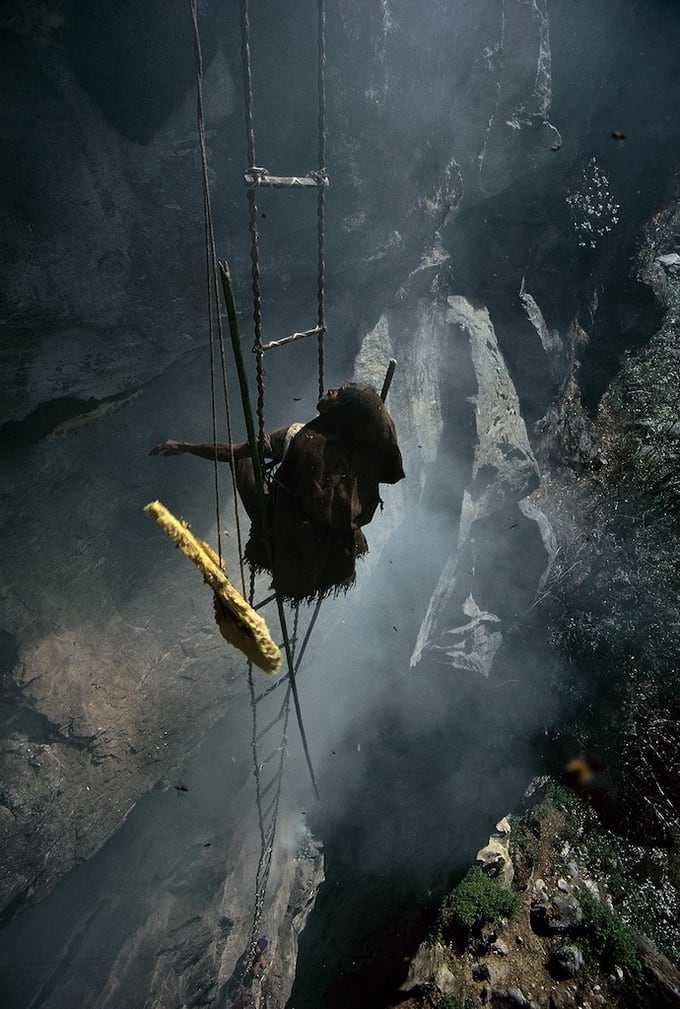
- They are often discussed in photography and documentary work for their distinct material culture and remote settlements.
Read the full overviewWhere do the Gurung people come from?, What does Gurung culture look like in practice?, Why do Gurung communities appear in photography?, How has Gurung identity changed over time?
Where do the Gurung people come from?
Gurung origin stories vary, and historical migration accounts are often mixed with oral tradition. What is clear is that Gurung communities established themselves in Nepal’s central hills and adjacent Himalayan areas centuries ago, living in rugged terrain that encouraged village-based, landholding communities and seasonal movement between elevations. Some older accounts place their ancestors in migration routes from the Tibetan plateau or farther north, but these narratives should be read carefully, since ethnic history in the Himalayas is often layered and not fully documented in written records.
Over time, Gurung settlements became part of the wider mosaic of Nepal’s mountain peoples, alongside groups such as the Tamang, Magar, Sherpa, and Thakali. The category “Gurung” refers not to a single occupation or caste, but to an ethnic community with its own language, customs, and social organisation.
What does Gurung culture look like in practice?
Gurung life has traditionally centred on agriculture, animal husbandry, and trade, all adapted to steep, cold terrain. Homes are built from local stone, timber, and mud plaster, with roofs and layouts designed for mountain weather and family labour. Dress, festivals, and ritual objects often reflect both practical needs and local symbolism: woven textiles, metal ornaments, drums, masks, and domestic shrines appear in ceremonies and everyday display.
Religion and ritual matter strongly in Gurung communities. Older shamanic practices associated with Bön persisted alongside later Buddhist forms, and many households still recognise ritual specialists who mediate illness, protection, and ancestor relations. In many places, these traditions now sit alongside Hindu and Buddhist influence from the wider Nepali cultural environment, producing local practice that is not neatly bounded by one faith.
Why do Gurung communities appear in photography?
Photographers and documentary makers often turn to Gurung villages because their architecture, landscape setting, and ceremonial life are highly visual without being staged for outsiders. The combination of terraced fields, slate roofs, carved wood, woven clothing, and mountain weather creates images that speak clearly about labour and environment. In that sense, Gurung communities are not just subjects of portraiture; they are part of a broader visual history of how Himalayan life has been recorded.
That visual interest can also flatten complex realities if it treats Gurung identity as picturesque rather than lived. A good documentary image shows tools, domestic interiors, fields, paths, and ritual objects as well as faces and costume. It makes visible the systems of work and belief that hold a mountain community together.
How has Gurung identity changed over time?
Like many indigenous groups in Nepal, Gurung communities have changed through migration, education, military service, tourism, and urban work. Some people live far from their ancestral villages now, while others maintain strong ties through seasonal return, kinship obligations, and festivals. Language use and ritual practice can weaken in diaspora settings, but they often persist in modified forms.
Today, Gurung identity is both local and transnational. It belongs to particular villages and valleys, but also to wider Nepali and Himalayan networks where history, labour, and representation continue to be negotiated.
Frequently Asked Questions
Are Gurungs the same as Tamu?
Yes. “Tamu” is the name many Gurung people use for themselves, while “Gurung” is the more common external name in English and Nepali contexts. Both refer to the same ethnic community.
What language do Gurung people speak?
Gurung communities speak Gurung, a Tibeto-Burman language, though fluency varies by region and generation. Nepali is also widely used, especially in education, government, and urban life. Language shift is a real concern in some places, as younger speakers may grow up with limited command of the ancestral tongue.
What is distinctive about Gurung material culture?
Gurung material culture includes stone-and-timber houses, woven textiles, ritual objects, agricultural tools, and ceremonial dress adapted to mountain life. The forms are practical, but they also carry social meaning in festivals, weddings, healing rites, and ancestor observance. In photographs, these objects often signal a community shaped by altitude, labour, and long continuity.