
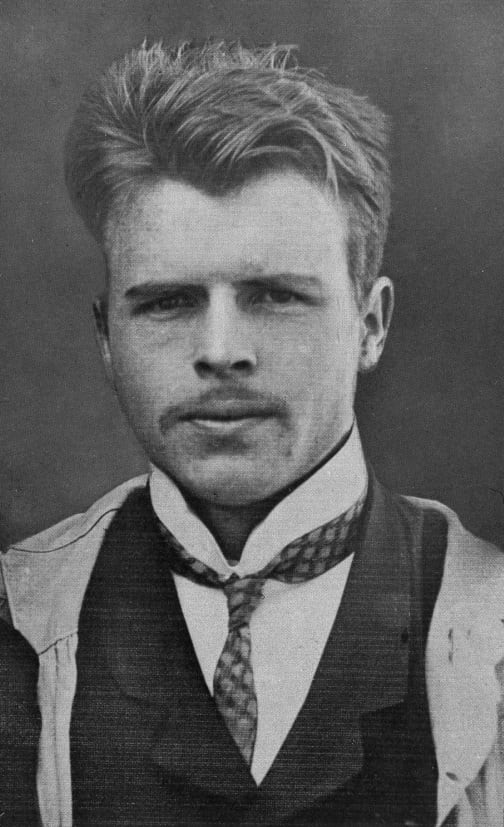
Hermann Rorschach was a Swiss psychiatrist and psychoanalyst who created the inkblot test that bears his name. He is best known for a method of diagnosis built around ambiguous printed blot images, used to prompt free response and to suggest aspects of thought, perception, and personality.
| Born | 8 November 1884, Zurich, Switzerland |
|---|---|
| Died | 1 April 1922, Herisau, Switzerland |
| Field | Psychiatry, psychoanalysis |
| Known for | The Rorschach inkblot test |
| Method | Presentation of ten inkblots, each interpreted by the subject |
Why Rorschach matters
Rorschach’s name became attached to one of the most famous psychological tests of the 20th century. The inkblot test treated interpretation itself as evidence: when a person describes what a blot resembles, the answer is assumed to reveal something about the structure of attention, imagination, and unconscious association. That made the test attractive to clinicians who wanted a tool that could reach beyond direct questioning.
The method also became controversial for the same reason. Different schools of psychology disagreed about how much could be inferred from a response to an abstract image, and how reliably the results could be scored. Even so, the test entered wider culture as a symbol of hidden motives and inner life, far beyond the clinical setting where it began.
How did the inkblot test work?
The original Rorschach test used ten standardized inkblots printed on cards. Some are black and white, while others include color. The examiner shows the cards one at a time and asks what each one looks like. The answers are then recorded and interpreted using a scoring system that considers the part of the blot seen, the use of color or shading, and the kind of object or scene described.
Rorschach was interested in how people organize uncertain visual material. The cards do not contain fixed images in the ordinary sense, so the test depends on perception, memory, and association. In practice, the method sits between observation and projection: the printed stain is simple, but the response can be detailed, personal, and culturally shaped.
What kind of psychiatry did Rorschach come from?
Rorschach trained and worked in a period when psychiatry was closely entangled with psychoanalysis. Freudian ideas about repression, symbolism, and unconscious conflict strongly influenced the way many clinicians thought about personality in the early 1900s. Rorschach’s test grew out of that intellectual world, where indirect signs were often treated as more revealing than direct statements.
He was not a household-name theorist during his lifetime, and he died young at 37. The test’s fame grew after his death, when other psychiatrists developed more formal systems for administering and interpreting it. That later history matters, because much of what people now associate with the “Rorschach test” reflects the work of his successors as much as his own original notes.
How is Hermann Rorschach remembered today?
Rorschach is remembered less as a broad theorist than as the author of a single enduring instrument. His name has moved into common speech as shorthand for any ambiguous image that invites projection. That cultural afterlife has made him one of the most recognizable figures in psychology, even among people who know little about clinical testing.
In modern practice, the inkblot test is used far less casually than popular culture suggests, and its status remains debated. Still, it remains important as a design object as well as a psychological one: a set of printed forms carefully balanced between structure and indeterminacy, made to produce interpretation rather than illustration.
Frequently Asked Questions
Was Hermann Rorschach the first person to use inkblots in psychology?
No. Inkblots and similar ambiguous images had appeared in games, art, and experimental settings before his test. Rorschach’s contribution was to turn the blot into a standardized clinical tool with a defined set of cards and an interpretive method.
Did Rorschach believe the test could read the mind directly?
No, not in a literal sense. He treated responses as clues to mental organization and personality, not as direct translations of hidden thoughts. Later users sometimes overclaimed what the test could show.
Is the Rorschach test still used?
Yes, but much less universally than its pop-culture reputation suggests. Some clinicians and researchers still use it within broader assessment frameworks, while others reject it because of questions about reliability and validity. Its influence remains strongest in cultural memory and in the history of psychological testing.
Articles mentioning Hermann Rorschach
