
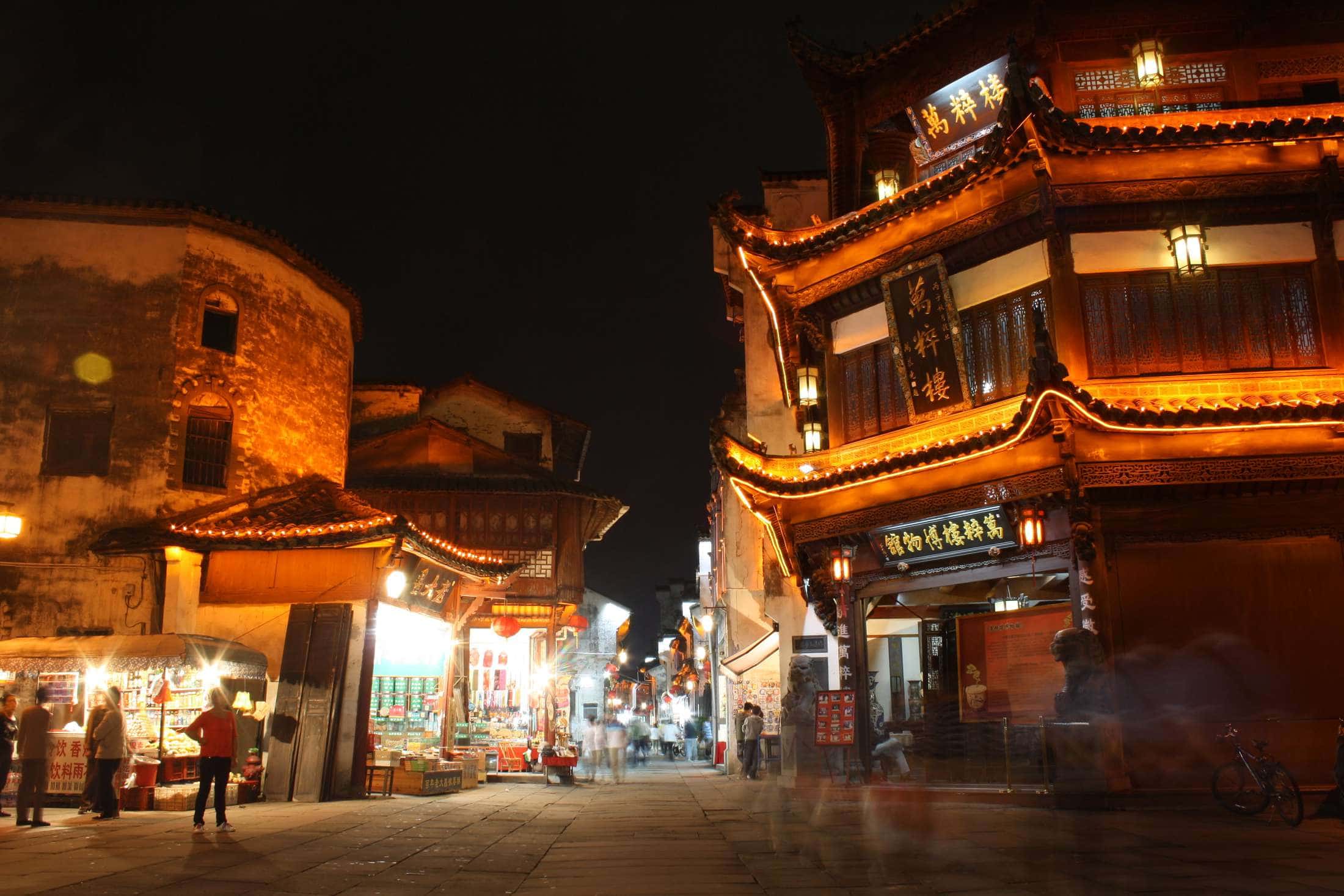
Huangshan City is a prefecture-level city in southern Anhui province, China, named for the Yellow Mountains that dominate much of its territory. Its administrative center is Tunxi District, the former city of Tunxi, and the prefecture includes three urban districts and four counties. The city matters in visual culture because it sits at the meeting point of a celebrated mountain landscape, historic settlement, and contemporary tourism and design.
| Type | Prefecture-level city |
|---|---|
| Province | Anhui, China |
| Chinese name | Huangshan, “Yellow Mountain” |
| Administrative center | Tunxi District |
| Administrative divisions | 3 urban districts and 4 counties |
| Known for | Yellow Mountains, scenic landscape, tourism, historic Huizhou culture |
Why Huangshan City is important
Huangshan City is not only a place on a map. It is an administrative unit built around one of China’s most famous mountain landscapes, and that landscape shapes the city’s identity, economy, and built environment. The Yellow Mountains have long drawn painters, poets, travelers, and later mass tourism, so the city is tied to a visual tradition as much as to government geography.
That relationship matters to design and architecture. Hotels, visitor facilities, transport infrastructure, and retail districts in Huangshan all operate under the pressure of a powerful scenic brand. Local building projects often have to answer two competing demands: accommodate large numbers of visitors and remain visually compatible with a landscape associated with mist, pine-covered peaks, and historic timber architecture.
Where is Huangshan City?
Huangshan City lies in southern Anhui, inland from China’s eastern seaboard. The prefecture covers a large and varied area that includes the mountain zone itself, river valleys, and historic county towns. This is one reason the city cannot be understood as a single urban core; it is a broad administrative frame that contains both dense settlement and protected scenic terrain.
The administrative center, Tunxi District, grew from the older city of Tunxi and now serves as the city’s practical hub. It concentrates transport, commerce, and services for the wider prefecture. For visitors heading into the mountain area, Tunxi often acts as the point of arrival, accommodation, and logistics before the terrain becomes more remote and steep.
What does the city look like in practice?
Huangshan City’s built character changes sharply between its urban districts and its mountain areas. In Tunxi, the city reads as a contemporary Chinese regional center with roads, hotels, shops, and administrative buildings. In the mountain counties and scenic zones, the visual field shifts to tiled roofs, stone paths, narrow lanes, and a landscape shaped as much by preservation rules as by daily life.
Its historic connection to Huizhou culture also leaves a strong imprint. Whitewashed walls, dark timber framing, carved gateways, and compact courtyard planning appear in older settlements across the prefecture. These features are not mere decoration; they reflect local building traditions developed around commerce, clan organization, and adaptation to a hilly environment.
Why do designers and architects pay attention to Huangshan?
Huangshan City appears in architectural and hospitality projects because it offers a specific kind of setting: heavily branded, culturally loaded, and difficult to build in without care. A hotel or visitor facility in this context is never neutral. It must negotiate sightlines, material choices, and scale so that it can serve modern travelers without clashing with the mountain environment that brings them there in the first place.
That makes Huangshan useful as a case study in context-sensitive design. Materials such as timber, stone, plaster, and dark roof tiles often recur because they visually connect new construction to vernacular forms. Even when the architecture is contemporary, projects in the area frequently borrow proportions, colors, or roof profiles from older Huizhou buildings to avoid appearing alien to the landscape.
Frequently Asked Questions
Is Huangshan City the same as the Yellow Mountains?
No. Huangshan City is the prefectural administrative unit, while the Yellow Mountains are the scenic mountain range after which the city is named. The mountains are one part of the larger territory governed from Huangshan.
In everyday use, people sometimes blur the two because the mountains are so closely tied to the city’s identity. For reference and geography, though, they are distinct entities.
What is Tunxi District?
Tunxi District is the urban center and administrative seat of Huangshan City. It was originally the city of Tunxi before being incorporated into the prefecture-level city system.
Today, it functions as the main commercial and logistical base for the wider area. Many trips into the mountains begin there.
Why is Huangshan City relevant to visual culture?
The city sits at the intersection of landscape, heritage, and tourism, which makes it a frequent subject for painters, photographers, architects, and hotel designers. Its most recognizable features are not just scenic but also spatial and material: mountain silhouettes, historic villages, tiled roofs, and restrained use of color.
Projects in the area often respond directly to those features. As a result, Huangshan City is a useful example of how place can shape design decisions from the ground up.
At a glance
- Address
- Anhui, People's Republic of China
- Coordinates
- 29.7, 118.3
Articles mentioning Huangshan City
