
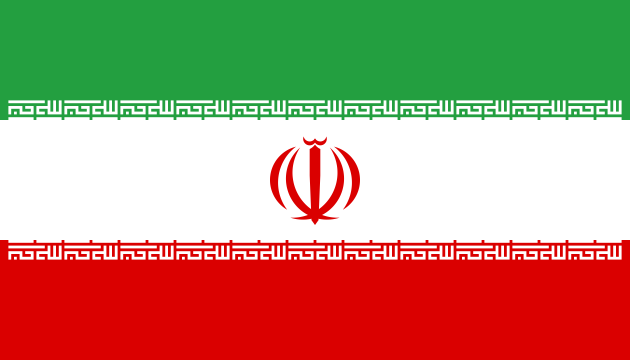
Iran is a country in Western Asia, with a long Persian cultural history and one of the world’s oldest continuous architectural traditions. It is officially the Islamic Republic of Iran, but in art, design, and historical writing the names Iran and Persia often overlap. The distinction matters: Persia usually points to older cultural and artistic traditions, while Iran is the modern state and the name used in politics and administration.
- Modern Iran is the political state; “Persia” is still common when discussing older art, poetry, architecture, and craft.
- Its design history includes courtyard houses, wind catchers, brick vaults, tilework, gardens, and finely tuned responses to climate.
- Contemporary Iranian architecture often reworks those inherited forms rather than quoting them literally.
- Iranian visual culture ranges from miniature painting and calligraphy to photography, film, illustration, and experimental architecture.
- Geography and climate strongly shape building in Iran, especially shade, ventilation, water management, and the use of local brick and earth materials.
Why do articles still say “Persia”?
“Persia” was the name most Europeans used for the country for centuries, and it remains common when referring to premodern culture. A Persian rug, Persian miniature, or Persian garden usually means an object, form, or tradition tied to historical Iranian culture rather than to present-day state identity. In a design context, the older name often signals continuity with established craft lineages: brick vaulting, glazed tile, patterned plaster, gardens organized around water channels, and calligraphic ornament.
“Iran” became the internationally recognized name in 1935, though the term had long been used inside the country. Today both names still circulate, but they do different work. “Iran” points to the nation-state, while “Persia” points to the cultural archive that artists, architects, and historians continue to cite.
What does Iranian architecture look like?
Iranian architecture is shaped by climate, material economy, and a strong tradition of geometric order. In hot, dry regions, builders used thick mud brick or fired brick walls, shaded courtyards, and tall ventilation devices called wind catchers to move air through buildings. Domes, iwans, and vaults appear repeatedly because they suit both structure and ornament, allowing surfaces to carry tile, pattern, and inscription.
Water is also central. Traditional Persian gardens divide space with channels, basins, and axial paths, turning irrigation into a visible part of design. That logic still informs contemporary work. Many Iranian architects reinterpret courtyards, screened facades, and geometric massing to manage light and privacy while connecting to older spatial habits.
How does Iran show up in contemporary visual culture?
Iran’s influence in contemporary visual culture is visible well beyond heritage architecture. Iranian photographers and illustrators often work with sharp social observation, staged symbolism, and a strong sense of surface. Designers and artists also draw on the country’s long relationship with pattern, script, and urban facade as tools for modern image-making.
In recent architecture, the reference to Iran is rarely nostalgic in a simple way. Projects may borrow the courtyard, the brick screen, or the roofline, then push it into new geometries and new materials such as steel, concrete, and glass. The result is not a replica of tradition but a conversation with it, often balancing modern construction with regional memory.
Why Iran matters in design history
Iran matters because it links craft, climate, and symbolism in a particularly durable way. Many of the country’s built forms were not decorative additions to structure; they were practical responses to heat, sun, privacy, and water scarcity. At the same time, those practical elements became highly refined visual language, which is why Iranian buildings often read as both functional and ornate.
That combination has made Iran a lasting reference point for architects, artists, and makers working with geometry, enclosure, and ornament. It also explains why the country appears so often in projects about modern reinterpretation: Iranian design history offers a deep store of forms that remain legible when translated into new contexts.
Frequently Asked Questions
Is Iran the same thing as Persia?
Not exactly, though the terms overlap. Iran is the modern state name; Persia is the older name that survives in cultural and historical use. In design and art writing, “Persia” usually points to premodern traditions, while “Iran” is used for contemporary political and geographic reference.
What materials are most associated with Iranian architecture?
Brick is one of the most important materials, especially in historic buildings across much of the country. Mud brick, fired brick, plaster, tile, and wood all appear frequently, chosen according to climate and local availability. These materials support layered surfaces, vaulted forms, and intricate ornament without requiring heavy imported systems.
Why do so many Iranian buildings use courtyards?
Courtyards help control climate, light, and privacy. They create cooler inner spaces, bring daylight into the plan, and allow air to move around rooms. In Iranian domestic and civic architecture, the courtyard often acts as the organizing core rather than a leftover void.