
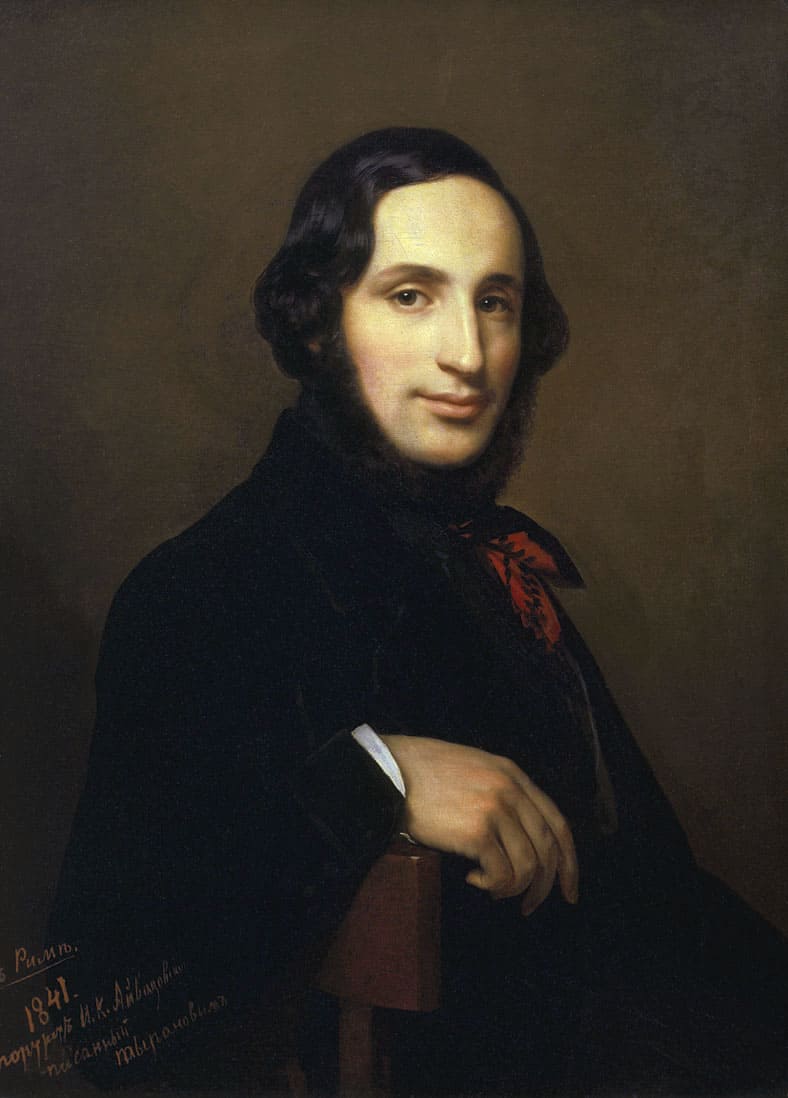
Ivan Aivazovsky was a 19th-century Russian-Armenian painter best known for luminous seascapes, storm scenes, and naval battles. Born in Feodosia on the Crimean coast in 1817, he built a career around painting water, sky, and weather with unusual speed and theatrical clarity. More than half of his known works depict the sea, which became the subject through which he made his name.
- Known for: seascapes, moonlit waters, storms, shipwrecks, and harbour views
- Active period: mid-19th century into the early 20th century
- Materials and technique: oil painting, often with thin glazes and controlled highlights to create translucency and motion
- Where he worked: Crimea, St Petersburg, the Black Sea region, and widely across the Russian Empire and Europe
- Why he matters: he helped define the romantic seascape as a major genre in Russian and European painting
Why Aivazovsky became the painter of the sea
Aivazovsky’s subject was not just water but the changing behaviour of water: swell, spray, foam, mist, moonlight, and reflected fire. He turned the sea into a stage for movement and light, painting both calm harbours and catastrophic storms with the same intensity. His best-known works often place a small ship or figure against a vast marine field, using scale to create drama and vulnerability.
His background helped shape that focus. He grew up in Feodosia, a port on the Black Sea, where the coastline, shipping traffic, and weather provided constant material. The sea was not an abstract motif for him; it was a lived environment, and that closeness gave his paintings their confidence and specificity.
How did he paint water so convincingly?
Aivazovsky worked mainly in oil, using a highly polished style that relied on layered colour, subtle gradients, and crisp points of light. His seas often look translucent because he balanced dark underlayers with thin, luminous passages on top, especially in waves and foam. He handled sky and water as connected surfaces, so light in the clouds reappears on the sea below.
He also painted quickly, and that speed mattered. The fluidity of his process suited his subject: storm fronts, breaking waves, and moonlit reflections can lose their freshness if overworked. Many of his pictures carry the feeling of a scene grasped in one sustained burst, even when he later refined them in the studio.
What does his work look like in practice?
Typical Aivazovsky paintings show a strong horizon line, broad atmospheric space, and a concentrated event near the centre or edge of the composition. A ship may tilt in rough water, a bright opening may cut through heavy cloud, or a pale moon may hang over a still sea. The palette ranges from deep greens and blues to silver, pearl, and the warm orange of sunset or firelight.
He was equally interested in spectacle and serenity. Some works show naval confrontations or wrecks, but others present almost empty expanses of water with only light and weather to animate them. That range is part of his importance: he made the sea appear at once natural, emotional, and monumental.
Why does Aivazovsky still matter?
Aivazovsky helped establish the marine painting tradition in the Russian Empire as a serious and popular genre. His work shaped public expectations of what a seascape could do: not just describe a coastline, but dramatise human fragility, national power, or the sublime force of nature. He also became one of the most widely recognised painters of the Black Sea world, giving that region a visual identity that still circulates today.
He remains relevant because his paintings show how technical control can produce atmosphere without losing clarity. Designers, illustrators, and photographers still study his handling of light, reflection, and composition. Even in reproduction, the surfaces feel active: the eye keeps moving between wave crest, cloud edge, and distant ship, as if the image were breathing.
Frequently Asked Questions
Was Aivazovsky only a seascape painter?
No. He also painted land views, city scenes, religious subjects, and historical events, but the sea dominated his output and reputation. Seascapes made up the largest and most influential part of his career, and they are the works most closely associated with his name.
Why do his waves look so translucent?
That effect comes from careful layering and strong control of value. Aivazovsky used dark bases, thin colour passages, and bright highlights to suggest light moving through water rather than sitting on its surface. The result is a sense of depth and motion that makes the waves feel unstable and alive.
Which themes recur in his paintings?
Storms, shipwrecks, moonlit calm, dawn, dusk, and naval encounters appear again and again. These scenes let him explore contrast: danger and beauty, darkness and reflection, human scale and natural force. The sea in his work is never neutral; it always carries mood and drama.
Articles mentioning Ivan Aivazovsky
