
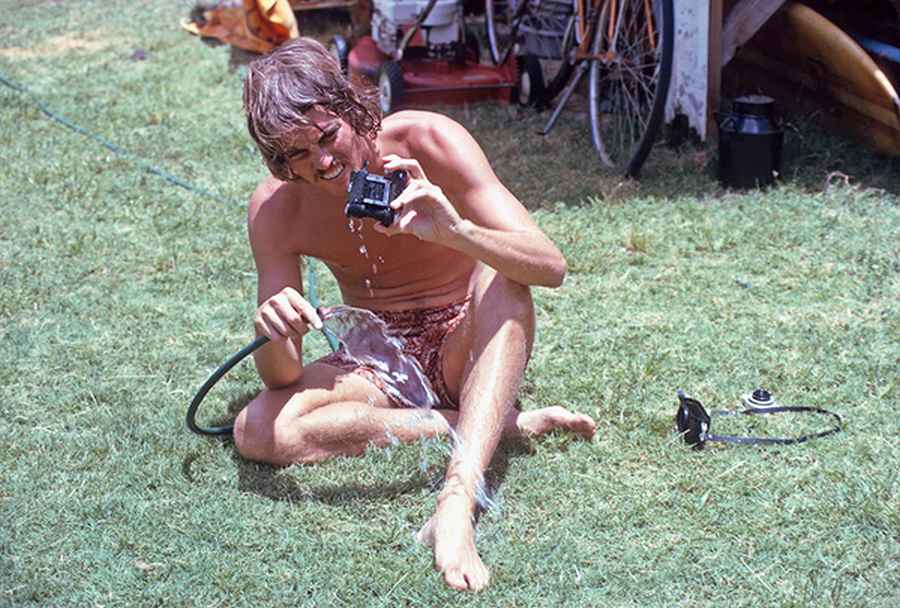
Jeff Divine is an American surf photographer and photo editor known for documenting surf culture from the 1960s through the early 2000s, with a body of work centered on Southern California, Hawaii, and major breaks around the world. He began photographing surfers in La Jolla, California, and later built one of the most important archives of surf imagery from the postwar period into the digital era.
| Field | Surf photography |
|---|---|
| Known for | Photographing surf culture, editing Surfer and The Surfer’s Journal |
| Origin | La Jolla, California |
| Active period | 1960s onward; especially 1970s–2000s |
| Notable role | Photo editor for two major surf publications |
| Archive | Large surf photography archive covering roughly 1970–2009 |
How Jeff Divine came into surf photography
Divine started as a local photographer in La Jolla, shooting friends and fellow surfers in his hometown during the 1960s. That early access mattered because surfing then still sat between subculture and spectacle: it was visible enough to attract attention, but not yet fully absorbed by advertising, sports media, or lifestyle branding.
His work moved from local documentation to editorial photography in 1971, when he joined Surfer magazine. That job put him inside the main channel through which surf culture was seen, interpreted, and circulated. It also gave him a platform to travel widely and photograph the sport in the places where it mattered most.
What does his work look like in practice?
Jeff Divine’s photographs usually focus on the moment before or after the obvious action shot. He made images of surfers paddling, waiting, traveling, talking on the beach, and standing in the landscape around the break. The result is a record of surf life rather than just surf performance.
Because he worked for decades, his archive shows changes in clothing, boards, attitudes, and publishing style. The 1970s material often carries the looseness of the era: long hair, single-fin boards, stripped-down beaches, and a documentary style that feels immediate rather than polished. Later work broadens into a more extensive visual history of surfing’s international growth.
Why does Jeff Divine matter?
Divine matters because he documented surf culture before it was flattened into a commercial image. His photographs preserve the texture of a scene that was still local, improvisational, and tied to specific breaks and communities. For historians of visual culture, that makes his archive more than sports photography; it is evidence of how a youth culture became a global style.
He also shaped the way surf imagery was edited and remembered. As photo editor for Surfer and later The Surfer’s Journal, he helped decide which images represented the culture to its own audience. That editorial role gave him influence beyond his own camera work, because he helped define the visual language of surf publishing for decades.
How his archive became part of surf history
Divine’s archive is unusually valuable because it spans a long period of change, roughly from 1970 to 2009. That means it documents the shift from regional surf culture to a global industry, along with the changing look of boards, magazines, and the people around the sport. Few surf photographers worked continuously enough to leave such a broad record.
His published books have kept that archive in circulation, especially collections devoted to the 1970s and 1980s. Those volumes present surf photography as historical evidence, not just nostalgia. They show that the beach, the board, the print magazine, and the photographer were all part of the same visual system.
Frequently Asked Questions
Was Jeff Divine only a surf action photographer?
No. Although he is best known for surf photography, much of his work records the wider culture around surfing: beaches, travel, board design, and the social life of the scene. That broader focus is part of why his archive has historical weight.
What publications is Jeff Divine associated with?
He worked as a staff photographer for Surfer magazine starting in 1971. He later served as photo editor for both Surfer and The Surfer’s Journal, two of the most influential surf publications in the United States.
Why are his 1970s photographs especially important?
The 1970s were a turning point for surfing, when the sport’s countercultural image was still intact but beginning to enter the mainstream. Divine’s pictures capture that period before surf style became heavily commercialized. They are important because they document the visual language of the era with unusual consistency and depth.
Articles mentioning Jeff Divine
