
Jessica Alba is an American actor and entrepreneur whose public image was built through film, television, beauty advertising, and magazine portraiture. She first became known in the late 1990s and early 2000s as a screen actor, then became a frequent subject for fashion and lifestyle photographers, where her face, hair, and styling were used to project a polished, glossy kind of celebrity femininity. Her later role as co-founder of The Honest Company made her a familiar figure beyond entertainment.
Stories from Jessica Alba
5 stories

About Jessica Alba
- She broke through on television with Dark Angel and moved into studio films soon after.
- Her image has been used across fashion, beauty, and celebrity editorial photography.
- She became a major celebrity-brand figure through The Honest Company.
- Her public persona often combines glamour, fitness, and approachable motherhood.
Read the full overviewHow did Jessica Alba become famous?, Why does Jessica Alba matter in fashion and editorial photography?, What does her public image look like in practice?, How did she move from actor to entrepreneur?
How did Jessica Alba become famous?
Alba started acting as a teenager, with early roles in television and youth-oriented film. Her career changed with Dark Angel, the Fox sci-fi series created by James Cameron, where she played a genetically enhanced soldier in a tightly choreographed, physically demanding role. The show made her recognisable internationally and established an image that photographers and editors could easily translate into magazine glamour: long dark hair, athletic posture, sharp lighting, and a cool, controlled expression.
That television visibility led to a wave of film roles in the 2000s, including Honey, Sin City, Fantastic Four, and Into the Blue. The films varied in quality and reach, but together they placed her inside a specific Hollywood type: the bankable young star whose face could carry posters, premieres, and magazine covers even when the material itself was uneven. For publications, that made her a reliable subject for image-making.
Why does Jessica Alba matter in fashion and editorial photography?
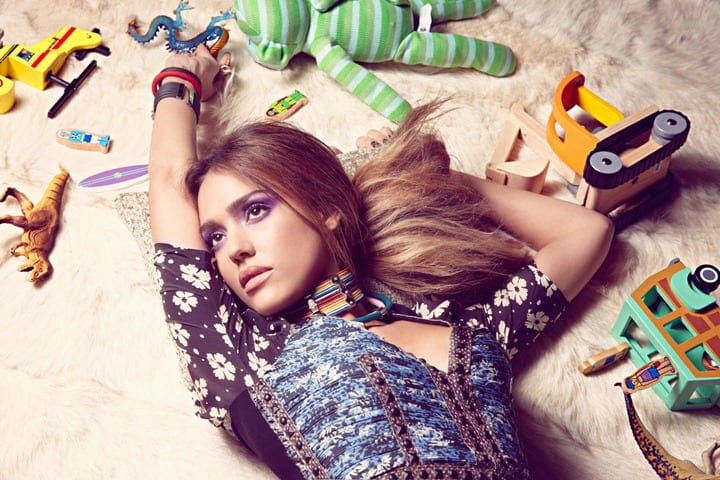
Alba matters because her celebrity image has been produced as carefully as any fashion campaign. Editors and photographers have used her to represent a version of contemporary femininity that balances glamour with ease: fitted dresses, glossy hair, luminous skin, and poses that imply motion rather than stiffness. In portraits by high-end magazine photographers, including work attributed to Diego Uchitel, the emphasis tends to fall on surface and styling as much as expression.
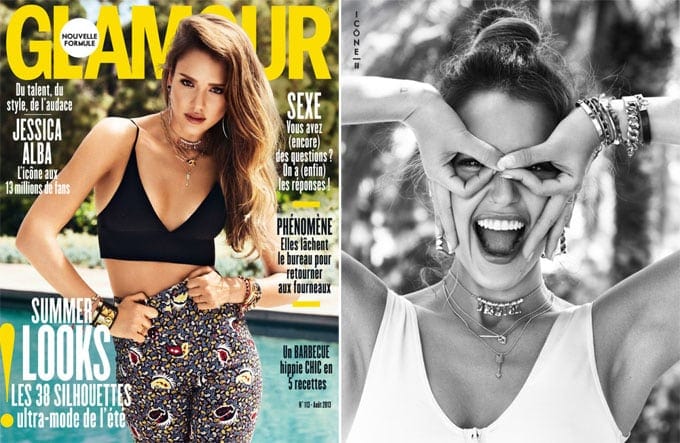
That matters in visual culture because celebrity portraiture does more than record a face. It turns a public person into a visual style reference. Alba’s pictures often sit between beauty advertising and editorial portraiture, which is why she appears so often in magazines like Glamour France and InStyle. Her image fits a long-running fashion shorthand: polished, youthful, affluent, and carefully managed without looking overworked.
What does her public image look like in practice?
In practice, Alba’s imagery usually relies on clean styling and a controlled sense of brightness. Hair is often worn smooth or softly waved; makeup tends toward warm skin, defined eyes, and neutral lips; clothing frequently leans toward fitted silhouettes, satin finishes, or dresses that read well under studio light. The overall effect is not avant-garde. It is commercial glamour, built to feel legible at a glance.
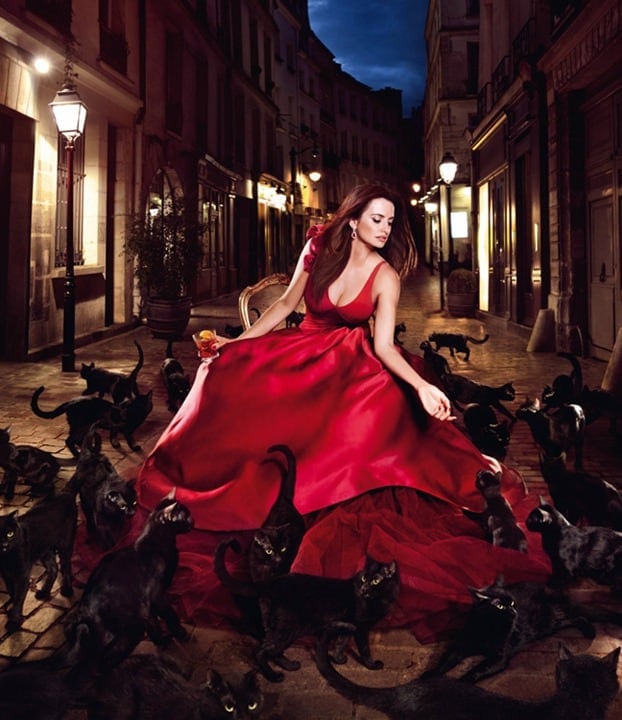
That kind of image works across formats. On a magazine cover, it signals star power. In a beauty spread, it suggests polish and desirability. In a calendar image, such as her appearance in the 2013 Campari Calendar alongside Penelope Cruz, the visual language becomes more controlled and stylised, using color, pose, and costume to turn celebrity into a product of design. Alba’s face and figure are often presented as adaptable surfaces for branding.
How did she move from actor to entrepreneur?
Alba later became widely known as a business founder through The Honest Company, which sells consumer goods associated with clean and family-oriented living. That shift matters because it changed her from a subject of image culture into a producer of it. The company’s branding depended heavily on trust, natural materials, and a calm domestic aesthetic, all of which aligned with the public persona she had already built.
This move also shows how celebrity now works across multiple industries. Alba’s name can sell a film, a magazine cover, or a household product because the same visual logic underpins all three: recognisability, polish, and aspirational normality. Her career is useful to study because it shows how entertainment fame feeds directly into lifestyle branding.
Frequently Asked Questions
Is Jessica Alba primarily known as an actor or a business founder?
She is known for both, but the acting career came first and established her public profile. Dark Angel and her early-2000s film roles made her a familiar celebrity before The Honest Company expanded her reach into business and consumer branding. The later role did not replace the earlier one; it built on it.
Why do magazines use Jessica Alba so often?
Her image reads quickly and cleanly in editorial settings. She fits a commercial fashion vocabulary that values beauty, confidence, and approachability, so she works well in covers, beauty features, and celebrity spreads. That makes her useful to publications that want a polished, recognisable subject.
What kind of celebrity image is associated with Jessica Alba?
Alba is often presented as glamorous but controlled, feminine but not overly theatrical. The styling tends to favour sleek hair, luminous skin, and fitted clothes that photograph well under studio lighting. The result is a brand-friendly image that has remained adaptable across film publicity, fashion editorials, and consumer marketing.