
Joshua Tree National Park is a protected desert park in southeastern California, named for the Joshua tree woodlands that grow across its landscape. It became a U.S. National Park in 1994 under the California Desert Protection Act, after decades as a national monument, and today it covers 790,636 acres of Mojave and Colorado Desert terrain. Nearly 430,000 acres are designated wilderness, which helps explain why the park still feels so open, sparse, and physically exposed.
Stories from Joshua Tree National Park
1 story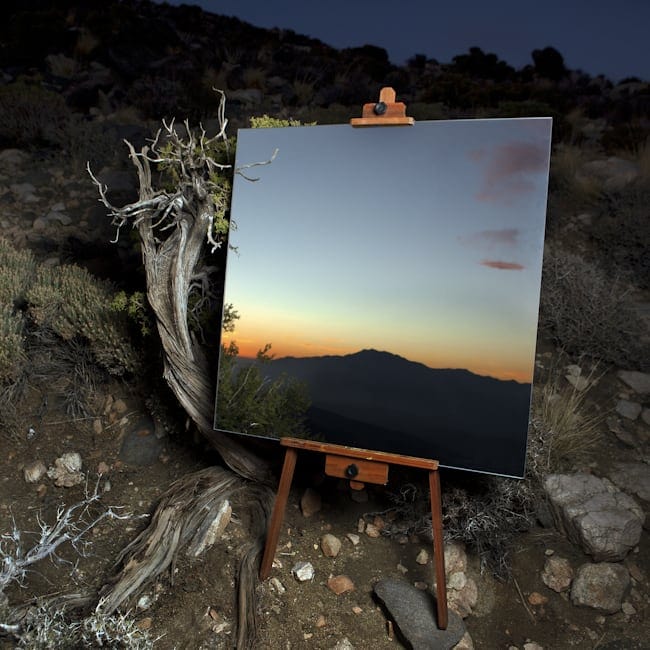
About Joshua Tree National Park
| Fact | Details |
|---|---|
| Location | Southeastern California, near the meeting point of the Mojave and Colorado deserts |
| Status | U.S. National Park since 1994; U.S. National Monument from 1936 |
| Area | 790,636 acres |
| Wilderness | 429,690 acres |
| Name | Derived from the Joshua tree, a native desert plant |
Read the full overviewWhat makes the park distinctive?, How did Joshua Tree become a national park?, What does the landscape look like in practice?, Why does Joshua Tree matter to artists and designers?
What makes the park distinctive?
The park’s visual identity comes from contrast: twisted Joshua trees, rounded granite boulders, long sightlines, and hard light. The land shifts between low desert scrub, rocky hills, and dry washes, with plant life that survives on little water and intense heat. That mix has made the park a familiar setting for photographers, climbers, land artists, and designers looking for clear forms and minimal background noise.
Joshua Tree also matters because it preserves a large desert environment rather than a single scenic landmark. Its value is ecological as well as aesthetic. The park protects desert habitats, water sources, and geological formations that would be hard to read at smaller scale. The experience of the place depends on space, silence, and the visible toughness of the landscape.
How did Joshua Tree become a national park?
The area first gained federal protection in 1936 as Joshua Tree National Monument. That status recognized the region’s desert ecosystems and unusual plant communities, but it did not yet give it the broader profile or legal framework of a national park. In 1994, Congress passed the California Desert Protection Act, which upgraded the monument to national park status and expanded protections for surrounding land.
This history matters because the park sits inside a long American pattern of setting aside fragile landscapes once they are threatened by development, extraction, or overuse. The wilderness designation for a large share of the park adds another layer of protection. It limits roads, structures, and mechanized access, which keeps much of the interior closer to its original desert character.
What does the landscape look like in practice?
Joshua Tree National Park looks different from many parks people picture first. There are no waterfalls or dense forests. Instead, there are cactus patches, creosote scrub, fan palms in sheltered canyons, and boulder piles that seem placed for sculpture. The Joshua trees themselves, which are not true trees but yuccas, give the park its name and a distinctive silhouette: spiky crowns, branching arms, and pale bark against open sky.
That landscape shapes how the park is used. Hikers move through exposed trails and rock gardens; climbers use the granitic outcrops; campers and artists respond to the wide clearings and dramatic dusk light. In visual culture, the park often functions as shorthand for aridity, isolation, and a raw Western American aesthetic. Those associations are part of its appeal, but they rest on a real physical environment that is both beautiful and demanding.
Why does Joshua Tree matter to artists and designers?
The park has become a repeated reference point in photography, fashion, music imagery, and environmental art because it offers a ready-made study in form and texture. The composition is simple but never flat: shadow cuts across stone, branches repeat against the horizon, and the color palette shifts from bleached beige to blue-gray to iron red. That makes the park useful for work that depends on strong shape and natural negative space.
Its influence also comes from scale. A desert like Joshua Tree can make manufactured objects look small and temporary, which is one reason it appears so often in contemporary image-making. For artists working with mirrors, reflective surfaces, installation, or land-based interventions, the park provides a setting where materials behave differently under sun, wind, and dust. The environment becomes part of the work rather than a neutral backdrop.
Frequently Asked Questions
Is Joshua Tree National Park actually a forest?
No. The name refers to stands of Joshua trees, a yucca species that grows in desert conditions, not to a wooded forest in the usual sense. The park is mostly open desert with shrubs, rocks, and scattered tree-like yuccas. The word “forest” here describes a plant community, not a closed canopy.
Why did the park become a national park in 1994?
Congress upgraded the site from national monument to national park through the California Desert Protection Act. The change reflected a broader effort to protect large desert landscapes from piecemeal development and to recognize their ecological value. It also brought a higher public profile to a place already important for recreation and conservation.
What is the difference between the park and the wilderness area inside it?
The national park is the whole protected area, including roads, campgrounds, trails, and managed visitor zones. The wilderness area is a large subset with stricter limits on development and mechanized access. That designation helps preserve a more untouched desert interior and keeps many parts of the park in a natural state.