Julianne Moore is an American actor known for tightly controlled performances, plainspoken emotional realism, and a career that moves between art-house cinema, mainstream studio films, and fashion imagery. Born Julie Anne Smith in 1960, she adopted Moore as a professional name after discovering that another actor was already using her birth name. Since the late 1980s she has worked across film, television, and theatre, becoming one of the most decorated screen actors of her generation.
- She built her reputation through psychologically detailed, often fragile or inward performances.
- Her breakout period came in the 1990s, especially with The Fugitive, Short Cuts, and The End of the Affair.
- She has received multiple Academy Award nominations and won major prizes including Golden Globes and a BAFTA.
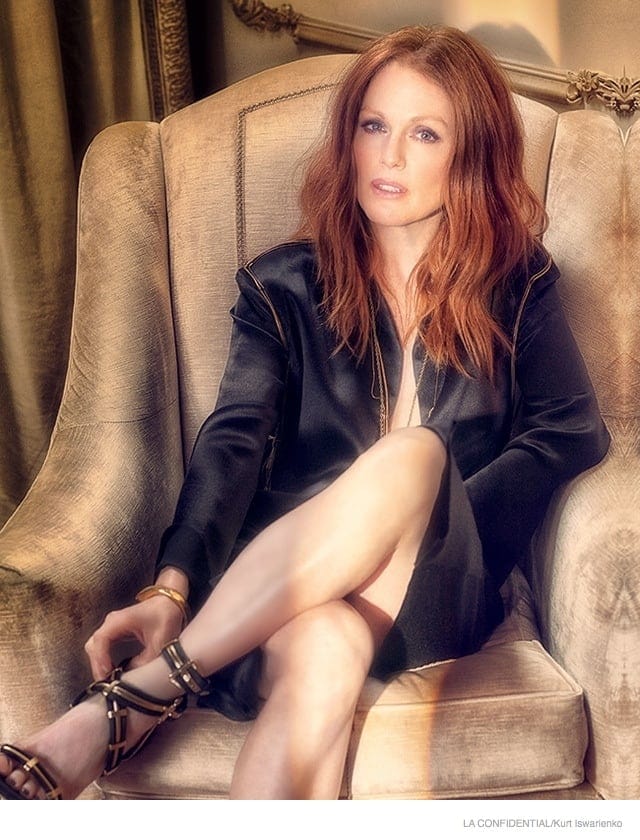
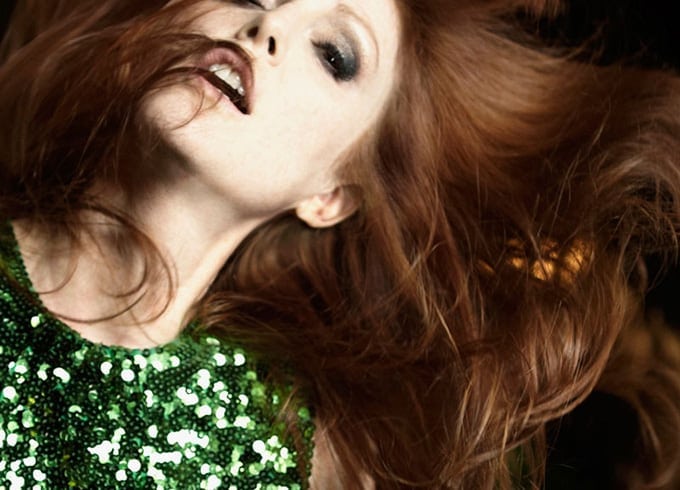
- Outside film, she appears frequently in magazines and advertising, where her red hair and direct gaze became part of a recognisable visual identity.
- Her work often combines glamour with restraint, which makes her a useful reference point for editors and photographers looking for intelligence rather than flash.
How did Julianne Moore become a major screen actor?
Moore trained at Boston University’s theatre program and began her screen career in soap opera and television roles. That early work gave her the speed and discipline needed for a career that depends on repetition, timing, and close observation. Her rise in the 1990s was not based on one star-making role alone. Instead, she accumulated attention through a series of performances that showed range: anxious, comic, brittle, grieving, self-possessed.
The Fugitive and Short Cuts brought her into wider view, and films such as Safe, Boogie Nights, and The End of the Affair made her a critical favourite. By the time Far from Heaven and The Hours arrived, her screen persona had solidified: not loud or theatrical, but intensely readable in the face, hands, and pauses between lines.
What makes her performances distinct?
Moore often plays characters whose public composure hides private damage. She uses stillness rather than display, and she tends to make emotion visible in a small change of posture or a delayed reaction. That style works especially well in dramas about marriage, illness, shame, memory, or social performance, because she can suggest layers without forcing them into the open.
She is also unusually adaptable. In prestige dramas she can seem severe or wounded; in thrillers and genre films she can shift into menace, wit, or instability; in lighter work she can appear dry and self-aware. This flexibility is part of why photographers and magazine editors keep returning to her: she can project elegance, intelligence, and vulnerability at once, without flattening into a single image.
Why does she matter in fashion and visual culture?
Moore’s value to fashion imagery lies in contrast. She has classic red hair, porcelain skin, and a face that reads immediately on the page, but she rarely presents as ornamental. Stylists and photographers often use that tension to their advantage, placing her in severe tailoring, high-contrast lighting, or minimal sets so that expression becomes the main event. The result is less about celebrity gloss than about composed adult presence.
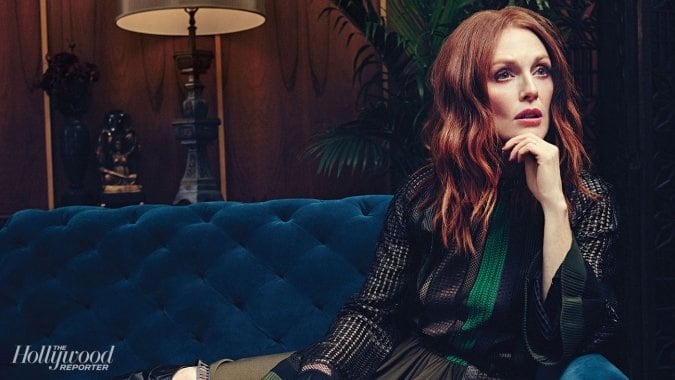
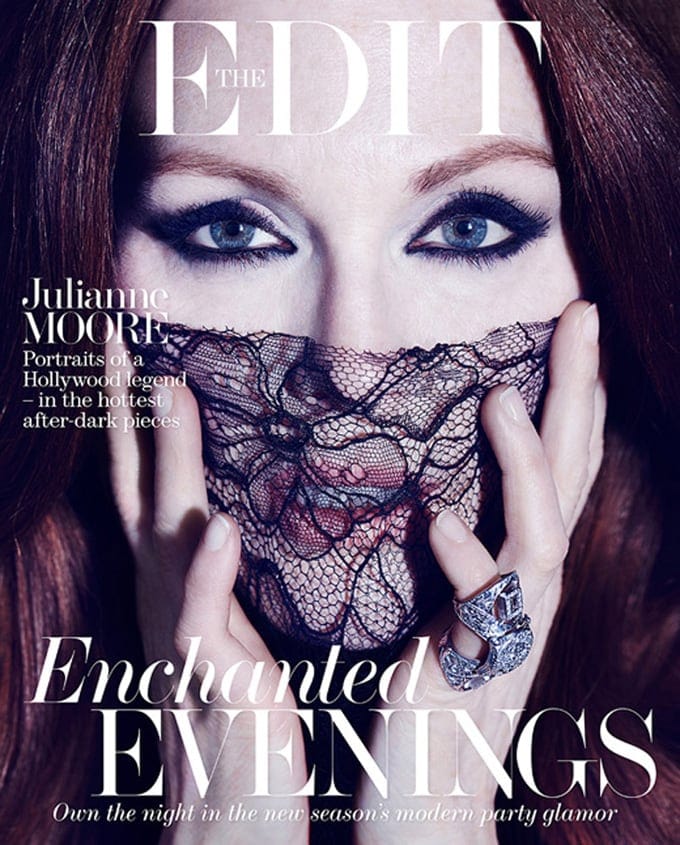
That is why she appears so often in editorial work for magazines such as The Edit, Vs., and The Hollywood Reporter. In these contexts, she offers a kind of visual credibility: not youth, not novelty, but authority. Her image tends to support stories about craft, confidence, and longevity rather than reinvention for its own sake.
What has she been recognised for?
Moore has received broad industry recognition, including an Academy Award for Still Alice and multiple additional Oscar nominations. Her awards shelf also includes Golden Globes, a BAFTA, and Screen Actors Guild honours. Those prizes reflect a career built on consistency rather than one exceptional year; she has remained central to American film culture across several decades.
Recognition aside, her influence comes from repetition and trust. Directors cast her when a role needs intelligence, emotional ambiguity, and a sense of lived-in experience. Editors cast her when they want a cover image that can carry both glamour and seriousness. That combination makes Moore less a fleeting celebrity than a lasting visual and cinematic reference.
Frequently Asked Questions
Why did Julianne Moore change her name?
She was born Julie Anne Smith, but that name was already in use professionally by another actor. She combined her own names and adopted Moore as a surname for screen work. The change was practical, not symbolic, though it ended up becoming one of the most recognisable names in contemporary film.
What kind of roles is she best known for?
Moore is best known for emotionally complex roles in dramas, especially parts involving grief, secrecy, marriage, or psychological strain. She has also appeared in thrillers, comedies, and science-fiction projects, but her strongest association remains with serious acting in character-driven films. Critics often praise her for making internal conflict visible without overstatement.
Why does she appear so often in magazines and fashion shoots?
Her face photographs clearly, and her public image balances elegance with restraint. That makes her useful for covers and editorial spreads that want polish without emptiness. She also reads as mature, authoritative, and contemporary, which gives fashion editors a strong visual anchor beyond simple celebrity recognition.
Articles mentioning Julianne Moore