
Kaifeng is a prefecture-level city in eastern Henan, China, on the southern bank of the Yellow River. It is one of the country’s historic inland capitals and is also known by its older name, Bianjing. Today it is a large urban centre, but its cultural weight comes mainly from the role it played as a political, commercial, and artistic hub in earlier Chinese history.
Stories from Kaifeng
1 story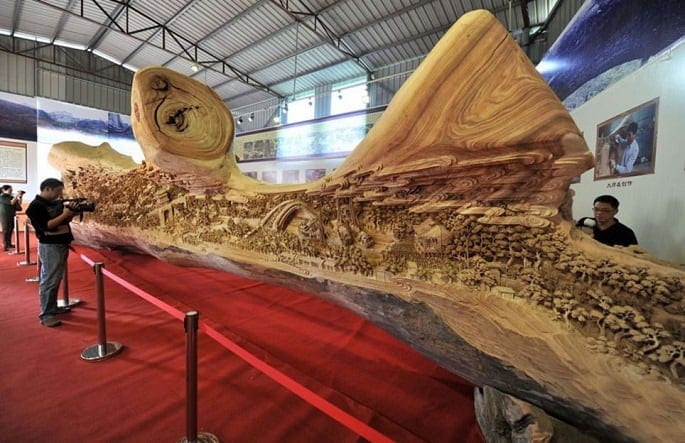
About Kaifeng
- Historic city in central China, in present-day Henan province
- Also known as Bianjing, especially in its imperial past
- Once a major capital and river-linked trade centre
- Associated with craft traditions, urban culture, and courtly art
- Still matters as a reference point in Chinese historical geography
Read the full overviewWhy does Kaifeng matter in Chinese history?, What did Bianjing look like in practice?, Why do artists and makers still refer to Kaifeng?, How is Kaifeng understood today?
Why does Kaifeng matter in Chinese history?
Kaifeng mattered because it sat at the centre of traffic, administration, and exchange. Its location on the Yellow River system helped make it a strategic city for grain movement, taxation, and governance, and that made it attractive as a capital. Under the Northern Song dynasty, Bianjing became one of the most important cities in the world, known for dense population, organised markets, printing, scholarship, and refined urban life.
That imperial past still shapes how Kaifeng is remembered. The city stands for a moment when Chinese city life, statecraft, and craft production came together at a very high level. When a work of art or design refers to Kaifeng, it often invokes that historical prestige as much as the modern city itself.
What did Bianjing look like in practice?
As a capital, Kaifeng was not a ceremonial court city set apart from everyday life. It was a working metropolis with streets, canals, markets, workshops, temples, and administrative offices all operating at once. Commerce and making were visible in the city’s daily life: paper, textiles, metalwork, carving, printing, painting, and other urban crafts circulated through markets and official commissions.
That density of activity matters for visual culture. Cities like Kaifeng produced the conditions for large-scale projects, from luxury objects for elites to practical goods for ordinary use. The city’s reputation rests partly on this mingling of state power and skilled labour, which gave rise to a broad and sophisticated material culture.
Why do artists and makers still refer to Kaifeng?
Kaifeng appears in historical writing, museum interpretation, and contemporary art because it represents a high point of premodern Chinese urban civilisation. For makers, the name can signal technical ambition, historical continuity, or a link to imperial-era forms. It is often used when discussing works that depend on exactness, patience, and long craft traditions.
That is especially true in projects that reconstruct or reinterpret historical objects. A maker invoking Kaifeng is usually pointing to an older world of workshops, court patronage, and artisanal knowledge rather than to the modern city alone. The name carries a sense of scale: not just an individual craft, but an entire civic environment that supported craft at a large level.
How is Kaifeng understood today?
Modern Kaifeng is an active city with contemporary industry, transport links, and urban growth, but its identity still draws heavily from its layered past. Historical sites, reconstructions, and heritage narratives keep earlier periods visible, especially the Song era, which remains central to how the city is presented in culture and tourism.
For a reader coming from an article about an artwork or object, Kaifeng usually matters as historical context. It may indicate origin, reference, or inspiration. In practice, the name often marks a connection to one of China’s great capitals, where design, craftsmanship, and urban life once met at exceptional scale.
Frequently Asked Questions
Is Kaifeng the same place as Bianjing?
Yes. Bianjing is the older historical name most often associated with Kaifeng’s role as a capital, especially during the Northern Song dynasty. The modern city is Kaifeng, but Bianjing remains important in historical and cultural writing.
What is Kaifeng best known for?
Kaifeng is best known as a former imperial capital and one of the major cities of medieval China. It is associated with administration, trade, printing, scholarship, and urban craft production. That combination made it influential far beyond its region.
Why would an art or design article mention Kaifeng?
An article may mention Kaifeng to locate a work in a specific historical tradition or to point to a source of craftsmanship. The city’s past as a capital gives it weight in discussions of technique, patronage, and material culture. It is often a shorthand for refinement, scale, and continuity with older Chinese making traditions.