
Karolína Kurková is a Czech fashion model and actress known for her work on major runway shows, magazine covers, and lingerie campaigns. Born in 1984, she rose to global visibility as a Victoria’s Secret Angel and became one of the defining faces of early-2000s luxury fashion. Her career sits at the point where editorial modeling, commercial beauty campaigns, and celebrity culture overlap.
Stories from Karolína Kurková
3 stories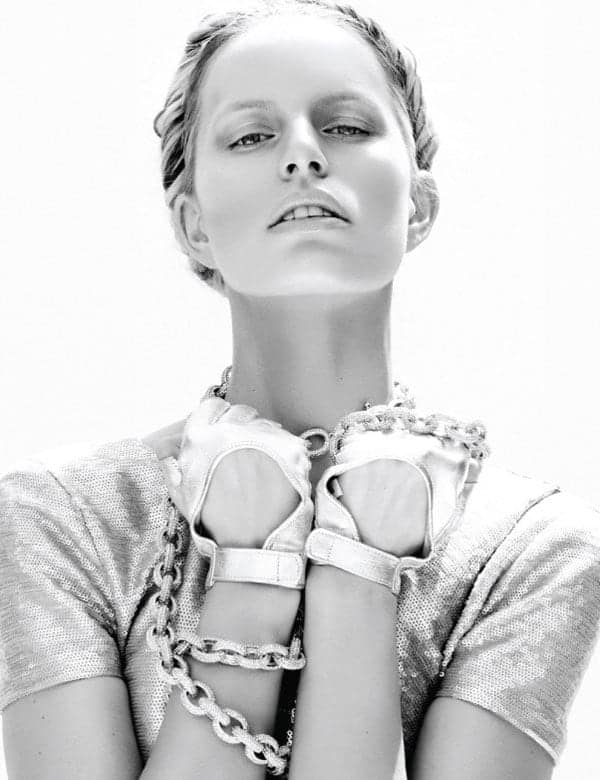


About Karolína Kurková
- Profession: Fashion model and actress
- Nationality: Czech
- Born: February 28, 1984
- Known for: Victoria’s Secret Angel, high-fashion editorials, cover work
- Recognition: Described by Vogue’s Anna Wintour as a “next supermodel”
Read the full overviewHow did Karolína Kurková become famous?, What does her modeling style look like?, Why does she matter in fashion?, Frequently Asked Questions
How did Karolína Kurková become famous?
Kurková emerged during a period when fashion media still relied heavily on a small group of highly visible models to carry runway shows, beauty campaigns, and magazine covers. Her look was striking enough to move easily between European fashion houses, American commercial campaigns, and editorial shoots. That flexibility mattered: the most successful models of her generation had to be readable in a single photograph and persuasive in motion on the runway.
Her rise was accelerated by work for Victoria’s Secret, where she became an Angel, a role that made her familiar far beyond fashion insiders. At the same time, she built credibility in the editorial system through features in magazines such as Vogue, where stylists and photographers used her face and figure to communicate glamour, confidence, and a polished sense of modern luxury.
What does her modeling style look like?
Kurková’s modeling is associated with long limbs, a strong runway presence, and a face that photographers can reshape through lighting and styling. That kind of versatility is valuable in fashion because a model is rarely asked to look like herself; she is asked to become a surface for garments, makeup, and a brand’s mood. In practice, that means she can appear glossy in a perfume campaign, severe in couture, or playful in a fashion story without losing recognizability.
Photographer Mario Testino praised the proportions of her body and face and her energy, which points to why she worked so well across different kinds of assignments. Energy matters in fashion photography because stillness alone can flatten a picture; a good model suggests movement, intention, and control even in a static image. Kurková’s appeal came from combining those qualities with a clean, high-fashion finish.
Why does she matter in fashion?
Kurková matters because she belonged to the last generation of models who could become global celebrities through magazines, runway work, and a single highly visible brand affiliation. Before social media made every model a self-publishing platform, editorial placement and repeated appearances in a small number of powerful fashion systems created fame. Her career shows how those systems worked at full strength.
She also represents a shift in beauty standards toward a more athletic, elongated, and internationally marketable model type. Anna Wintour’s description of her as a “next supermodel” placed her in a lineage of women whose names helped sell not just clothing, but the idea of fashion itself. That kind of status turned modeling into a form of authorship, even if the model did not design the clothes.
Frequently Asked Questions
Is Karolína Kurková still active as a model?
Yes. Her career has continued beyond the peak years of early-2000s supermodel culture, with appearances in fashion editorials, campaigns, and public events. Models at her level often shift between runway work, print campaigns, and selective appearances as their careers mature.
Why is she associated with Victoria’s Secret?
Kurková became widely known as one of Victoria’s Secret Angels, a title given to models who represented the brand in campaigns and runway shows. That role brought her into mainstream visibility because the company used its models as part of a highly recognizable commercial image. For many viewers, that was the first place her name and face became familiar.
Has she worked outside modeling?
Yes. She has also worked as an actress, which is common for top models whose public image can translate into film and television roles. That crossover reflects how fashion fame can expand into broader entertainment, especially when a model already has strong camera presence and name recognition.