
Kate Moss is an English fashion model who became one of the most recognizable faces of 1990s and 2000s fashion. She rose from early photo shoots in London to international fame, helped define the stripped-back look often called heroin chic, and later became a fixture in magazine covers, advertising campaigns, and runway work. Her image mattered because it shifted fashion toward a cooler, leaner, more ambiguous ideal of beauty that photographers, stylists, and brands repeated for years.
Stories from Kate Moss
15 stories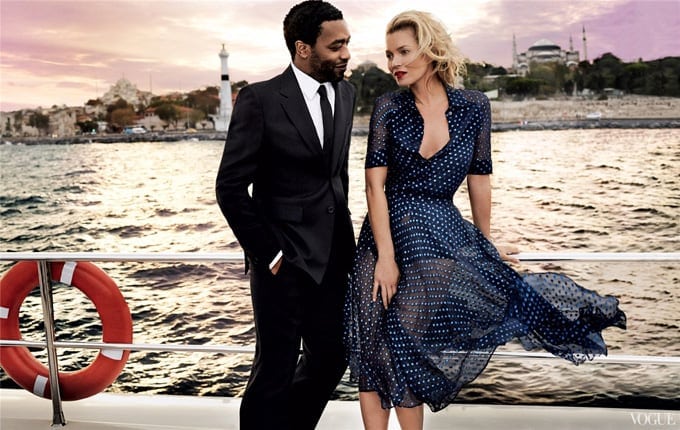




About Kate Moss
- Born in 1974 in Croydon, London.
- Became famous in the early 1990s through fashion photography and editorial work.
- Associated with the heroin chic aesthetic: pale skin, minimal styling, and a thin, fragile silhouette.
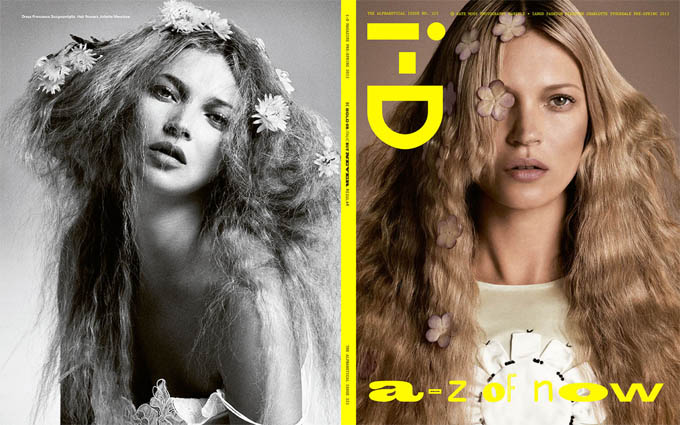
- Worked repeatedly with major photographers and magazines, including Vogue, i-D, and LOVE.
- Turned modeling into a long-running brand, appearing in campaigns, covers, and endorsements across decades.
Read the full overviewHow did Kate Moss become famous?, What is the “heroin chic” look?, Why did Kate Moss matter to fashion photography?, How was she used in campaigns and magazines?
How did Kate Moss become famous?
Moss first drew attention as a teenager in the early 1990s, when fashion was moving away from the glossy supermodel glamour of the late 1980s. Her slight frame, narrow face, and unstudied presence offered something different from the body ideal of the period. Photographers and editors found in her a look that seemed casual, young, and slightly detached, which fit the mood of the decade’s fashion imagery.
Her breakthrough coincided with a shift in editorial styling. Clothes were often shot with less polish, less muscle, and less overt luxury, and Moss became one of the clearest faces of that shift. She was not just a model in the conventional sense; she became a visual reference point for an entire fashion era.
What is the “heroin chic” look?
Heroin chic was a fashion aesthetic associated with Moss and other models in the early 1990s. It featured a pale complexion, minimal makeup, messy or flattened hair, and a very thin body type. The image suggested fragility, boredom, and urban cool rather than health, power, or glamour.
The style was controversial because it drew criticism for glamorizing drug culture and unhealthy thinness. Moss did not invent the trend alone, but her photographs made it widely visible. In practice, the look appeared in magazine editorials, perfume ads, and campaign images where bodies were posed with slack limbs, blank expressions, and hard light.
Why did Kate Moss matter to fashion photography?
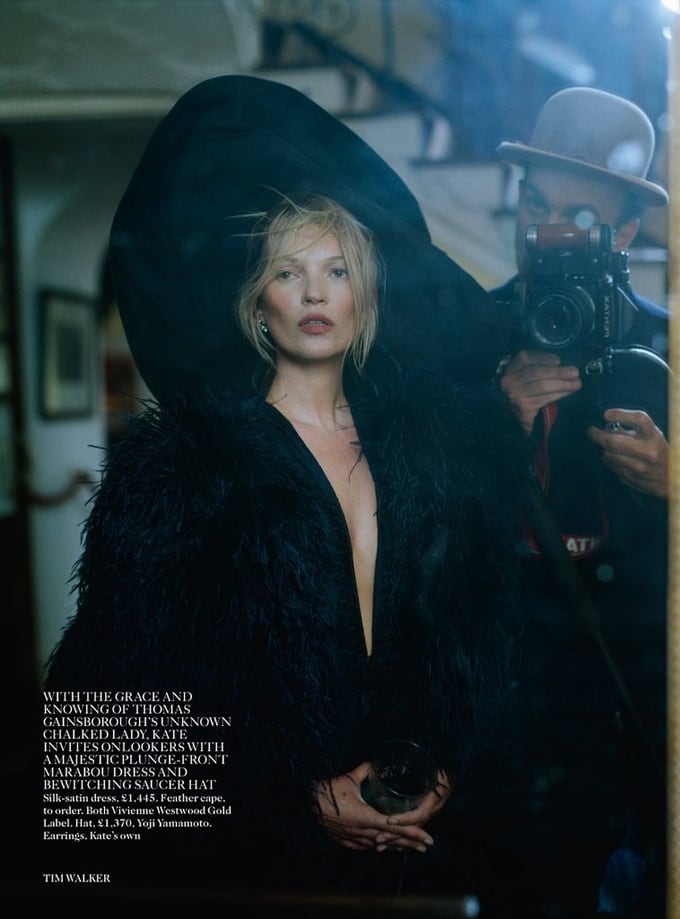
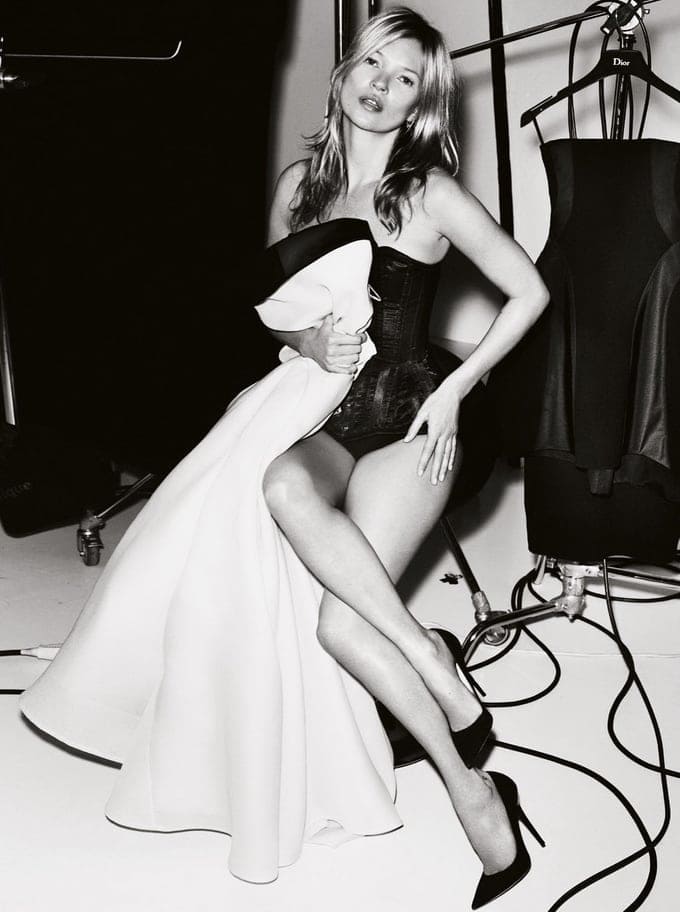
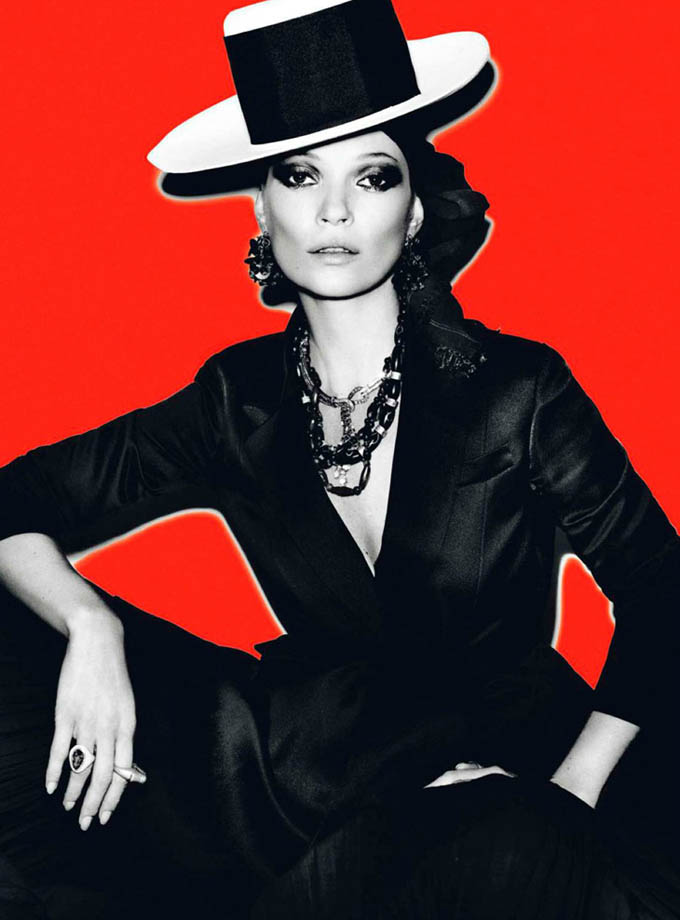
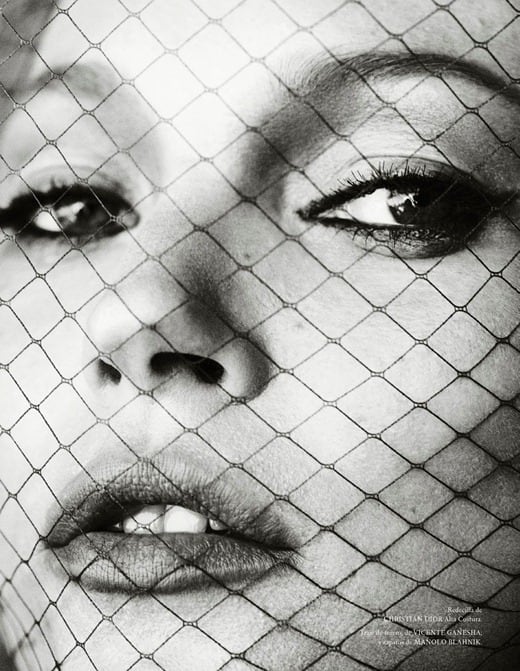
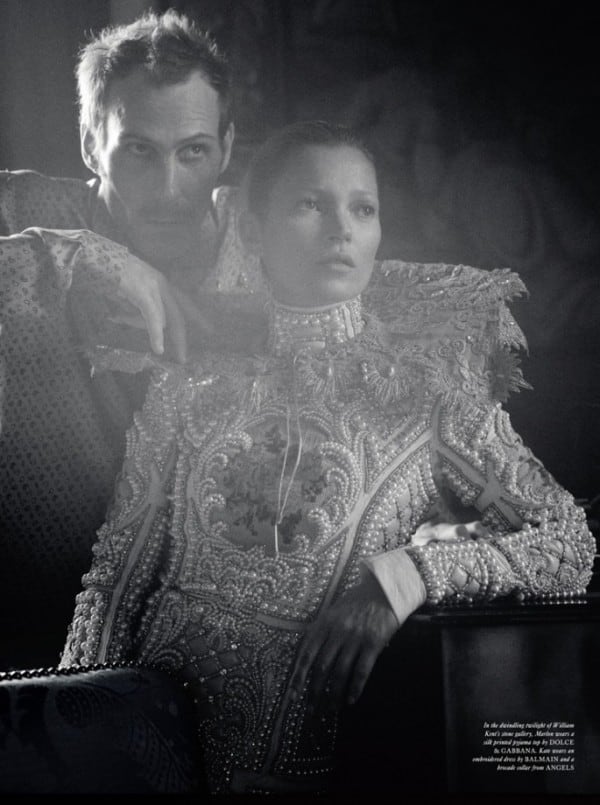
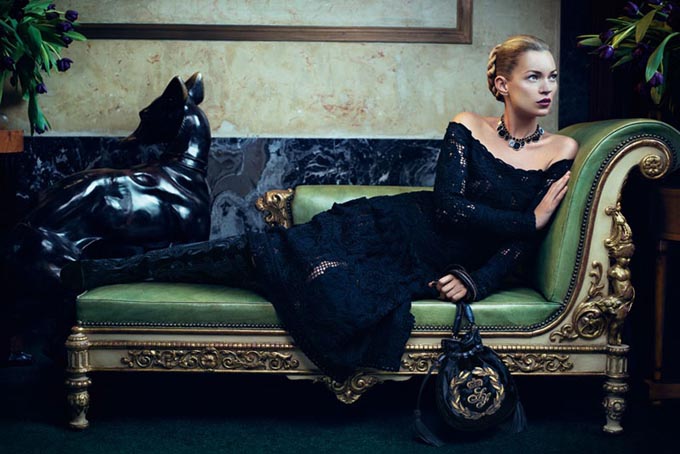
Moss gave photographers a face that could read as both ordinary and iconic. She worked well in minimalist studio portraits, gritty black-and-white spreads, and highly stylized editorial setups. That flexibility made her useful to image-makers such as Mario Testino and Tim Walker, whose pictures relied on a model who could carry mood without overpowering the scene.
She also helped make editorial fashion feel less distant. Her look could seem like London street culture as easily as luxury, and that tension made her adaptable to magazines such as Vogue and i-D. In many images, the clothes do not dominate the picture; instead, Moss and the photographer build a character together through pose, expression, and lighting.
How was she used in campaigns and magazines?
Brands and editors used Moss to signal contemporary taste. She appeared in covers, advertising campaigns, and seasonal features for labels and publications that wanted a cool, modern, slightly irreverent tone. A Moss image often relied on understatement: a simple background, controlled styling, and a pose that suggested effortlessness rather than performance.
Her work with photographers such as Testino and Walker shows how adaptable she was across genres. One image might use her for sharp luxury fashion; another might use her for dreamlike, theatrical storytelling. This range kept her visible long after the initial wave of 1990s fame, and it helped turn her into a recurring shorthand for fashion authority.
What does her legacy look like now?
Moss’s legacy is tied to both beauty standards and the business of fashion imagery. She helped normalize a leaner, more androgynous silhouette in high fashion, and her image became part of how magazines and brands defined “cool” for a generation. At the same time, her career shows how a model can become a durable media figure rather than a brief runway presence.
Her fame also reveals the costs of celebrity modeling. Public attention often focused on her private life as much as her work, which blurred the line between image and gossip. Even so, the strongest reason she remains relevant is simple: her face became one of the most copied and studied in modern fashion photography.
Frequently Asked Questions
Was Kate Moss only a runway model?
No. Moss built her reputation mainly through editorials, covers, and advertising, which gave her a broader public profile than runway work alone. She was especially important in still photography, where her expression and body type could be framed as a visual idea rather than just a live presentation of clothes.
Why is Kate Moss linked to size zero fashion?
She became associated with size zero fashion because her slim frame matched the thin silhouette that many designers and editors promoted in the 1990s and 2000s. The link is less about a formal category she created than about how her image was repeatedly used to represent that ideal. That association also made her a flashpoint in debates over thinness in fashion.
Did her private life matter to her career?
Her private life attracted intense media attention and often became part of her public image. That attention added to her celebrity, but it also risked reducing her to gossip rather than craft. Her long career shows that the work itself—posing, collaborating, and embodying fashion’s changing tastes—remained the basis of her significance.