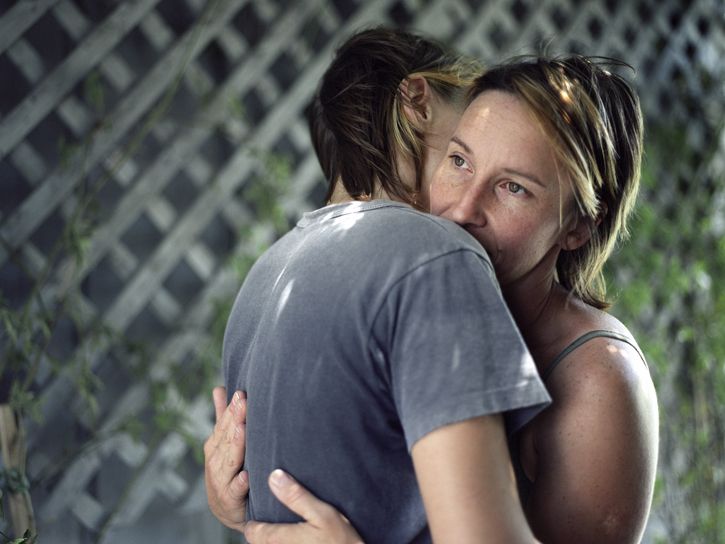
Kelli Connell is an American photographer known for staged, psychologically charged images that use doubled figures, self-portraiture, and meticulous composition to probe identity, intimacy, and performance. Her work sits within contemporary lens-based art rather than documentary photography, and it often borrows the grammar of portraiture, fashion imagery, and tableau photography to unsettle how a single body can be read in an image.
| Field | Details |
|---|---|
| Born | United States |
| Practice | Contemporary photography, self-portraiture, staged portraiture |
| Known for | Doubles, role-play, constructed narratives, portrait series |
| Collections | Microsoft, Columbus Museum of Art, Los Angeles County Museum of Art, Museum of Fine Arts, Houston, Museum of Contemporary Photography, Dallas Museum of Art |
What kind of photography does Kelli Connell make?
Connell’s photographs are carefully built rather than quickly captured. She often appears in her own work, sometimes in multiple roles or as paired figures, using lighting, pose, costume, and cropping to create images that feel both intimate and staged. The result is less a record of a moment than a constructed scene that asks how identity gets performed through the body.
Her self-portraiture is not straightforward autobiography. Instead, it uses the photographer’s own body as a tool for splitting, mirroring, and multiplying the self, which creates tension between seeing and knowing. That approach places her near other artists who use the camera to examine performance and persona, while still keeping her work rooted in the specific material facts of photography: lens, frame, print, and sequence.
Why does her work matter?
Connell matters because she treats the photograph as a site of fabrication, not just capture. In a medium often associated with proof, she builds images that expose how easily the camera can produce conviction without clarity. That makes her work useful for thinking about portraiture as a made object, shaped by staging, editing, and repetition.
Her practice also expands the language of self-portraiture. Rather than presenting a singular likeness, she uses the form to question stable identity, especially in relation to gender, desire, and the social codes attached to looking. In that sense, the work belongs to a broader history of contemporary photography that uses the artist’s own body as material, but it keeps a strong emphasis on formal control and visual ambiguity.
How are Connell’s images made?
Connell’s images depend on precise control over composition and production. A staged photograph may involve location scouting, directed posing, wardrobe, and technical choices in camera and post-production that make the final picture feel seamless. The doubled or repeated figure often requires careful planning so the image reads as a single coherent scene rather than an obvious technical trick.
That attention to craft is part of the meaning of the work. By showing how a photograph can be assembled, Connell makes construction visible even when the image looks polished or calm. The viewer sees a finished print, but the image carries the signs of labor: arrangement, repetition, and the decision to use the camera not as a witness but as an instrument for building identity.
Where does she sit in contemporary photography?
Connell’s work belongs to a lineage of artists who use self-portraiture and staged tableaux to challenge realism. Her practice is often discussed in relation to photographers and image-makers who treat the body as mutable and the self as something performed for the camera. What distinguishes her is the balance between formal elegance and conceptual friction; the pictures are visually controlled, but they rarely settle into a single reading.
Her presence in major museum collections confirms that the work has moved beyond niche photo practice into the broader field of contemporary art. For readers encountering her through an article, that museum context matters: the images are not only about individual identity, but about how photography itself makes, edits, and circulates ideas of selfhood.
Frequently Asked Questions
Is Kelli Connell mainly a self-portrait photographer?
Yes, self-portraiture is central to her practice, but the term only partly describes the work. She uses her own body as one element in a larger constructed image, often producing scenes that feel like portraits, doubles, or narrative fragments. The emphasis is on the photograph as a made situation, not on self-revelation alone.
Is her work documentary or staged?
It is staged. Connell builds images through planned composition, directing, and post-production rather than waiting for an event to unfold. That staged quality is essential to the meaning of the work, because it lets her question how photographs claim authority.
Why are museums interested in her photography?
Museums collect Connell because her work addresses major concerns in contemporary art: identity, representation, and the mechanics of photographic truth. Her images also have strong formal qualities, which makes them hold up as objects as well as ideas. The combination of conceptual rigor and visual precision makes the work fit well in museum collections.
Articles mentioning Kelli Connell