Kristina Makeeva is a Russian photographer known for images that mix fashion, travel, and staged fantasy. Her work often places people in extreme landscapes, icy lakes, deserts, salt flats, ornate interiors, and other locations that already look unreal, then heightens them with color, costume, and precise composition. She has built a recognizable style around brightness, softness, and a sense of wonder, with subjects posed as if they belong inside a dream rather than a documentary frame.
- Works across fashion, travel, and conceptual portrait photography.
- Known for saturated color, airy lighting, and highly polished compositions.
- Often photographs dancers, models, and performers in dramatic natural settings.
- Uses location as part of the image design, not just as background.
- Her photos aim for enchantment rather than straightforward realism.
What kind of photographer is she?
Makeeva works in a mode that sits between editorial photography and visual fantasy. A single image may include the structure of fashion photography — posed figures, styled clothing, strong control over gesture — while also using the landscape as a subject in its own right. Snow, ice, reflective water, fog, and vivid mineral colors appear often because they amplify the atmosphere she wants: luminous, theatrical, and slightly unreal.
This approach matters because it rejects the idea that travel photography must simply record a place. In Makeeva’s images, location becomes material. Lake surfaces, frozen textures, pale skies, and long horizons function the way fabric or light does in studio work: they help build a scene.
How does she make her images look so dreamlike?
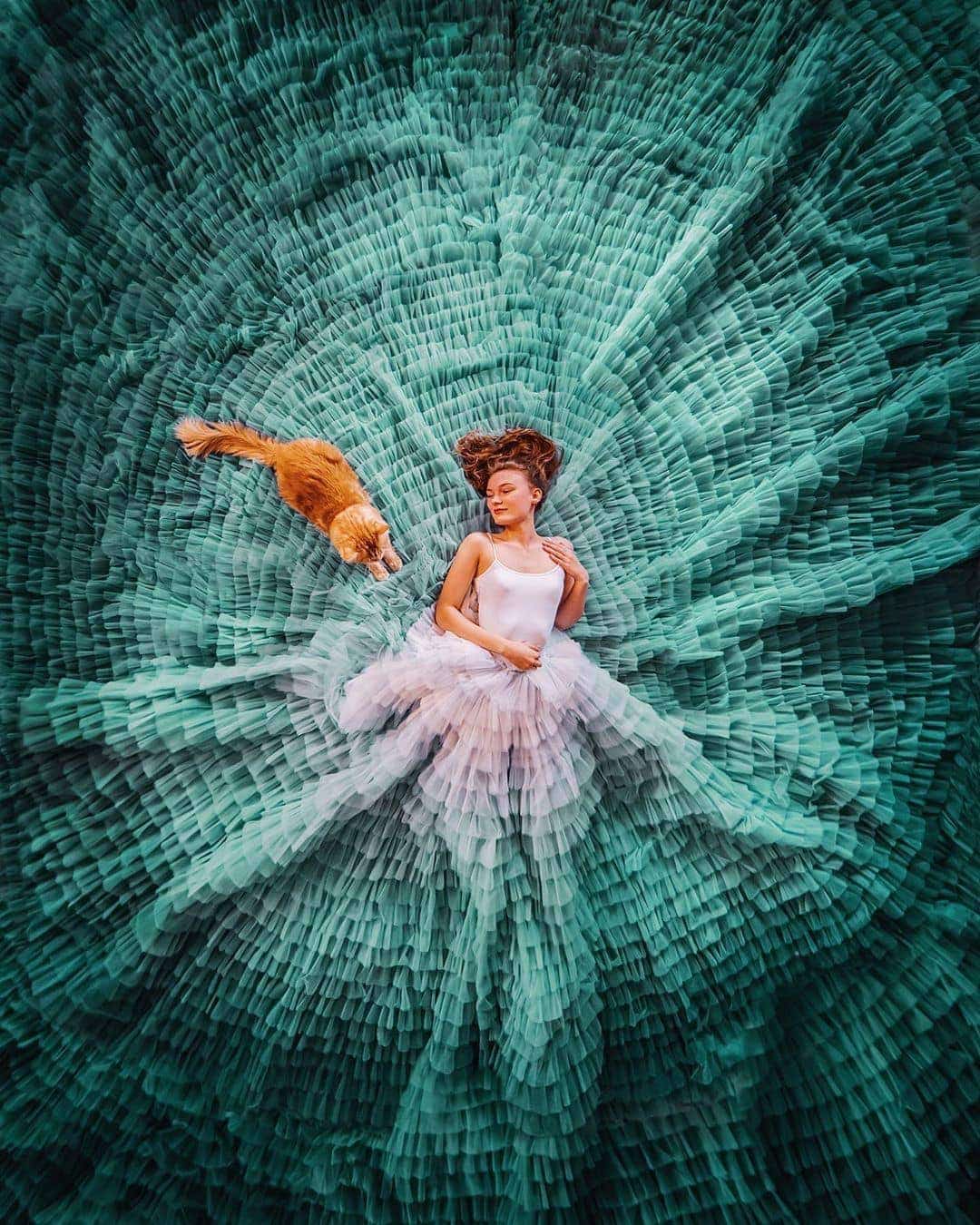
Her photographs depend on careful control of color and staging. She often uses pastel tones, clean framing, and a limited set of visual elements so that one idea dominates the frame. When she photographs dancers or models, she tends to preserve elegant body lines and a sense of movement, even when the figure is standing still. That gives the work a suspended quality, as if the image caught a moment between motion and stillness.
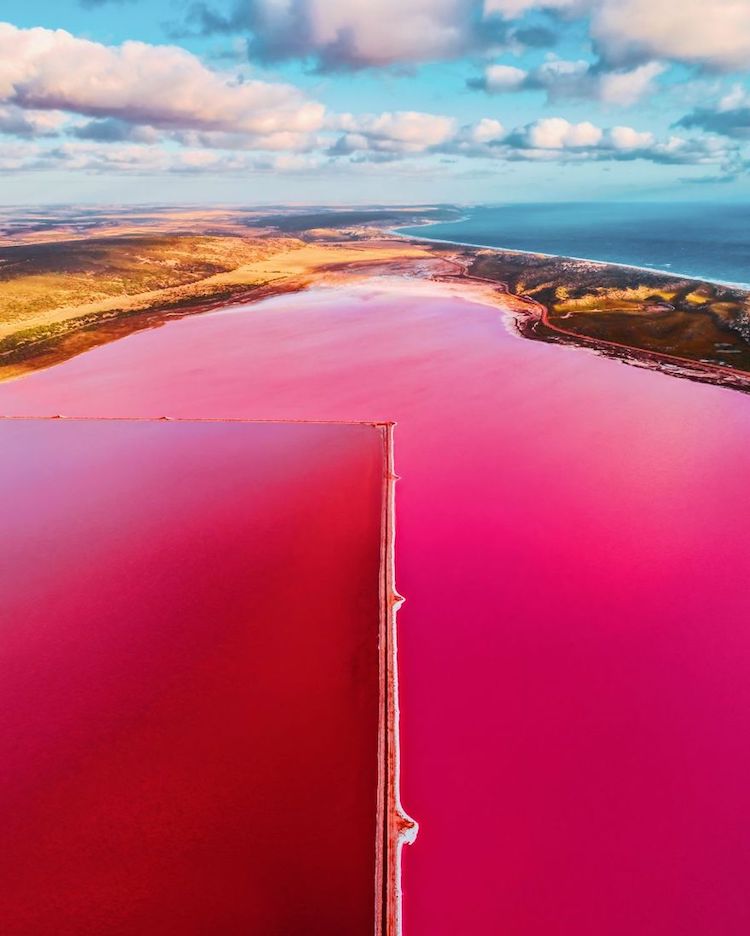
Environmental conditions also matter. Places such as Lake Baikal or Hutt Lagoon already have unusual physical properties — frozen surfaces, unusual pink water, vast open space, or harsh light — and Makeeva uses those conditions as raw visual material. Her style does not depend on heavy digital chaos; it depends on choosing locations, costumes, and timing that already support a heightened image.
Why does Kristina Makeeva matter?
Makeeva is part of a wider shift in contemporary photography toward images built for both editorial and social platforms. Her work is polished enough for magazines and brand storytelling, but distinct enough to circulate widely on its own. That blend has made her a recognizable figure in the current image economy, where a photographer’s style can be as important as the subject being photographed.
She also offers a useful counterpoint to travel photography that leans on authenticity alone. Her pictures argue that beauty can be constructed without losing emotional force. The result is a body of work that feels decorative, but not empty; expressive, but still rooted in real places and real photographic labor.
What does her practice look like on location?
A Makeeva shoot usually depends on planning, weather, and a strong visual concept. A location like Lake Baikal is not just selected for its fame or scale, but for its textures, light, and seasonal transformation. Frozen lake, open ice, and pale winter light allow a subject to appear isolated and delicate, which suits her visual language.
In practice, that means working with a small set of decisive choices: wardrobe that contrasts with the environment, poses that keep the body sculptural, and framing that leaves room for the setting to breathe. The finished photograph often feels effortless, but that effect comes from controlling many visible and invisible parts of the shoot.
Frequently Asked Questions
Is Kristina Makeeva a fashion photographer or a travel photographer?
She is both, and that overlap is central to her work. Many of her images use the logic of fashion photography — styling, posing, visual polish — while relying on real destinations as the main stage. That combination is what gives her pictures their unusual identity.
What subjects does she photograph most often?
She frequently photographs women, dancers, models, and performers in landscapes or settings with strong visual character. Water, ice, snow, bright skies, and vivid natural color appear often because they help produce her dreamlike atmosphere. The subject is usually chosen to intensify the place, not compete with it.
Why are her photographs described as “magic”?
That word fits her work because she treats wonder as a visual goal. Instead of aiming for plain observation, she creates scenes that feel heightened, graceful, and slightly impossible. The result is a style that turns real environments into something closer to visual fable.
Articles mentioning Kristina Makeeva